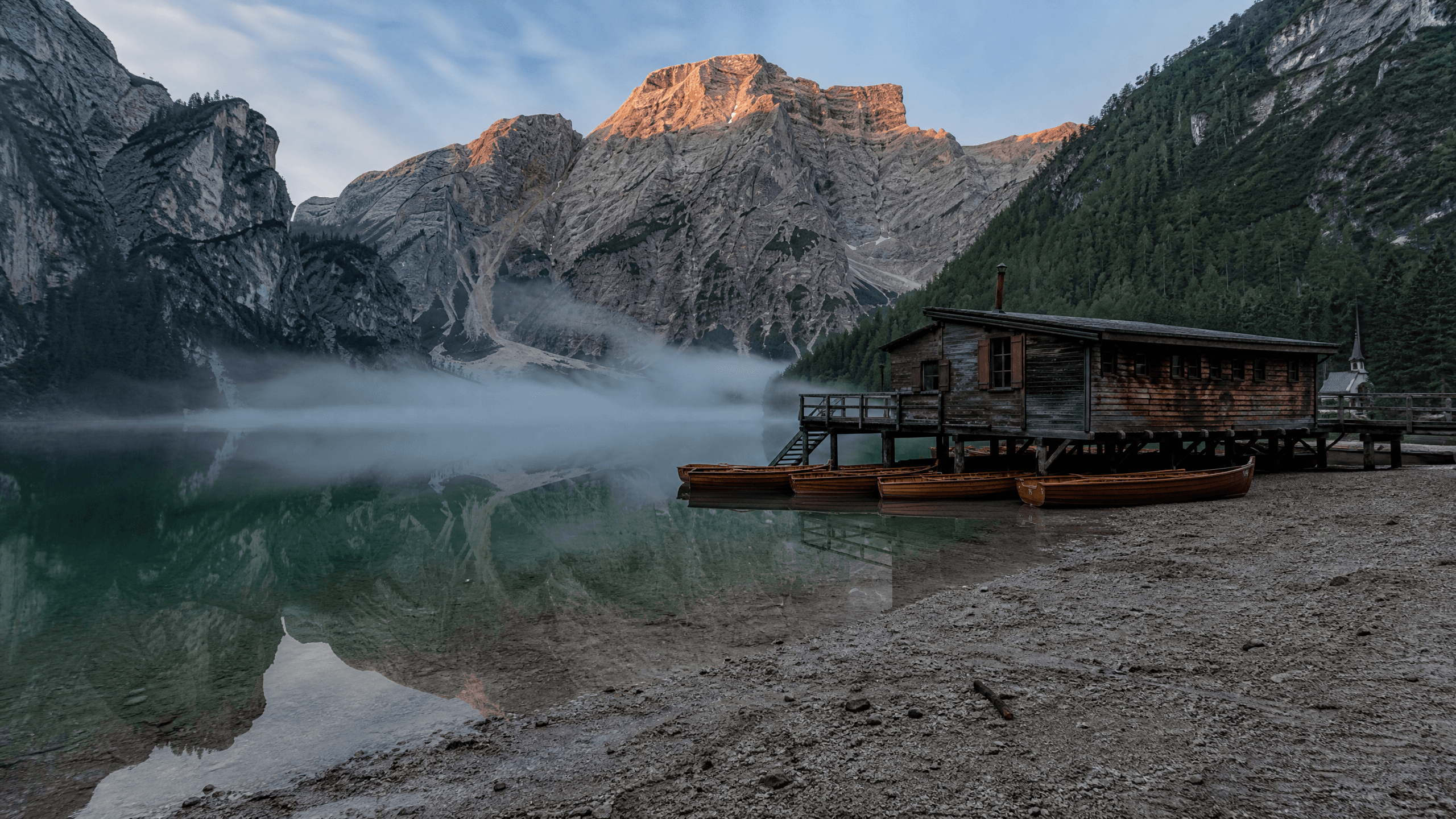
The Dolomites Travel Planning & Itineraries
By Bobby Atwal, TICO-registered travel advisor (Fora Travel), Toronto · Updated
The Dolomites are the most beautiful mountains in Europe — pale limestone towers that turn pink at sunset above green meadows, with Alpine villages that are somehow also Italian (espresso and strudel, prosecco and speck). Summer is hiking between mountain huts, lake walks at Braies and Misurina, and the Alta Badia Michelin scene; winter is the Sella Ronda ski circuit and Cortina's glamour. It's a two-hour drive from Venice, and the hotel scene — Rosa Alpina, Forestis, the family-run five-stars of Alta Badia — is as good as the Alps get.
Free advisor planning includes Fora Reserve hotel perks at no extra cost — or use our AI planner to pace your The Dolomites days, pick the right neighbourhoods, and build a route that makes sense.
The Dolomites at a glance
- Best time to visit
- Late June to mid-September is hiking season — the huts and lifts open, wildflowers in July, 15–25°C by day, afternoon storms possible.
- Budget
- $120–180 USD/day (a rifugio bunk or a village B&B, hut lunches of polenta and dumplings, lift passes).
- Getting there from Canada
- Fly into Venice (VCE) — nonstop from Toronto (YYZ) on Air Canada and Air Transat (seasonal, ~9h) — then drive 2–2.5 hours north to Cortina or Alta Badia.
Planning Your The Dolomites Trip
Best Time to Visit
Late June to mid-September is hiking season — the huts and lifts open, wildflowers in July, 15–25°C by day, afternoon storms possible. Mid-September to early October is the sweet spot: golden larches, clear skies, half the crowds, lifts still running until early October. December to March is ski season — Cortina and the Sella Ronda, Christmas and February peak. April–May and November are shoulder: lifts closed, many hotels shut, snow lingering on the trails. Lake Braies needs a summer reservation to drive in (July–September, 9:30am–4pm).
Budget Overview
Budget: $120–180 USD/day (a rifugio bunk or a village B&B, hut lunches of polenta and dumplings, lift passes). Mid-range: $350–550/day (a 4-star in Alta Badia or Val Gardena with half board, a car, a guided hike). Luxury: $900–2,500+/day (Rosa Alpina/Aman, Forestis, Hotel de Len, Cristallo in Cortina — where advisor perks and the half-board-included hotels make the daily cost predictable). The Dolomites are cheaper than the Swiss Alps for comparable quality.
Getting There
Fly into Venice (VCE) — nonstop from Toronto (YYZ) on Air Canada and Air Transat (seasonal, ~9h) — then drive 2–2.5 hours north to Cortina or Alta Badia. Innsbruck (INN), Verona (VRN) and Milan (MXP) are alternatives (2–3.5h drives). Trains reach Bolzano and Bressanone; from there, buses or a transfer into the valleys. A car is strongly recommended for the valleys; many luxury hotels offer Venice transfers (~€350–450).
Getting Around
A car for the passes and the lake drives — the Great Dolomite Road (Bolzano–Cortina) is one of Europe’s great scenic routes. Lifts and cable cars (summer pass) do the climbing; hut-to-hut hiking between rifugi is the classic way to experience the range. In winter, the Dolomiti Superski pass covers 1,200 km of pistes across 12 valleys. Buses link villages in season.
Common The Dolomites planning mistakes
Arriving at Tre Cime or Braies at 10am in August
Both have capped parking that fills by early morning; Braies requires an online reservation to drive in. Dawn starts, or the shuttle buses.
Visiting in May or November
Lifts are closed, trails snowbound, and many hotels shut between seasons. Late June to early October or December to March.
Basing only in Cortina
Cortina is wonderful but on the eastern edge. Alta Badia or Val Gardena sits in the middle of the range and reaches more of it; split a week between two valleys.
Skipping the huts
A night in a rifugio — sunset on the towers, a hut dinner, stars — is the Dolomites experience. Even luxury travellers should do one; Lagazuoi has private rooms.
The Dolomites Neighbourhoods
Cortina d’Ampezzo
The glamorous one — 2026 Winter Olympics host, Tofane and Faloria lifts, the Corso Italia passeggiata, Cristallo and Hotel de Len. Pricier and busier. — best for: skiers, the scene, Tre Cime access
Alta Badia — Corvara, San Cassiano, La Villa
The food capital of the Alps (three Michelin stars in one valley), the Sella Ronda, Rosa Alpina and a cluster of superb family-run five-stars. Ladin culture. — best for: foodies, luxury, ski-and-hike balance
Val Gardena — Ortisei, Selva
The woodcarving valley beneath the Sassolungo and the Seceda ridge — the most photographed viewpoint in the range — and Alpe di Siusi, Europe’s largest high meadow. — best for: hikers, photographers, families
Val Pusteria — Lake Braies, San Candido
The northern valley with the emerald Lago di Braies, the Tre Cime approach from Lake Misurina, and Forestis above Bressanone. — best for: the lake photo, Tre Cime, quieter stays
Val di Fassa & Val di Funes
Fassa for the Marmolada glacier and the Catinaccio; Funes for the little church of St. Johann in front of the Odle peaks — the other famous photo. Lower-key and good value. — best for: value, Marmolada, the postcard
The Dolomites Food & Drink
St. Hubertus
Norbert Niederkofler’s three-Michelin-star “Cook the Mountain” — zero-waste Alpine tasting menu. ~€300–380/person. Book months ahead; one of Italy’s great restaurants.
Rifugio Lagazuoi
Cable car up to a hut with a terrace facing half the Dolomites — barley soup, Kaiserschmarrn, a glass of Lagrein. ~€25–40/person. Stay the night for the sunset and the WWI tunnels.
Maso Runch
A farmhouse set menu of Ladin dishes — turtres (fried spinach pastries), barley soup, roast pork, apple strudel — at communal tables. ~€35–45/person. Book.
Baita Fraina
A mountain hut-restaurant above town doing refined Ampezzo cooking — casunziei (beetroot ravioli), game, polenta. ~€50–70/person.
Speck, Schlutzkrapfen & a Hugo
The hut lunch: smoked speck with rye bread, spinach-ricotta dumplings in butter, and a Hugo (prosecco, elderflower, mint). ~€20–30. The reason you hike.
Day Trips from The Dolomites
Tre Cime di Lavaredo loop
1h from Cortina (full day)The 10-km circuit of the three towers from Rifugio Auronzo — the signature Dolomites hike, moderate, with huts for lunch at Locatelli. Drive the toll road early (parking fills by 8am) or take the bus from Misurina.
Seceda & Alpe di Siusi
Val Gardena (full day)Cable car from Ortisei to the Seceda ridge (the jagged-cliff photo), hike down through meadows, then an afternoon on the Alpe di Siusi plateau with the Sassolungo behind.
Lake Braies & Lake Misurina
1h from Cortina or Alta BadiaRowboat on the emerald Braies at dawn (reserve the road slot in summer), then the drive to Misurina’s mirror lake beneath the Sorapiss. The two postcard lakes in one day.
The Great Dolomite Road
Bolzano to Cortina (full day)Drive the Passo Pordoi, Passo Sella and Passo Gardena with cable-car stops — the Sass Pordoi “terrace of the Dolomites” at 2,950 m is the one to take.
Ready to build your The Dolomites days?
Tell us your dates, pace, and interests — we’ll draft a day-by-day The Dolomites itinerary in under a minute.
A Sample The Dolomites Itinerary
Here’s a flavour of what our AI planner builds. Generate your own personalized The Dolomites itinerary in 60 seconds — free.
Venice → Alta Badia
- •Land at VCE, drive 2.5h north
- •Check into San Cassiano
- •Evening walk to Rifugio Scotoni
- •Ladin dinner at Maso Runch
Lagazuoi & the passes
- •Cable car to Rifugio Lagazuoi
- •WWI tunnels descent or terrace lunch
- •Drive Passo Falzarego to Cortina
- •Passeggiata on the Corso Italia
Tre Cime
- •Dawn drive to Rifugio Auronzo
- •The 10-km loop with lunch at Locatelli
- •Lake Misurina on the way back
- •Dinner at Baita Fraina
Lake Braies → Val Gardena
- •Rowboat on Braies at opening
- •Drive west via the Great Dolomite Road
- •Sass Pordoi terrace
- •Check into Ortisei
Seceda → departure
- •Seceda cable car and ridge walk
- •Alpe di Siusi meadow lunch
- •Drive to Venice or Innsbruck
- •Evening flight or Venice night
The Dolomites Travel FAQ
When is the best time to visit the Dolomites?
Late June to early October for hiking (September is ideal); December to March for skiing. Avoid the shoulder months when lifts and hotels close.
Where should I stay?
Alta Badia for food and a central position, Val Gardena for the famous viewpoints and families, Cortina for skiing and glamour. A week is best split between two valleys.
Do I need a car?
Yes — the passes, lakes and trailheads are spread across many valleys. Luxury hotels arrange Venice transfers, but a car gives you the dawn starts that beat the crowds.
How does it compare to the Swiss Alps?
More dramatic rock, better food, lower prices, and easier access from Venice. Switzerland has the trains and the glaciers; the Dolomites have the towers and the Michelin stars.
Explore More Destinations
Want The Dolomites planned for you?
Your Savvy Jetsetter advisor personally plans The Dolomites trips with handpicked hotels, Fora Reserve perks, restaurant bookings, and end-to-end support. Hotel bookings are complimentary; the hotel pays the commission.