Masai Mara & Kenya Safari Travel Planning & Itineraries
By Bobby Atwal, TICO-registered travel advisor (Fora Travel), Toronto · Updated
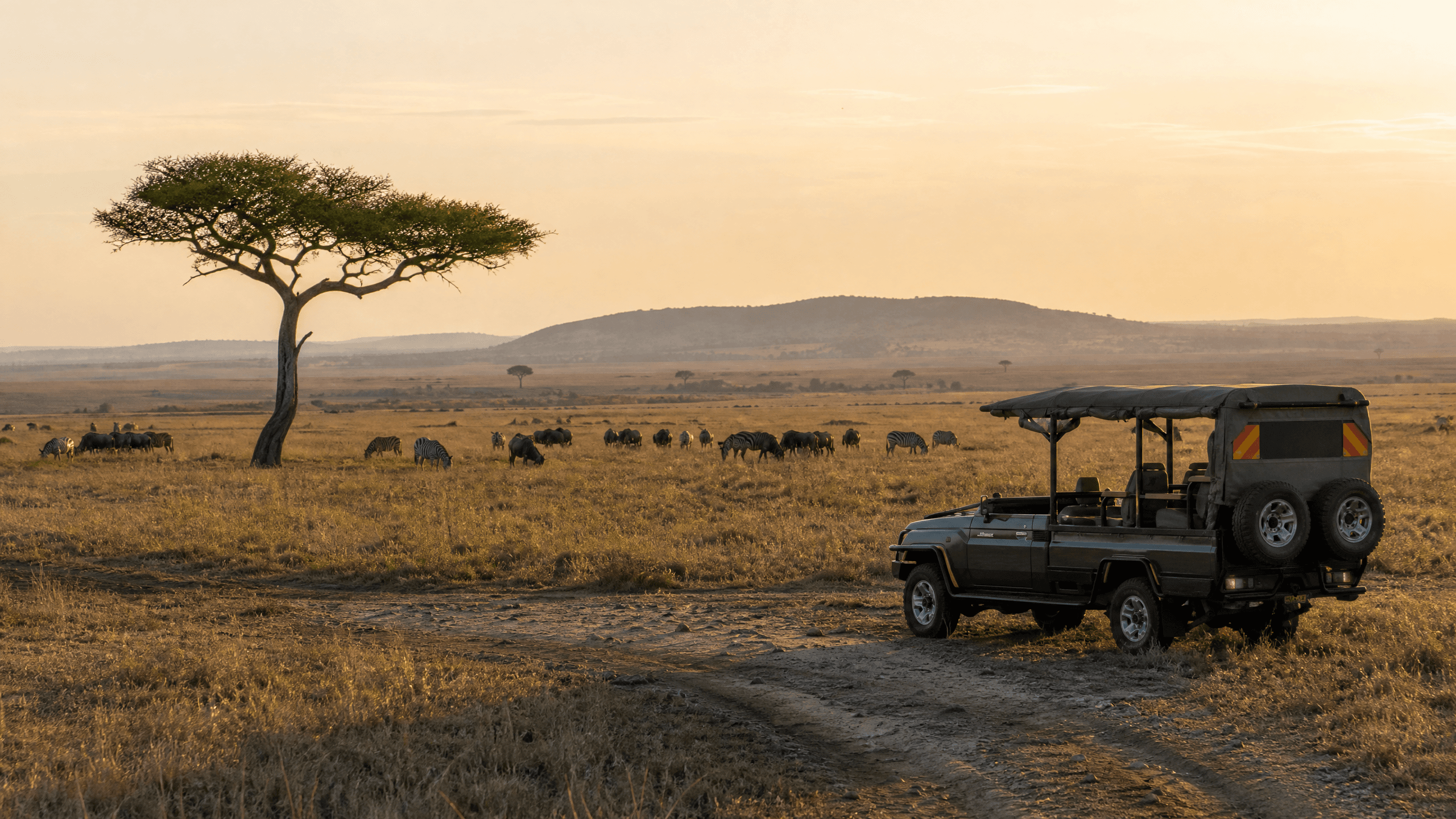
The Masai Mara is the safari everyone pictures: endless golden grassland, acacias against a huge sky, lions on a termite mound, and — from July to October — a million wildebeest pouring across the Mara River in the Great Migration. Kenya pairs it with Amboseli's elephants under Kilimanjaro, the rhinos of Laikipia and Lewa, flamingos in the Rift Valley lakes, and a beach finish on the Indian Ocean at Diani. The camps range from classic canvas to extraordinary, and this is the trip advisors plan most carefully, because the camp and the guide are everything.
Free advisor planning includes Fora Reserve hotel perks at no extra cost — or use our AI planner to pace your Masai Mara & Kenya Safari days, pick the right neighbourhoods, and build a route that makes sense.
Masai Mara & Kenya Safari at a glance
- Best time to visit
- July to October is the Great Migration in the Mara — river crossings, huge predator action, peak demand, and rates at their highest; the best camps book 12–18 months ahead.
- How long to stay
- Ten to twelve nights: a Nairobi night, 3–4 in the Mara, 3 in a second park (Amboseli or Laikipia), and 3–4 on the coast.
- Budget
- Kenya safari is priced per person per night, all-inclusive (meals, drives, guides, park fees).
- Getting there from Canada
- No nonstops from Canada. Fly YYZ → Nairobi (NBO) via Amsterdam (KLM), Paris (Air France), London (Air Canada + BA or Kenya Airways), Doha (Qatar) or Dubai (Emirates) — 18–22 hours total.
Planning Your Masai Mara & Kenya Safari Trip
Best Time to Visit
July to October is the Great Migration in the Mara — river crossings, huge predator action, peak demand, and rates at their highest; the best camps book 12–18 months ahead. January to February is the dry, hot calving season in the southern Serengeti (Tanzania side) with excellent Mara game viewing and fewer vehicles. June and November are shoulder months: good game, lower rates, some rain in November. April–May is the long rains — lush, cheap, some camps closed, muddy roads but superb for photography and birds. The Mara has game year-round; the Migration is the extra.
Budget Overview
Kenya safari is priced per person per night, all-inclusive (meals, drives, guides, park fees). Mid-range: $500–800 USD/person/night (a comfortable tented camp like Mara Bush Camp or Entim, a shared vehicle). Luxury: $1,000–1,800/person/night (Angama Mara, Mara Plains, Cottar’s 1920s, Sanctuary Olonana — private conservancies, private vehicles, the famous guides). Ultra: $2,000–3,500+ (Ol Jogi, Segera, a private mobile camp). Add ~$300–500/person for the bush flights, and a Diani or Nairobi night either side.
Getting There
No nonstops from Canada. Fly YYZ → Nairobi (NBO) via Amsterdam (KLM), Paris (Air France), London (Air Canada + BA or Kenya Airways), Doha (Qatar) or Dubai (Emirates) — 18–22 hours total. From Nairobi’s Wilson Airport, Safarilink or AirKenya fly 45 minutes to the Mara airstrips (Keekorok, Mara Serena, Olkiombo, Kichwa Tembo); your camp meets the plane. Driving Nairobi–Mara is 5–6 hours and only worth it for the scenery once.
Getting Around
Bush flights between parks (Mara → Amboseli → Laikipia → Diani) are the way — short, scenic, and timed to camp schedules. Inside the parks, you’re in your camp’s 4x4 with a guide; private vehicles are worth paying for. Nairobi needs a driver (Uber works in the city; traffic is heavy). Most itineraries are fully arranged camp to camp — this is not a self-drive trip.
Common Masai Mara & Kenya Safari planning mistakes
Booking the Migration too late
The best Mara camps for August–September sell out 12–18 months ahead. If this is a milestone trip, start planning two years out — an advisor will hold space.
Choosing on price per night alone
The difference between a $600 and a $1,200 camp is the guide, the vehicle (shared vs private), the location (reserve vs conservancy) and the number of other cars at your sighting. It’s the whole experience.
Too many camps, too few nights
Three nights minimum per camp. Two camps in a week — Mara plus Amboseli or Laikipia — beats four one-night stops with half-days lost to flights.
Forgetting the eTA and the yellow fever certificate
Kenya requires an online eTA before travel. Yellow fever vaccination is required if arriving from certain countries and strongly advised; see a travel clinic 6–8 weeks out for malaria prophylaxis too.
Masai Mara & Kenya Safari Neighbourhoods
Masai Mara National Reserve
The core reserve along the Mara River — the crossing points, the densest lion prides, and the most vehicles in July–October. Mara Serena, Governors’, Sanctuary Olonana. — best for: the Migration river crossings, first safaris
Mara conservancies — Naboisho, Olare Motorogi, Mara North
Private Maasai-owned conservancies bordering the reserve: limited vehicles, night drives, walking, off-road tracking. Mara Plains, Kicheche, Angama (on the escarpment). — best for: quality over crowds, repeat visitors, photographers
Amboseli
Big-tusker elephants in the swamps beneath Kilimanjaro — the most photogenic elephants on earth. Tortilis, Ol Donyo (Chyulu Hills). — best for: elephants, the Kilimanjaro shot, a second park
Laikipia & Lewa
The rhino and conservation heartland north of Mount Kenya — black and white rhino, Grevy’s zebra, walking and riding safaris. Lewa Wilderness, Segera, Ol Jogi, Sirikoi. — best for: rhinos, luxury, active safaris
Diani Beach & Lamu
The Indian Ocean finish: Diani’s white sand and kitesurfing south of Mombasa, or Lamu’s Swahili old town and dhows. Alfajiri, The Sands, Peponi. — best for: the beach week after the bush
Masai Mara & Kenya Safari Food & Drink
Bush breakfast
Eggs cooked on a tailgate under an acacia after the dawn drive, with the plains in front of you. Included at the better camps; ask for it on your first morning.
Carnivore
The all-you-can-eat nyama choma (roast meat) institution — ostrich, crocodile, beef on Maasai swords, the “surrender flag” on the table. ~$40–50/person. Touristy, fun.
Talisman
Garden restaurant in the leafy Karen suburb near the Giraffe Centre — Asian-African fusion, a good first-night dinner. ~$30–45/person.
Sundowners
Gin and tonic on a kopje or riverbank as the sun drops — the daily safari ritual your guide builds the afternoon drive around.
Ali Barbour’s Cave
Seafood dinner inside a 180,000-year-old coral cave open to the stars. ~$50–70/person. The Diani special night.
Day Trips from Masai Mara & Kenya Safari
Hot-air balloon over the Mara
From most Mara camps (~$450–550/person)Dawn lift-off, an hour drifting over the plains and the river at treetop height, then a champagne breakfast where you land. Expensive and unforgettable.
Maasai village visit
Arranged by camp (half day)A guided visit to a manyatta — the jumping dance, the homes, the market. Choose a camp with a genuine community partnership (the conservancy camps) over the roadside versions.
Nairobi: Giraffe Centre & Sheldrick elephants
Karen suburb (half day)Feed Rothschild giraffes at the Giraffe Centre and watch the orphaned elephants’ mud bath at the Sheldrick Wildlife Trust (11am daily, book ahead) — the classic Nairobi arrival day.
Lake Nakuru or Naivasha
2–3h from NairobiRift Valley lakes with flamingos, rhinos at Nakuru, boat trips among hippos at Naivasha, and Hell’s Gate for cycling among zebra. A good overland day between Nairobi and the Mara.
Ready to build your Masai Mara & Kenya Safari days?
Tell us your dates, pace, and interests — we’ll draft a day-by-day Masai Mara & Kenya Safari itinerary in under a minute.
A Sample Masai Mara & Kenya Safari Itinerary
Here’s a flavour of what our AI planner builds. Generate your own personalized Masai Mara & Kenya Safari itinerary in 60 seconds — free.
Nairobi
- •Land at NBO, transfer to Karen
- •Giraffe Centre and Sheldrick elephants
- •Early dinner at Talisman
- •Rest before the bush
Fly to the Mara
- •Morning Safarilink from Wilson
- •Camp meets the plane, lunch
- •First afternoon game drive
- •Sundowners and dinner under canvas
Full day on the plains
- •Dawn drive and bush breakfast
- •River crossings if the herds are near
- •Siesta
- •Afternoon drive, night drive in the conservancy
Balloon & the Maasai
- •Hot-air balloon at dawn
- •Champagne breakfast on landing
- •Maasai village visit
- •Final sundowner on the escarpment
Mara → Amboseli or Diani
- •Last dawn drive
- •Bush flight onward
- •Elephants under Kilimanjaro, or feet in the Indian Ocean
- •Continue the trip (10–12 nights recommended)
Masai Mara & Kenya Safari Travel FAQ
When is the Great Migration in the Masai Mara?
Typically July to October, with river crossings most likely August–September. It depends on the rains, so no date is guaranteed — but the Mara has superb resident game every month.
How much does a Kenya safari cost?
Realistically $600–1,500 per person per night all-inclusive, plus bush flights and international airfare. A 10-night Mara + Amboseli + Diani trip at a good luxury level runs $12,000–20,000 per person.
Is Kenya safe?
Safari areas and the coast are very safe and the industry is mature. Nairobi needs city precautions and a driver. Check the Government of Canada advisory for current regional notes.
How many days do I need?
Ten to twelve nights: a Nairobi night, 3–4 in the Mara, 3 in a second park (Amboseli or Laikipia), and 3–4 on the coast. Seven is the minimum for the Mara plus one other stop.
Explore More Destinations
Want Masai Mara & Kenya Safari planned for you?
Your Savvy Jetsetter advisor personally plans Masai Mara & Kenya Safari trips with handpicked hotels, Fora Reserve perks, restaurant bookings, and end-to-end support. Hotel bookings are complimentary; the hotel pays the commission.