Serengeti Safari Travel Planning & Itineraries
By Bobby Atwal, TICO-registered travel advisor (Fora Travel), Toronto · Updated
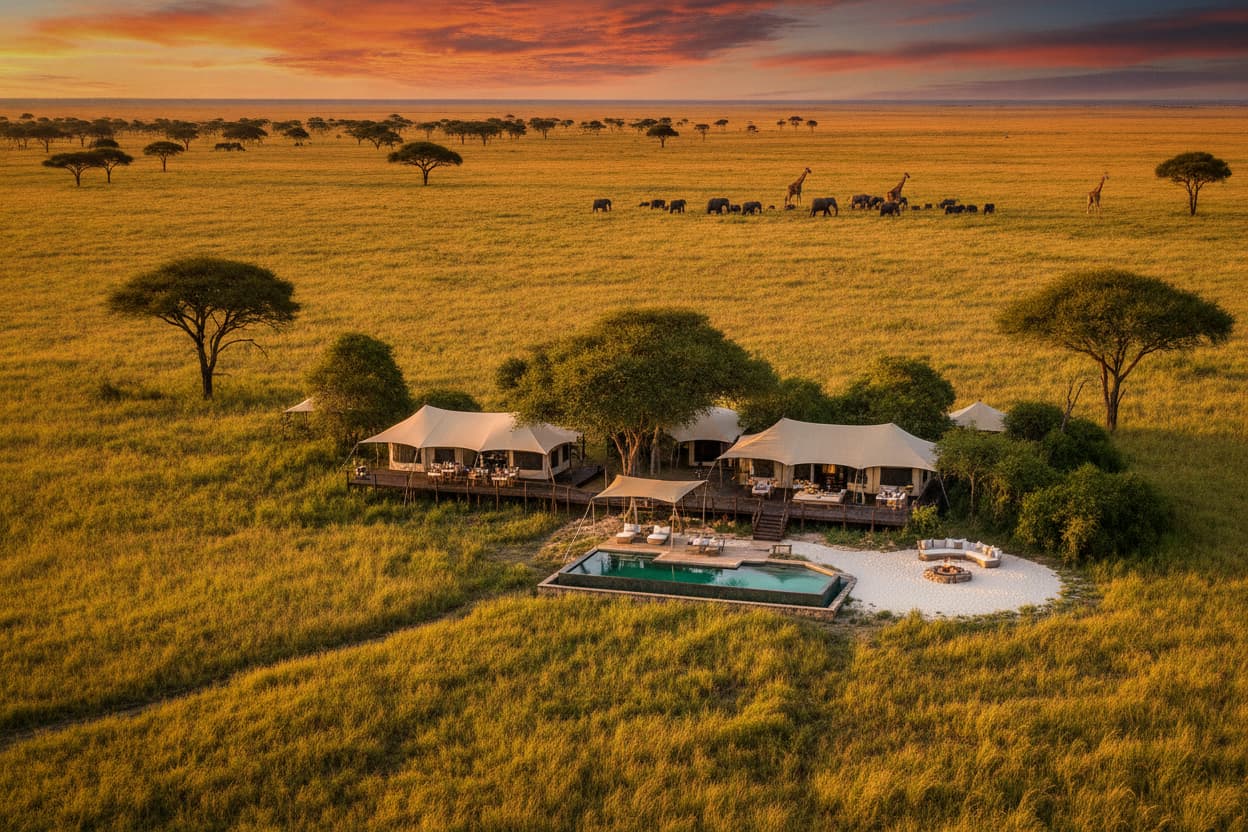
The greatest wildlife show on Earth — endless golden plains where 1.5 million wildebeest thunder across in the Great Migration, lions laze under acacias, and the Ngorongoro Crater holds a Noah's-ark of animals in one caldera. A Tanzania safari is bucket-list travel at its most profound: dawn game drives, sundowners on the savanna, and luxury tented camps that put you in the middle of it. It pairs perfectly with a Zanzibar beach finish.
Free advisor planning includes Fora Reserve hotel perks at no extra cost — or use our AI planner to pace your Serengeti Safari days, pick the right neighbourhoods, and build a route that makes sense.
Serengeti Safari at a glance
- Best time to visit
- The migration moves year-round, so timing is about where, not just when.
- How long to stay
- Plan at least 5–7 nights on safari to cover two or three areas (e.g. Tarangire, Ngorongoro, and the Serengeti) without rushing — plus travel days.
- Budget
- Safari is a premium experience, priced per person all-inclusive of game drives, meals, and park fees.
- Getting there from Canada
- Fly into Kilimanjaro (JRO) — from Toronto, connect via Amsterdam, Doha, Istanbul, or Addis Ababa (~18–22h).
Planning Your Serengeti Safari Trip
Best Time to Visit
The migration moves year-round, so timing is about where, not just when. June–October is the dry season — the best all-round game viewing, and when the dramatic Mara River crossings happen in the northern Serengeti (roughly July–October). January–February is calving season on the southern plains (predator action). November–May is greener, quieter, and cheaper (the 'green season'), with a wetter stretch March–May. Match your camp to the month.
Budget Overview
Safari is a premium experience, priced per person all-inclusive of game drives, meals, and park fees. Mid-range: $500–800/day (comfortable lodges or classic tented camps, shared drives). High-end: $1,000–1,800/day (excellent camps, private-ish guiding). Ultra-luxury: $2,000–4,000+/day (Singita, &Beyond, Four Seasons, private vehicles and guides). Park and conservation fees are steep and included in good packages — budget for tips (guide ~$20–25/day), and add flights between areas.
Getting There
Fly into Kilimanjaro (JRO) — from Toronto, connect via Amsterdam, Doha, Istanbul, or Addis Ababa (~18–22h). From JRO (or Arusha), you reach the parks by light-aircraft flights to bush airstrips (Seronera, Kogatende) or by a scenic-but-long 4x4 drive. Most safaris are arranged as fly-in packages; your camp handles the airstrip transfers. Many add Zanzibar via a short flight to finish on the beach.
Getting Around
By 4x4 safari vehicle with a guide — that's the whole experience. Within a park you game-drive morning and late afternoon; between parks you either fly (fast, scenic) or drive (long, dusty, but you see more country). Everything is arranged by your camp or operator. A private vehicle and guide (vs a shared seat) is the upgrade worth making if budget allows — you set the pace and never miss a sighting waiting on others.
Common Serengeti Safari planning mistakes
Chasing the migration in the wrong place
The herds move all year — the crossings are north (Jul–Oct), calving is south (Jan–Feb). Book the region that matches your dates, not just 'the Serengeti' generically.
Too few nights in the parks
Long travel plus one or two nights leaves you rushed and jet-lagged. Give the safari at least 4–6 nights across two areas to actually settle into it.
Booking the cheapest group truck
A crowded minibus with a rushed guide is a different trip. A private 4x4 and a top guide — or a quality small-group camp — is where the magic is; prioritise the guiding.
Forgetting park fees and tips in the budget
Conservation fees are high (and included in good packages), and tipping guides and camp staff is expected. Factor both in so the quoted rate isn't a surprise.
Skipping travel insurance and medevac
You're remote, far from hospitals. Comprehensive insurance with medical evacuation (and a yellow-fever/anti-malaria plan) is non-negotiable for a safari.
Serengeti Safari Neighbourhoods
Central Serengeti (Seronera)
The classic, wildlife-rich heartland — resident lions, leopards, and cheetahs year-round, and a good all-season base. — best for: first safaris, guaranteed big cats, year-round game
Northern Serengeti (Kogatende / Mara)
The stage for the Mara River crossings (roughly July–October) — dramatic and remote, with fewer vehicles. — best for: the migration crossings, exclusivity
Southern Serengeti (Ndutu)
The short-grass calving grounds — in January–February, hundreds of thousands of wildebeest give birth here, drawing predators. — best for: calving season, big predator action
Ngorongoro Crater
A collapsed volcanic caldera teeming with wildlife, including rhino — one of the densest game-viewing spots on the continent. Usually a day within a wider trip. — best for: the 'Big Five' in a day, dramatic scenery
Tarangire
Baobab-studded plains famous for huge elephant herds, brilliant in the dry season — often the first stop on a northern-circuit safari. — best for: elephants, an easy add-on from Arusha
Zanzibar (beach finish)
A short flight to the Indian Ocean spice island — white sand, turquoise water, and Stone Town — the classic post-safari unwind. — best for: honeymoons, a beach reward after the bush
Serengeti Safari Food & Drink
Camp full-board
All meals are included and often excellent — surprisingly good multi-course dinners under canvas or the stars, wine included at the better camps.
Bush breakfast
A cooked breakfast set up in the open after the dawn game drive — coffee and eggs with a horizon of wildebeest. A safari highlight.
Sundowners
The evening ritual — gin and tonics or a cold Kilimanjaro/Serengeti lager at a scenic spot as the sun drops. Included at most camps.
Nyama choma
Grilled meat, the national favourite — you'll get a version at camp, or the real thing in Arusha before or after the bush. Hearty and simple.
Swahili coast cuisine
If you add Zanzibar, don't miss the coconut-and-spice seafood curries and the Forodhani night-market grills in Stone Town. A few dollars to ~$20.
Tanzanian coffee
Tanzania grows fine arabica on Kilimanjaro's slopes — a plantation tour near Arusha is a good pre-safari morning.
Day Trips from Serengeti Safari
Ngorongoro Crater day
From the crater rimDescend into the caldera for a full day among lions, elephants, flamingos, and the rare black rhino — one of the densest wildlife concentrations anywhere.
Great Migration river crossing
Northern SerengetiIn the northern Serengeti (July–Oct), position for a Mara River crossing — thousands of wildebeest braving the crocodile-filled water. Timing and patience required.
Hot-air balloon safari
Dawn, ~1h flightA dawn balloon flight over the Serengeti plains, drifting above herds, capped by a Champagne bush breakfast on landing. The splurge everyone remembers.
Maasai village visit
Near the craterA guided cultural visit to a Maasai boma near Ngorongoro — a respectful look at pastoralist life, dance, and craft. Choose a reputable, community-run one.
Ready to build your Serengeti Safari days?
Tell us your dates, pace, and interests — we’ll draft a day-by-day Serengeti Safari itinerary in under a minute.
A Sample Serengeti Safari Itinerary
Here’s a flavour of what our AI planner builds. Generate your own personalized Serengeti Safari itinerary in 60 seconds — free.
Arrive → Arusha
- •Land at Kilimanjaro (JRO)
- •Transfer to an Arusha lodge
- •Trip briefing + kit check
- •Rest and adjust after the long flight
Tarangire
- •Drive or fly to Tarangire
- •Afternoon game drive among the baobabs
- •Huge elephant herds
- •Sundowners + camp dinner
Ngorongoro Crater
- •Dawn descent into the caldera
- •Lions, elephants, flamingos, maybe rhino
- •Picnic lunch on the crater floor
- •Overnight on the rim
Into the Serengeti
- •Fly to a Serengeti airstrip
- •Afternoon drive — big cats
- •Optional balloon booked for tomorrow
- •Tented-camp dinner under the stars
Serengeti & migration
- •Dawn balloon safari + bush breakfast
- •Full-day drive tracking the herds
- •River-crossing watch (in season)
- •Final sundowner on the plains
Serengeti Safari Travel FAQ
When is the best time for a Serengeti safari?
June–October is the classic dry-season window with the best game viewing and the northern Mara River crossings (roughly July–October). January–February is calving season in the south. Match your dates to the wildlife you want.
How many days do I need?
Plan at least 5–7 nights on safari to cover two or three areas (e.g. Tarangire, Ngorongoro, and the Serengeti) without rushing — plus travel days. Many add 3–4 nights in Zanzibar.
How much does a safari cost?
It ranges widely — roughly $500/day per person for good mid-range camps up to $2,000–4,000+/day for ultra-luxury (Singita, &Beyond), all-inclusive of game drives, meals, and park fees. Flights and tips are extra.
Is it safe?
Yes, with a reputable operator — you are always with experienced guides, camps are secure, and Tanzania is welcoming. Ensure comprehensive travel insurance with medical evacuation and an anti-malaria plan.
Can I combine it with a beach?
Absolutely — a short flight to Zanzibar for a few days of white-sand beaches and Stone Town is the classic safari-and-sand honeymoon combination.
Fly or drive between parks?
Light-aircraft flights save hours and are scenic; driving is cheaper and shows you more country but is long and dusty. Many itineraries mix both — fly one way, drive the other.
Explore More Destinations
Want Serengeti Safari planned for you?
Your Savvy Jetsetter advisor personally plans Serengeti Safari trips with handpicked hotels, Fora Reserve perks, restaurant bookings, and end-to-end support. Hotel bookings are complimentary; the hotel pays the commission.