Tuscany Travel Planning & Itineraries
By Bobby Atwal, TICO-registered travel advisor (Fora Travel), Toronto · Updated
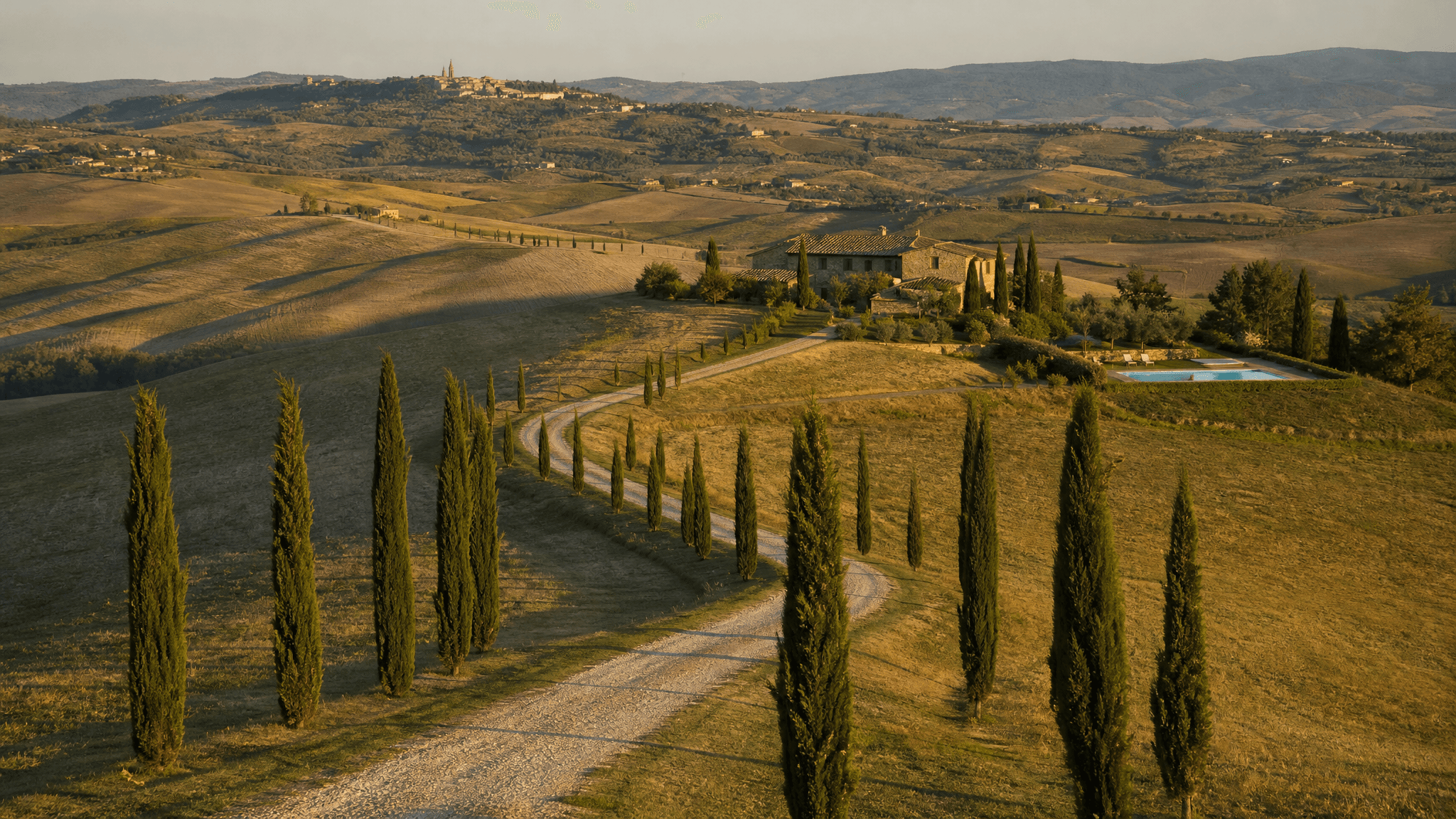
Tuscany is the Italy of cypress-lined drives, hilltop towns, Brunello and Chianti, and long lunches that become dinner. Florence is the gateway, but the trip is the countryside: the Val d’Orcia's rolling fields, Montalcino's wine cellars, Siena's shell-shaped piazza, San Gimignano's towers, and an agriturismo or converted villa with a pool as your base. It's the easiest Italian road trip, the best food-and-wine region in the country, and the trip most couples and families ask me to plan first.
Free advisor planning includes Fora Reserve hotel perks at no extra cost — or use our AI planner to pace your Tuscany days, pick the right neighbourhoods, and build a route that makes sense.
Tuscany at a glance
- Best time to visit
- May to June is perfect — poppies and green hills, warm days (22–28°C), everything open, pools swimmable by June.
- How long to stay
- Seven nights is the classic: Florence plus a countryside base. Ten lets you add Lucca and the coast or a slower pace.
- Budget
- $120–180 USD/day (an agriturismo room, a rental car split two ways, trattoria dinners, €3 cappuccini).
- Getting there from Canada
- Fly into Rome (FCO) or Milan (MXP) nonstop from Toronto (YYZ) on Air Canada (~8.5–9h), then train to Florence (SMN) — 1.5h from Rome, 2h from Milan on Frecciarossa — or pick up a rental at the airport and drive 2.5–3h.
Planning Your Tuscany Trip
Best Time to Visit
May to June is perfect — poppies and green hills, warm days (22–28°C), everything open, pools swimmable by June. September to mid-October is the other peak: the grape harvest (vendemmia), golden light, truffle season beginning, and the Val d’Orcia at its most photogenic. July–August is hot (35°C), crowded in Florence and Siena, but blissful at a villa pool. November to March is quiet, cheap, and lovely for Florence and food; many agriturismi close.
Budget Overview
Budget: $120–180 USD/day (an agriturismo room, a rental car split two ways, trattoria dinners, €3 cappuccini). Mid-range: $350–550/day (a boutique countryside hotel or a villa share, a wine tour, one Michelin lunch). Luxury: $1,000–2,500+/day (Castello di Casole, Rosewood Castiglion del Bosco, Borgo Santo Pietro, COMO Castello del Nero, or a staffed villa with chef — where advisor perks and villa sourcing matter most). Wine tastings are cheap (€15–40); the big spend is the base.
Getting There
Fly into Rome (FCO) or Milan (MXP) nonstop from Toronto (YYZ) on Air Canada (~8.5–9h), then train to Florence (SMN) — 1.5h from Rome, 2h from Milan on Frecciarossa — or pick up a rental at the airport and drive 2.5–3h. Florence (FLR) and Pisa (PSA) work for European connections. For a Val d’Orcia base, collect the car at Florence or Chiusi-Chianciano station rather than driving in the city.
Getting Around
You need a car for the countryside — hill towns, wineries and agriturismi are off the rail network. Pick it up leaving Florence, not inside it, and watch for ZTL zones (restricted historic centres; the fines arrive months later). Driving is easy and scenic; an automatic costs more and should be booked early. For Florence, Siena and Lucca alone, trains and buses are fine. Private drivers (~€500–700/day) are the stress-free luxury for wine days.
Common Tuscany planning mistakes
Driving into a ZTL
Florence, Siena, Lucca and most hill towns have camera-enforced restricted zones. Park outside the walls, always. The €100+ fines arrive 6–12 months later via the rental company.
Basing in Florence for the whole week
Florence is two or three nights. The Tuscany people dream of is a villa or agriturismo in Chianti or the Val d’Orcia, with a pool and a view.
Not booking wineries
Most estates are by appointment, especially in Montalcino. Book tastings a few weeks out; the famous names (Antinori, Biondi-Santi) book months ahead.
Too many towns per day
Three hill towns in a day is a slog. One in the morning, a long lunch, one in the afternoon, then the pool. Tuscany rewards slowness.
Tuscany Neighbourhoods
Florence
The Renaissance capital: Uffizi, the Duomo climb, the Oltrarno artisan district, bistecca at Buca Lapi. Two or three nights before the countryside. — best for: art, first-timers, a car-free start
Chianti
The classic wine hills between Florence and Siena — Greve, Panzano, Radda, Castellina. Stone villas, cypress drives, Sangiovese everywhere. — best for: wine, a central base, couples
Val d’Orcia
UNESCO-listed southern Tuscany: Pienza’s pecorino, Montalcino’s Brunello, Montepulciano’s Vino Nobile, Bagno Vignoni’s hot springs, the Gladiator fields. — best for: photographers, wine lovers, the dream landscape
Siena & San Gimignano
Siena’s Piazza del Campo and Gothic duomo, the Palio in July and August; San Gimignano’s medieval skyline 40 min away. — best for: history, day trips from Chianti, a Palio once in your life
Lucca & the coast
Walled Lucca with its tree-topped ramparts to cycle, Pisa next door, and Forte dei Marmi’s beach clubs for a sea day. — best for: families, cyclists, a Tuscany-with-beach combo
Tuscany Food & Drink
Osteria di Passignano
Michelin-starred Antinori restaurant beside an 11th-century abbey — Tuscan classics elevated, with the cellar tour beforehand. ~€110–150/person. Book well ahead.
Antica Macelleria Cecchini
Dario Cecchini’s butcher-shop restaurants — the Officina della Bistecca is a set menu of beef and bravado at a communal table. ~€50–75/person. Loud, fun, essential.
La Bandita Townhouse Caffè
Modern Tuscan in a converted convent on Pienza’s main street — pici with duck ragù, pecorino tastings. ~€55–70/person. Sunset on the town walls after.
Trattoria Mario
Lunch-only, communal tables, ribollita and bistecca since 1953. ~€20–30/person. Queue before noon; no reservations, no cards.
Enoteca La Fortezza
Brunello flights inside the medieval fortress walls — the easiest way to taste across producers without driving. ~€25–45 per flight.
Day Trips from Tuscany
Val d’Orcia loop
Full day by car from Chianti or SienaPienza → Montepulciano → Montalcino → Bagno Vignoni in one golden day: pecorino, two wine towns, a Brunello cellar visit, and a soak in the thermal pools. The signature Tuscan drive.
Siena & San Gimignano
45 min from Chianti (full day)Morning in Siena’s Campo and duomo, lunch on the Campo, then San Gimignano’s towers and Gelateria Dondoli in the afternoon.
Chianti wine day with a driver
All within 30 min of GreveThree estates (Antinori’s architectural winery, a family cellar in Radda, a Super Tuscan in Castellina), lunch in Panzano, nobody worrying about driving.
Cinque Terre or the coast
2.5h by train (long day)A long day by train from Florence via La Spezia to the five villages, or an easier beach day at Forte dei Marmi. Better as an overnight if you have the time.
Ready to build your Tuscany days?
Tell us your dates, pace, and interests — we’ll draft a day-by-day Tuscany itinerary in under a minute.
A Sample Tuscany Itinerary
Here’s a flavour of what our AI planner builds. Generate your own personalized Tuscany itinerary in 60 seconds — free.
Arrive Florence
- •Train from FCO or MXP to Florence SMN
- •Duomo climb before closing
- •Oltrarno wander and Piazzale Michelangelo at sunset
- •Dinner at a trattoria in Santo Spirito
Florence → Chianti
- •Uffizi at opening (timed tickets)
- •Lunch at Trattoria Mario
- •Collect the car, drive the SR222 to Greve
- •First evening at the villa pool
Chianti wine day
- •Antinori nel Chianti Classico tour
- •Butcher’s lunch at Cecchini in Panzano
- •Family cellar tasting in Radda
- •Sunset in Castellina
Val d’Orcia
- •Pienza pecorino and the town walls
- •Montalcino Brunello at Enoteca La Fortezza
- •Cypress-drive photo stops near San Quirico
- •Hot springs at Bagno Vignoni
Siena → departure
- •Siena’s Campo and duomo in the morning
- •Lunch on the Campo
- •San Gimignano towers and gelato
- •Drive to Florence or Rome for the flight
Tuscany Travel FAQ
Where should I base myself in Tuscany?
Two or three nights in Florence, then four or five in the countryside. Chianti is central and easy; the Val d’Orcia is the dream landscape and better for a second trip or a longer stay. A villa with a pool is the right call for groups and families.
Do I need a car in Tuscany?
For the countryside, yes — wineries, hill towns and agriturismi aren’t reachable by train. Pick it up as you leave Florence. For a Florence-only trip, no.
When is the best time to visit?
May–June and September–mid-October. June for green hills and poppies, September for the grape harvest and golden light. August is hot and busy; winter is quiet and many countryside places close.
How long should I stay?
Seven nights is the classic: Florence plus a countryside base. Ten lets you add Lucca and the coast or a slower pace. Five works for Florence plus Chianti.
Explore More Destinations
Want Tuscany planned for you?
Your Savvy Jetsetter advisor personally plans Tuscany trips with handpicked hotels, Fora Reserve perks, restaurant bookings, and end-to-end support. Hotel bookings are complimentary; the hotel pays the commission.