
The mist is still sitting on the lower terraces when you arrive at Tegalalang at 6:30am. Two farmers are working a field below you, moving slowly, a small flock of ducks threading between the rows. Behind you, somewhere in the tree line, a temple bell. You have this to yourself for roughly 40 minutes -- until the first tour bus arrives at 7:15 and the equation changes entirely.
That gap -- between what Bali actually delivers and what most first-timers experience -- is what this Bali travel guide for 2026 is about. The rice terrace at dawn exists. So does the 9am version with tour groups and matching photo angles. The difference between those two visits isn't a different destination; it's an alarm clock.
Bali has had a rough run of press lately. Overtourism discourse, resentment from locals toward the digital nomad influx, Canggu traffic horror stories, a $10 tourist levy introduced in 2024. Some of this is legitimate and worth knowing before you go. None of it is a reason to skip Bali. It's a reason to stop going without a plan.

What to Expect: Bali Overtourism and the 2026 Reality
The $10 tourist levy is enforced. Pay at arrival at Ngurah Rai International Airport or in advance at lovebali.id. Keep your receipt -- some cultural sites ask for it. The fee is nominal and shouldn't deter anyone. The money is designated for sustainability programs; whether those programs are actually being funded is a separate and messier question. Pay it, keep the receipt, move on.
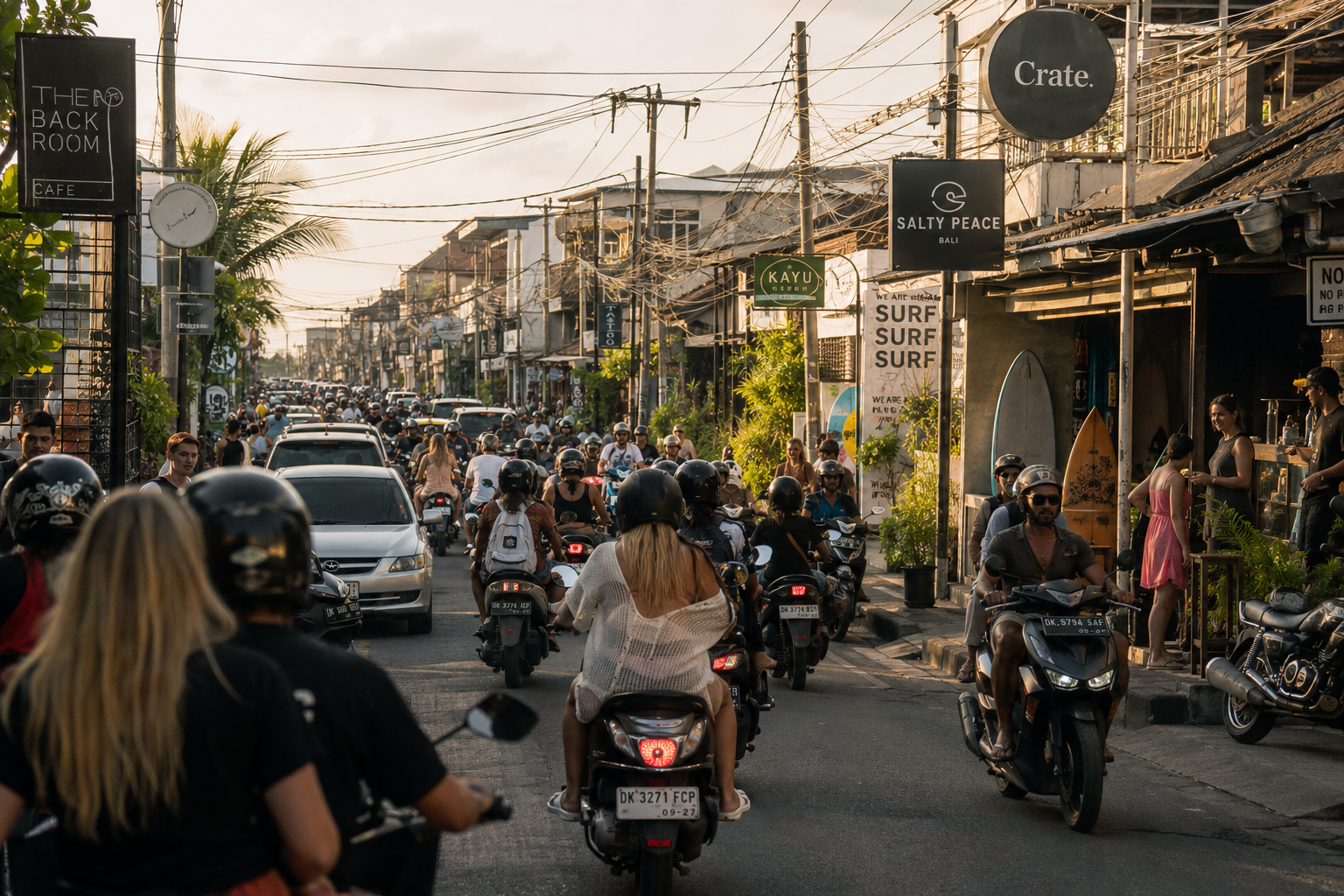
Canggu is overtouristed. Bali overtourism is real, and it's most visible in Canggu: the main road through Berawa and Batu Bolong runs gridlocked between 8am-10am and again 5pm-7pm. On a scooter, you'll weave through it. In a car, add 40% to whatever Google Maps estimates. Canggu is still worth a visit for the right traveler; it's a difficult base for car-dependent sightseeing.
Villa rental rules have tightened. The Balinese government has cracked down on unlicensed short-term rentals, which is good for you as a visitor: check that your villa or boutique hotel has a registration number before booking. Unlicensed properties carry zero legal protection if something goes wrong, and some of the cheapest options on rural roads fall into this category.
Mid-range prices have moved up. A private villa with a pool in Seminyak or Canggu now starts at $80-120/night for something decent. Budget accommodation still exists -- guesthouses near the warungs for $25-40/night -- but the good ones book out 4-6 weeks ahead of high season.
The Neighborhood Decision: Ubud vs Seminyak vs Canggu

Where to stay in Bali for the first time is the most important decision covered in any Bali travel guide for 2026, and the one that gets made on Instagram vibes more often than anything else. The neighborhoods are different enough that choosing the wrong base means a fundamentally different trip.
Seminyak is the right starting point for most first-timers. Twenty minutes from the airport, the densest concentration of good restaurants on the island, and home to the landmark beach clubs -- Potato Head and ATLAS Beach Fest (formerly Ku De Ta, rebranded 2021) are the two you'll see referenced everywhere, and roughly $20-30 minimum spend at either gets you a sunbed and pool access at sunset. Seminyak is busy without being chaotic, and it positions you well for day trips in any direction.
Canggu is 15 minutes north. Surf culture, a cafe every 100 meters, a younger crowd, Batu Bolong black sand beach. If you came to Bali for the digital nomad scene -- working from a rice paddy view, yoga in the mornings, surfing Berawa -- Canggu delivers all of it. Traffic is the cost. If that scene doesn't describe your trip, skip Canggu as a base and visit for a day instead.
Ubud is not the beach. It's inland, cooler at night, and organized around something entirely different: rice terraces, traditional dance, temple ceremonies, cooking classes, yoga retreats. Two hours from the airport in traffic. A different planet in atmosphere. Regardless of where you're staying in Bali, add a minimum of 2 nights in Ubud to your trip. The most consistent thing people say after their first Bali trip is that they wish they'd spent more time there.
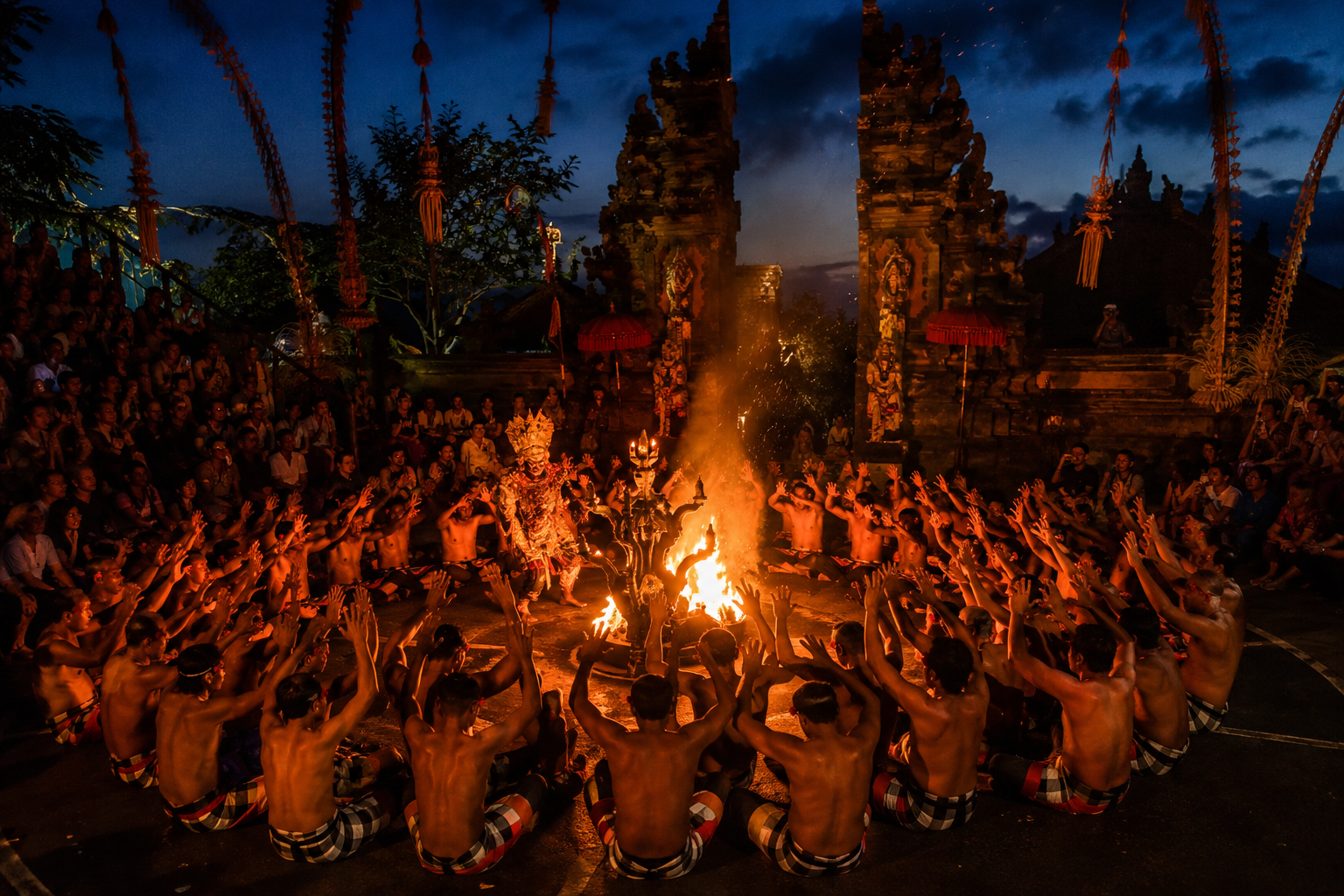
Uluwatu (Bukit Peninsula) is the southern cliff coast -- dramatic limestone, Bali's best surf breaks, and Pura Luhur Uluwatu temple perched above the Indian Ocean. The Kecak fire dance at sunset here earns its reputation. Fewer restaurants than Seminyak or Canggu, but the scenery is better. Best for surfers and travelers who want dramatic coastline over beach club logistics.
Amed and East Bali reward return visitors or people tacking 2 nights onto the end of a longer trip. 2.5 hours from Kuta, volcanic black sand beaches, and the USS Liberty wreck at Tulamben -- a WWII shipwreck sitting partly in shallow water that's accessible to snorkelers, not just divers. Worth the drive if you have the time. Not the right base for a 7-day first visit.
For a day-by-day itinerary that sequences these neighborhoods without burning half your trip in transit, build a free Bali itinerary -- it takes around 60 seconds and works from your dates, group size, and travel style.
What's Actually Worth It
Tegalalang Rice Terraces. Already covered the timing: 6:30am, not 9am. Entry is roughly $2 at the gate. Walk past the main viewpoint and the terraces extend another 300 meters -- quieter sections, better light, the same view without the shoulder-to-shoulder crowd. No guide needed; the path is self-explanatory.
Ubud Traditional Dance. Watch one performance. Legong at the Ubud Palace runs most evenings at 7:30pm for around $10. Kecak at Uluwatu -- fire, cliff edge, ocean backdrop, sunset as the backdrop light source -- is the more theatrical version and worth the extra drive. Both are genuine cultural performances, not recreations built for tourist consumption. Skipping both is the most common miss on a Bali trip.
Mount Batur Sunrise Hike. Active volcano, 1,717 meters. Leave the trailhead at 3am, hike 2 hours in the dark, watch the sun come up from the crater rim with Lake Batur below you. $35-50/person including a guide, which is required by local law. Moderate difficulty -- steep but not technical. The crater rim view at 5:30am, with Lombok's Rinjani volcano visible on the horizon, is the kind of thing you'll try to describe to people and fall short.
Nusa Penida Day Trip. A 45-minute fast ferry from Sanur. Kelingking Beach -- the T-Rex cliff viewpoint -- is the most photographed place in Bali, and the hike down to the actual beach takes 45-90 minutes each way on steep, loose ground. If you're in reasonable shape, do it. $20-30 round-trip ferry, $10-15 for a scooter rental on the island, which you need because Nusa Penida has no taxi infrastructure.
One Beach Club. Go once. Potato Head (Seminyak) or Finns (Canggu) are the reliable options -- $25-40 minimum spend for a sunbed, pool access, and a cocktail at sunset. It's not overpriced for what it is. Do it once, check it off, and spend the rest of your trip at the warungs.
What's Overpriced (Honest Edition)
Jalan Hanoman in Ubud. The main tourist restaurant strip has good food at prices 30-40% higher than the same dishes two streets away. Walk one block off the main drag and prices reset. The best meals in Ubud are in the smaller warungs you'll walk past on the way somewhere else.
Guided tours to Tanah Lot. The sea temple on a rock surrounded by surf is worth visiting, especially at sunset when the light hits the wet rock. Most tour operators charge $40-60 for a 15-minute stop as part of a multi-temple circuit. Rent a scooter or hire a private driver ($25-40/day) and go independently instead. The rice paddy drive through Tabanan on the way there is worth at least as much as the temple.
The swing photos. Privately operated novelty setups on private land, not connected to any cultural site or natural wonder. The Bali swing photo costs $30-50 for roughly three minutes of shooting time. If that specific image matters to your trip, fine -- but it belongs on no honest list of Bali experiences.
Cheap cooking classes. There's a genuine quality gap at the $15-20 price point. The good classes -- Casa Luna and Bumbu Bali in Ubud are the established benchmarks -- include a market visit, hands-on cooking of four to five dishes, and recipes worth keeping. They run $35-50/person. The budget options are largely performative, with minimal instruction and food you'd have enjoyed more at a restaurant. Pay the difference.
For a full breakdown of Bali accommodation picks, neighborhood restaurants, and what to book in advance vs. leave flexible, visit our destination guides.
Bali Travel Guide 2026: Budget Reality
Any honest Bali travel guide 2026 has to address cost directly: Bali is no longer cheap Southeast Asia. The mid-range ceiling has moved, and the budget floor requires more effort than it used to.
- Budget (2 people): $50-70/day. Guesthouse rooms, warung meals ($3-8/dish), scooter transport, no beach clubs.
- Mid-range: $130-200/day. Private villa with pool, sit-down restaurants, occasional private driver. Where most first-time English-speaking visitors actually land.
- Luxury: $350+/day. Resort stays, daily spa, beach clubs, private guide.
- Scooter rental: $5-8/day -- the right way to get around if you've ridden before. See below.
- Private driver: $40-55/day for a car and driver. Excellent value for groups of three or more, families, or anyone not confident on a scooter.
The tourist levy adds $10 once per trip. Factor in the Nusa Penida ferry ($25), the Mount Batur hike ($45), and one beach club day ($35), and your experiences budget for a 10-day trip runs roughly $300-400/person separate from accommodation and food.
Common Mistakes That Ruin Bali Trips
Staying only in Canggu or Seminyak. You'll leave having experienced the beach strip and the cafe scene -- the least interesting version of Bali. Ubud is not optional for a first trip. The food is different, the pace is different, the things worth doing are entirely different. Two nights minimum. If you skip it, you'll be back within a few years specifically to fix that.
Renting a scooter without prior experience. Bali roads mix potholes, tourist drivers, local trucks, stray dogs, and variable road markings. Tourist accident rates are high -- not as a statistic to dismiss, but as a daily reality you'll see evidence of at the hospital near Seminyak. If you have not ridden a motorbike before -- not a bicycle, a motorbike with a throttle -- hire a driver for $40-55/day instead. A serious accident in Bali typically requires a medical flight to Singapore or Australia. Without coverage, that flight alone costs $15,000-30,000.
Skipping travel insurance with medical evacuation. This applies to everyone, not just scooter riders. Standard medical care for serious injuries in Bali is limited. Emergency evacuation is the standard response for major incidents. A policy that doesn't explicitly cover medical evacuation leaves you exposed in the scenario that matters most. Buy coverage before you leave.
Arriving at Tegalalang after 8:30am. The 6:30am visit and the 9:30am visit are not the same place. Set the alarm.
Leaving Ubud accommodation to the last minute. Good private villas and boutique hotels in Ubud book out 4-8 weeks ahead during July-August and December-January. Book Ubud first, then build the rest of the itinerary around it.
Walking into the Monkey Forest without knowing what you're walking into. The Sacred Monkey Forest is worth visiting. The macaques will also take glasses off your face, pull at open bags, and grab anything you're holding near them. Secure everything before you enter, keep bags closed, don't hold food in the open. Go in knowing this and it's entertaining. Go in expecting a peaceful nature walk and it will be alarming.
Is Bali Still Worth Visiting in 2026?
Yes -- with the condition that you plan for the Bali that exists in 2026, not the one from the travel magazine you read five years ago. The Bali travel tips for 2026 that actually move the needle are almost entirely about timing and location choice, not destination selection.
For travelers who get to Tegalalang before the crowds, base themselves strategically, and spend real time in Ubud instead of only the beach strip, Bali delivers what it promises. The crater rim at 5:30am. The Kecak dance against a cliff-edge sunset. A temple procession you walk into by accident on a Tuesday afternoon in Ubud. These are real, and they don't require extraordinary effort -- just being in the right place at the right time.
Practical upshot of this Bali travel guide 2026: timing (earlier than the crowd), base selection (Ubud for culture, Seminyak for logistics, Canggu if you want the nomad scene), and not skipping the parts that require planning. Bali overtourism is real in the congested tourist zones; it disappears 20 minutes outside them.
For a personalized day-by-day Bali itinerary built around your travel dates and preferences, generate one free at savvyjetsetter.ca/plan. For a fully planned trip with hotel picks, VIP perks, and experience booking handled by an advisor, submit an inquiry.