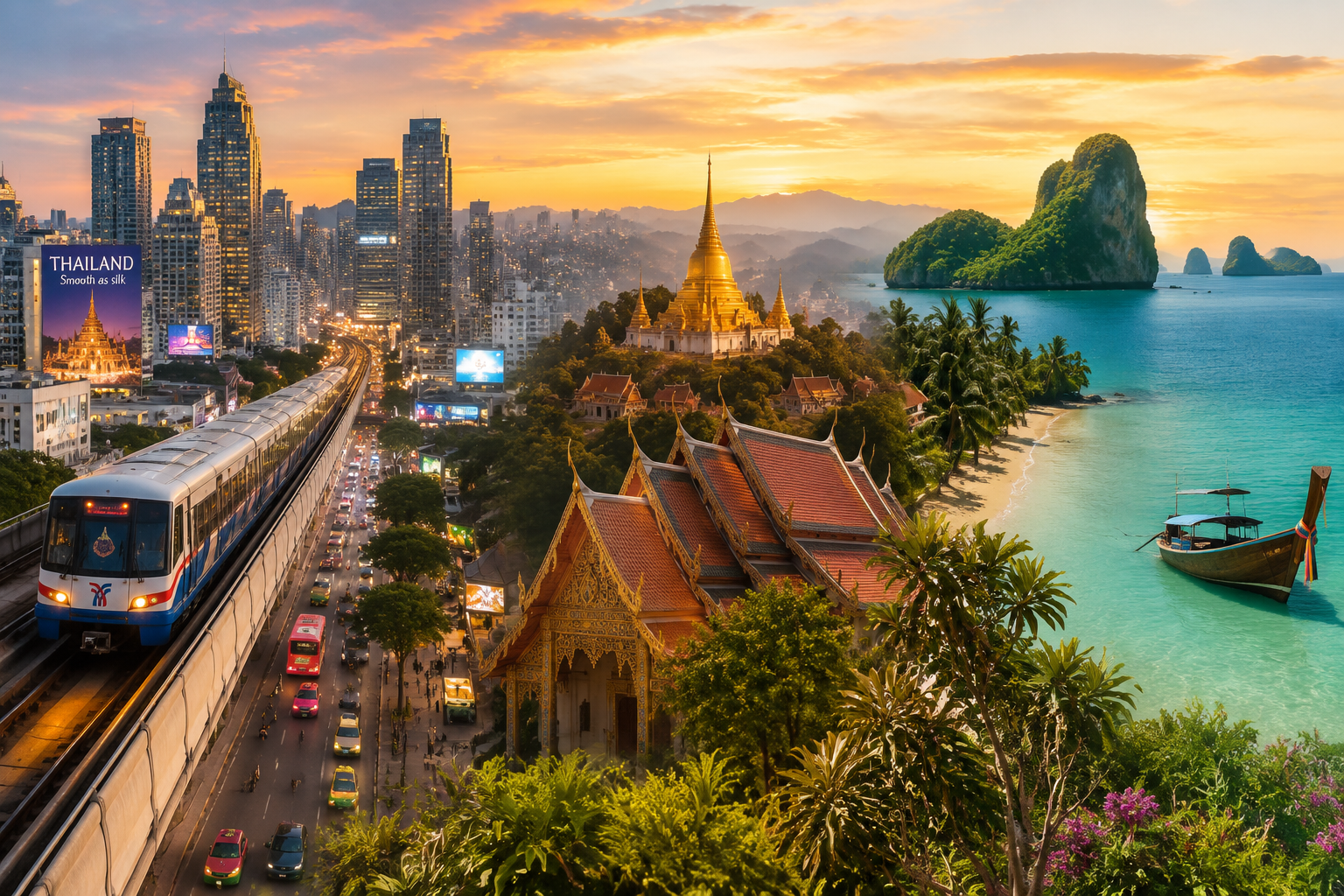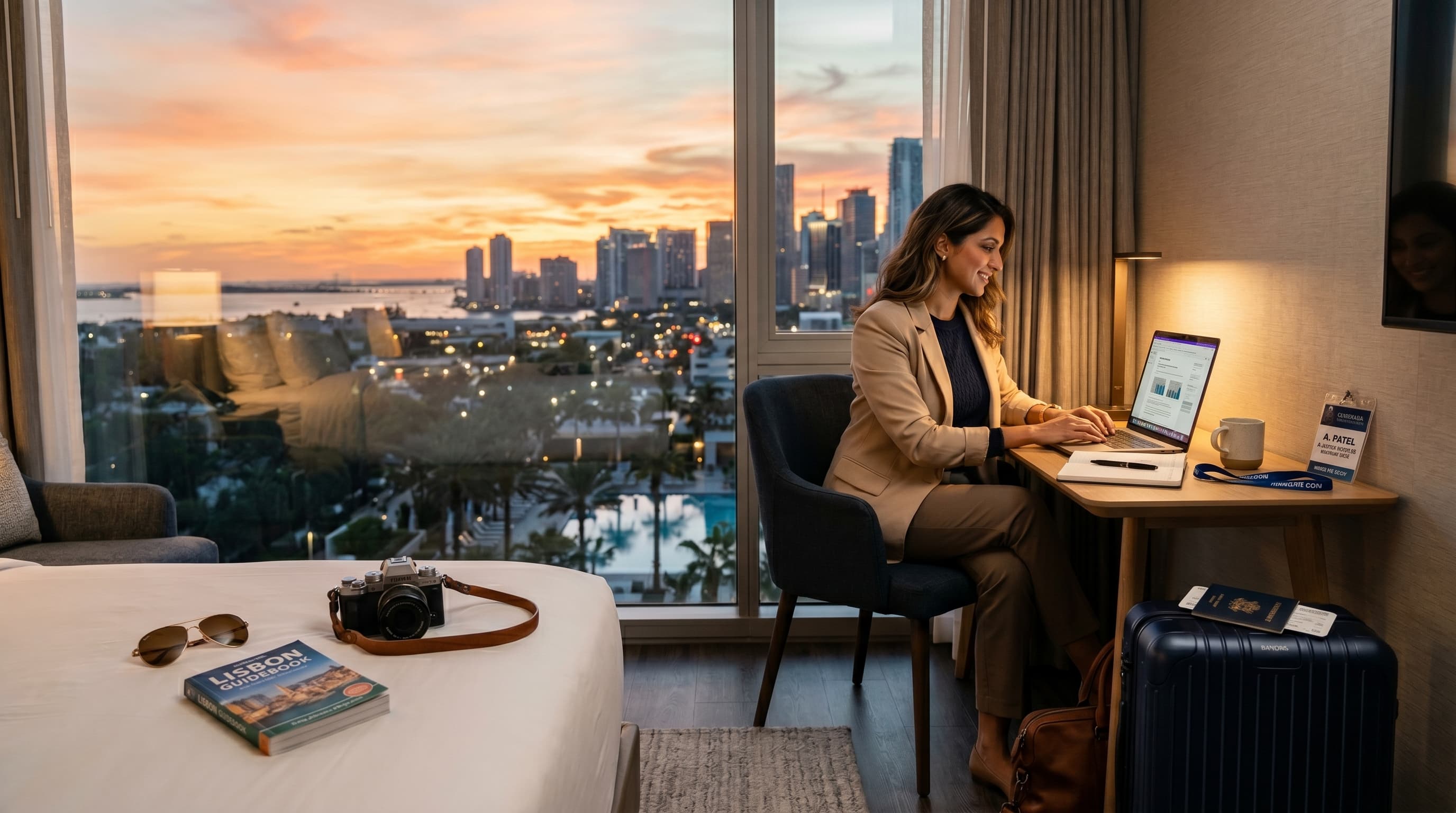
Last October I flew to Singapore for a three-day fintech conference. The company covered flights, hotel, and meals through Thursday evening. I stayed until Monday. Those extra three days, spent wandering hawker centres in Tiong Bahru, taking a morning ferry to Pulau Ubin, and eating chilli crab at no particular speed, turned what would have been another forgettable work trip into one of my favourite travel memories of the year.
This is bleisure travel. A 2024 Skift survey found that 89% of business travellers have added leisure days to at least one work trip, and the number keeps climbing. The logic is simple. You're already there. The flight is paid for. And the hardest part of any trip, getting yourself to the destination, is already handled.
Here's how to turn a work trip into a vacation without overcomplicating it, annoying your employer, or burning out trying to do too much.
Start with your company's travel policy (seriously)
This is where most people skip ahead and later regret it. Before you book a single extra night, read your employer's travel policy. Most companies are fine with employees extending business trips for personal time, but the specifics matter.
Key questions to answer before you commit:
- Who covers the extended hotel nights? Most policies draw a clear line. The company pays through your last business day, and you pay from there. Some require you to switch hotels or rebook under a personal card.
- Does travel insurance still apply? Corporate travel insurance almost always ends when the business purpose ends. You'll need personal coverage for your leisure days.
- Are there per diem implications? Some companies claw back per diem if you extend. Others simply stop paying it. Know which applies.
- Do you need formal approval? A quick email to your manager or travel coordinator is usually enough, but some companies require a written request, especially for international destinations.
The conversation with your manager doesn't need to be complicated. Something like: "The Barcelona conference ends Thursday afternoon. I'd like to stay through Sunday on my own dime and fly back Monday. Does that work on your end?" In most workplaces, this is a non-issue. In some, it requires a paper trail. Either way, asking first saves you from an awkward expense report conversation later.
The best cities to turn a work trip into a vacation
Not every conference city rewards a long weekend. Some are built for it. Here are the cities where the transition from business to leisure feels effortless.
London
Conference districts like Canary Wharf and the South Bank are well connected to everything worth staying for. After your last meeting, you're twenty minutes from Borough Market, an evening at the Barbican, or a slow Saturday in Hampstead Heath. Stay in Bermondsey or Shoreditch for your leisure days. Both neighbourhoods have excellent restaurants without the central London price tag. Try Padella near Borough Market for handmade pasta that justifies any queue, or The Marksman in Hackney for a properly elevated pub lunch.
Singapore
One of the easiest bleisure cities in the world. It's safe, compact, and the public transit is flawless. Move from your Marina Bay Sands conference hotel to a boutique stay in Tiong Bahru or Kampong Glam for your personal days. Eat at Lian He Ben Ji Claypot Rice in Chinatown Complex (the queue is part of the experience), and spend a morning on the Southern Ridges walk, a canopy trail through the jungle that most conference attendees never hear about.
Tokyo
Business travel to Tokyo usually means Marunouchi or Shinjuku. For your leisure extension, base yourself in Shimokitazawa or Yanaka. They're quieter, deeply local, and far more interesting than staying near Tokyo Station. The transition from suit-and-laptop to wandering the backstreets of Kagurazaka is one of travel's great pleasures. Don't miss Yakitori Alley under the tracks at Yurakucho for post-conference drinks that cost almost nothing and taste like they should cost much more.
Barcelona
The Fira Gran Via convention centre is purpose-built for massive conferences (Mobile World Congress alone brings 100,000 people). The city rewards you for staying. After your event, relocate to Gràcia. It feels like a small town inside a major city, with quiet plazas, independent shops, and restaurants where locals outnumber tourists. La Pepita does some of the best tapas in the city without the Gothic Quarter markup.
Dubai
A growing hub for conferences in finance, tech, and real estate. The business infrastructure is world-class, and the leisure side has matured a lot in the last few years. After your event, spend a morning in the Al Fahidi Historical Neighbourhood. It's a completely different feel from the glass-tower conference district. Al Ustad Special Kabab in Bur Dubai has been serving outstanding Iranian food since 1978 and remains one of the best meals in the city for under $15 USD.
How to pack for dual-purpose travel
Packing for bleisure travel is a skill, and the mistake most people make is packing two separate wardrobes (the work clothes and the vacation clothes) and ending up with a checked bag they resent hauling around.
The better approach is to build a capsule that does both. Here's the framework:
- One blazer or structured jacket that works over a dress shirt for meetings and over a t-shirt for dinners.
- Dark jeans or chinos that read professional enough for business casual settings and comfortable enough for walking ten kilometres through a new city.
- Two collared shirts for work days, plus two casual tops for leisure days.
- One pair of shoes that crosses over. Clean leather sneakers (like Common Projects or Koio) or minimal dress shoes that don't destroy your feet on cobblestones.
- Compression packing cubes. Separate your work and leisure clothing so you're not digging through your entire bag every morning.
The goal is a single carry-on. If your work trip requires a full suit, wear it on the plane and pack everything else. The less you carry, the easier the transition feels.
Using business travel perks for your leisure extension
This is where bleisure travel gets genuinely strategic. Every work trip generates loyalty currency: airline miles, hotel points, status credits. Most professionals let these accumulate passively without a plan. Your bleisure extension is the perfect time to deploy them.
Hotel points and status
If your company books you into a Marriott, Hilton, or IHG property for the work portion, you're earning points and status nights automatically. Use those points to cover your leisure nights at the same property or a sister property in a better location. Marriott Bonvoy Platinum status (earned at 50 nights) gets you room upgrades, lounge access, and late checkout. All three are far more valuable during leisure days than during a conference, when you're out of the room by 7:30 AM anyway.
Pro tip: if you're staying at a chain hotel for work and want something more interesting for leisure, check whether the loyalty programme includes boutique brands. Marriott's portfolio includes Design Hotels and The Luxury Collection. Hilton includes Canopy and Tapestry. You can burn points at properties that don't feel like corporate hotels at all.
Airline miles and upgrades
Business travel often means economy flights booked through a corporate portal. The miles still accrue to your personal account. If you've banked enough for an upgrade on the return leg, your leisure extension might mean flying home in business class on a ticket your company paid the base fare for. The timing helps too. Flying home on a Sunday or Monday instead of the Friday everyone else leaves makes upgrade availability much more likely.
Credit card benefits
If you're putting conference meals or ground transport on a personal travel card (and expensing them later), those purchases are earning you points too. Cards like the Chase Sapphire Reserve or Amex Platinum offer 3x to 5x points on dining and travel, and those points compound with what you're already earning from the flights and hotels.
Planning your leisure days (without over-scheduling them)
The single biggest mistake people make when they turn a work trip into a vacation is treating the leisure portion like another packed itinerary. You've just spent three days in back-to-back meetings, conference dinners, and hotel breakfasts. Your leisure days should feel different. Not just in content but in rhythm.
A good rule: plan one anchor activity per day and leave the rest open. That anchor might be a neighbourhood you want to explore, a restaurant you've booked for dinner, or a specific museum. Everything else happens organically. Some of the best bleisure moments I've had came from having nowhere to be: finding a courtyard café in a neighbourhood I wandered into, or spending two hours in a bookshop I passed on the way to somewhere else.
If you want a structured starting point, the Savvy Jetsetter AI planner lets you generate a custom itinerary based on your dates, budget, and interests. It's useful for bleisure specifically because you can input just the leisure days and get recommendations calibrated to a shorter stay. It gives you focused, neighbourhood-level suggestions instead of the generic "top ten things to do" list.
Common mistakes when combining work and leisure travel
Bleisure travel is straightforward in principle, but a few traps catch people repeatedly.
Not checking visa implications for extended stays
This mostly affects travel outside your home country's visa-free zone. A business visa and a tourist visa are different instruments in many countries. If your company secured a business visa for a four-day conference, staying an extra five days for tourism may technically require a different visa category, or at minimum a different stated purpose at immigration. Countries like China, India, and Russia are strict about this. Southeast Asian nations are generally more relaxed, but "generally" is not a policy you want to rely on at a border crossing.
Do the research. For most Western passport holders travelling to common conference destinations (UK, EU, Japan, Singapore, UAE), a standard entry stamp covers both business meetings and tourism. Verify it for your specific passport and destination combination.
Over-scheduling your leisure days
I mentioned this above, but it bears repeating because almost everyone does it. You do not need to see every major attraction in Barcelona because you happen to be there. Pick the two or three things that genuinely interest you. Leave room for the unplanned. The point of extending a work trip is to actually experience a place, not to speedrun a sightseeing checklist.
Forgetting to switch your mindset
This one is subtle but real. After three days of networking, presentations, and professional performance, many people struggle to actually relax. They keep checking Slack. They eat at the hotel restaurant out of inertia. They stay in the business district because it's familiar. Actively break the pattern. Move to a different neighbourhood. Silence notifications for a few hours. Eat somewhere your colleagues would never find. The transition from work mode to leisure mode doesn't happen automatically. You have to create it.
Not budgeting the leisure portion separately
Your company covers the work days. Your leisure extension (hotel, meals, transport, activities) comes out of your own pocket. It's easy to underestimate this because the trip feels partially free. Budget your leisure days as you would any personal trip. A useful benchmark: plan for $150 to $250 USD per day in Western European cities, $80 to $150 USD in Southeast Asian cities, and adjust from there based on your comfort level.
Ignoring travel insurance for personal days
Corporate travel insurance typically covers you only during the business portion of your trip. The moment your conference ends and your leisure days begin, you may be uninsured. Buy a short-term personal travel insurance policy that covers your extension. It's usually under $30 USD for a few extra days and covers medical emergencies, trip interruption, and lost belongings.
A framework for your next bleisure trip
If you're ready to turn your next work trip into a vacation, here's a simple checklist:
- Four weeks out: read your company's travel policy. Send the approval email to your manager.
- Three weeks out: book your leisure accommodation separately. Consider switching neighbourhoods from the business district.
- Two weeks out: check visa requirements for an extended stay. Buy personal travel insurance for the leisure portion.
- One week out: pack a dual-purpose capsule wardrobe. Download offline maps for the neighbourhoods you want to explore.
- Day of transition: physically leave the conference hotel or business district. Change clothes. Put your laptop away. The work trip is over. The vacation starts now.
For destination-specific planning, Savvy Jetsetter's destination guides cover dozens of cities with neighbourhood breakdowns, restaurant recommendations, and logistics that are particularly useful when you only have a few days to work with.
The bottom line
Bleisure travel isn't a hack or a loophole. It's a practical recognition that business travel puts you in interesting places, and staying a few extra days is one of the most efficient ways to see the world. The flights are covered. The status is earned. The only thing standing between your next conference and a real travel experience is a bit of planning and a conversation with your manager.
If you want personalised recommendations for what to do with those extra days (restaurants, neighbourhoods, day trips calibrated to your actual interests), try the Savvy Jetsetter AI planner. It takes about five minutes, and the suggestions tend to be the kind of places a well-travelled friend would text you, not the first page of a Google search.
Your next work trip doesn't have to end when the conference does. Make it count.