A friend was three clicks away from booking a $4,200 CAD group tour of Japan. Then she did the math. Same 14 days, same bullet trains, same temples, planned herself, came in at $3,400 CAD all-in. She ate better, slept later, and skipped the matching headsets entirely. That trip became her benchmark for every holiday since.
Japan is the most-searched travel destination of 2026, and there's a reason for that. It's safe, the public transport is unreasonably good, and the whole country runs on a level of precision that makes independent travel feel almost easy. A self-guided Japan itinerary is not just doable. For most travellers, it's the better version of the trip. This guide walks you through how to do Japan independently, from the moment you land at Narita to your last evening in Hakone.
Why self-guided Japan beats the tour bus
Tour groups are designed to reassure first-timers. They also guarantee you'll be at Fushimi Inari at 10 a.m. with a thousand other people, leave before the crowds thin, and eat at restaurants pre-selected for Western palates.
When you plan independently, you get to time things properly. You book the hotel that suits your pace. You linger at Nishiki Market until you've tried everything. You catch the early Shinkansen when you want to, not when 22 other people have agreed on a departure time.
The logistics worry people who haven't been yet. They shouldn't. Japan has some of the best public infrastructure in the world, and once you understand two key tools, getting around is straightforward.
Before you go: two things you cannot skip
JR Pass
Buy it before you leave home. It's cheaper that way and you can't get the same rate inside Japan. The pass covers most Shinkansen travel and regional JR lines, which is the backbone of any Japan 2 week itinerary self guided. A 14-day pass runs roughly ¥70,000 (approx. $620 CAD / $480 USD). It pays for itself by Day 4 once you factor in the Tokyo–Kyoto leg alone.
Note: The JR Pass does not cover Nozomi or Mizuho Shinkansen services. Use the Hikari or Sakura instead. They run constantly and take about 20 minutes longer.
IC Card (Suica or Pasmo)
Pick one up at the airport the moment you land. Load ¥5,000 on it and you're set for days. It works on subway systems, local buses, and at convenience stores and vending machines. Fumbling for coins to buy individual ¥210 subway tickets wastes 20 minutes a day, and there's no reason to put up with it.
With those two sorted, the rest of your Japan trip planning tips fall into place.
Your 2-week self-guided Japan itinerary, day by day
Days 1–4: Tokyo
Where to stay: Sequence Miyashita Park, Shibuya. It sits directly above the redesigned Miyashita Park, which puts you in the middle of Shibuya without the worst of the tourist congestion. Rooms from approx. ¥25,000/night (~$220 CAD / $170 USD). Book early; it fills fast on weekends.
Day 1 — Arrive and recover. Land, activate your JR Pass, pick up your IC card, get to the hotel. Don't plan sightseeing on arrival day. Get a bowl of ramen at Ichiran in Shibuya (the private-booth setup requires zero social energy, which is exactly what you need after a long-haul flight) and then sleep.
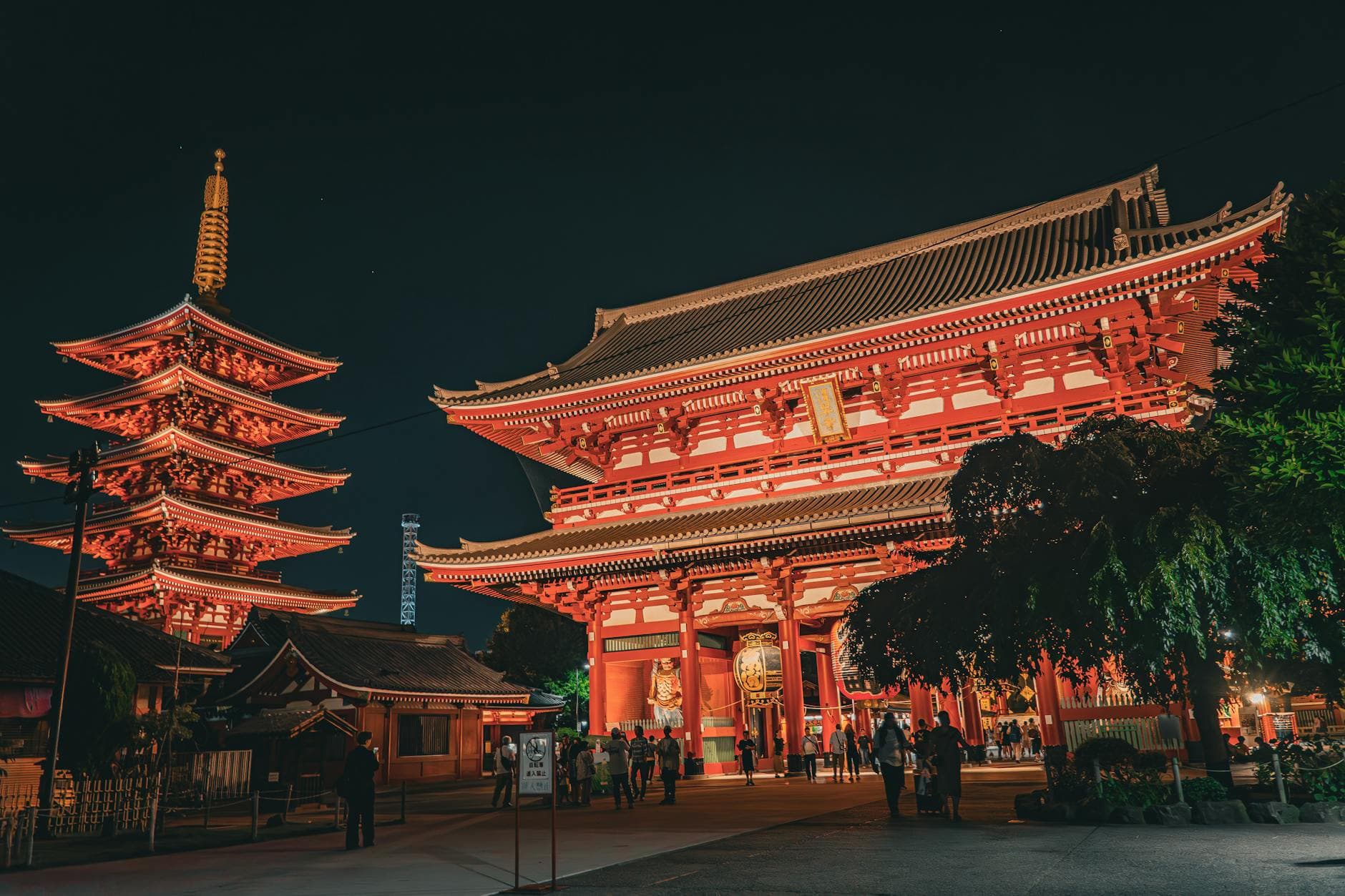
Day 2 — East Tokyo. Be at Senso-ji Temple in Asakusa before 8 a.m. By 9 a.m. it's thick with visitors; before that, it's still and worth the early alarm. Walk the Nakamise-dori stalls, pick up a ningyo-yaki from one of the older vendors, and work your way to Ueno. Afternoon: Akihabara if electronics or anime interest you, Yanaka if they don't. Yanaka is older, lower-rise, and feels like a different decade.
Day 3 — West Tokyo. Harajuku's Takeshita Street for street fashion, then Meiji Shrine as a counterpoint. Same neighbourhood, entirely different register. Walk Omotesando for architecture and food, then end in Shinjuku. The Golden Gai, a warren of tiny bars tucked into back alleys near Kabukicho, is worth a drink at dusk.
Day 4 — Shibuya and surrounds. Shibuya Crossing at rush hour is something you need to see once. The best vantage point is the second-floor Starbucks on the corner. Daikanyama and Nakameguro are walkable and better for a slower afternoon: good independent coffee shops, the canal lined with cherry trees or summer greenery depending on your season.
Days 5–8: Kyoto
Take the Shinkansen Hikari from Tokyo Station. About 2 hours 20 minutes to Kyoto. Your JR Pass covers it entirely.
Where to stay: The Celestine Kyoto Gion. Set in the Gion district, this is the right address for Kyoto: a short walk from Hanamikoji Street, close to Yasaka Shrine, and well-positioned for the eastern temple circuit. Rooms from approx. ¥28,000/night (~$245 CAD / $190 USD).
Day 5 — Gion and Higashiyama. Arrive mid-morning. Spend the afternoon on the stone-paved lanes of Ninenzaka and Sannenzaka before the afternoon crowds settle in. Dinner in Gion: Okutan Nanzenji for traditional tofu kaiseki, or a simpler set menu at Gion Kappa. Either way, eat early. Kyoto kitchens often close their last seating by 9 p.m.
Day 6 — Fushimi Inari and Nishiki Market. Be at Fushimi Inari Taisha by 7 a.m. The thousands of torii gates feel different when the morning mist is still on them and the path is quiet. Back to central Kyoto by 10, then spend a proper hour at Nishiki Market. The covered arcade runs five blocks and is the best place in the city to eat your way through lunch: grilled cuttlefish skewers, fresh pickles, matcha soft-serve from Tsujiri, tamagoyaki hot off the pan.
Day 7 — Arashiyama. Read the Common Mistakes section before you plan this day. Set an early alarm, be at the bamboo grove by 6:30 a.m., and you'll have it nearly to yourself. Afterwards: Tenryu-ji garden is a two-minute walk and worth it. Rent a small wooden boat on the Oi River for an hour. Lunch at a riverside tofu restaurant before heading back to Gion.
Day 8 — Temple circuit or Nara day trip. Kinkaku-ji (the Golden Pavilion), Ryoan-ji for the rock garden, Nijo Castle. All manageable in a single day. Or take the JR Nara Line to Nara (45 minutes) to walk among the deer in Nara Park and see Todai-ji, one of the largest wooden structures in the world. The Nara day trip is especially useful if Kyoto temple fatigue is setting in.
Days 9–11: Osaka
Osaka is a 15-minute Shinkansen hop from Kyoto, or a 75-minute local JR ride that also works.
Where to stay: Cross Hotel Osaka or Dormy Inn Premium Namba. Both central, both well-priced at roughly ¥15,000–18,000/night (~$130–$160 CAD). In Osaka, location matters more than design credentials.
Osaka is best understood as a food city. Dotonbori for takoyaki and okonomiyaki. Kuromon Ichiba Market for wagyu beef, crab claws, and produce eaten standing at stall counters. One dinner at a proper kushikatsu restaurant in Shinsekai, the old-school neighbourhood south of Namba, rounds out the trip without requiring advance reservations.
Day 10: Osaka Castle in the morning, then a slow afternoon at Kaiyukan, one of the largest aquariums in the world. Time it for late afternoon when the light is coming through the whale shark tank.
Days 12–14: Hakone or Hiroshima
Option A — Hakone: Two nights in a traditional ryokan with an outdoor onsen and a view of Mount Fuji on clear mornings. The Hakone Open-Air Museum justifies a half-day. Your JR Pass covers the route to Odawara; from there, the Hakone Free Pass handles local transport (about ¥6,100 / ~$54 CAD).
Option B — Hiroshima and Miyajima: The Peace Memorial Museum is important and sobering. Set aside two hours, not one. Miyajima Island, with its floating torii gate of Itsukushima Shrine, deserves a full afternoon at high tide. Staying overnight on the island means you have it to yourself at dawn, which is worth the logistics. Both destinations are covered by your JR Pass.
For the best places to visit in Japan for first timers, most travellers who have done this route would tell you the same thing: if you have 14 days, don't swap Kyoto days for more Tokyo time. Kyoto needs more than you think to feel rather than tick off.
Common mistakes on a self-guided Japan itinerary
1. Underestimating temple fatigue. By Day 8, every wooden gate and gravel garden starts to blur into the last one. Build in deliberate non-temple days: Osaka's food streets, a slow morning at a Kyoto kissaten (old-style coffee shop), an afternoon in Tokyo with no agenda. The itinerary above does this. Resist the urge to fill those gaps with more shrines.
2. Not booking Arashiyama at dawn. This is the most consistent planning error in Kyoto. Mid-morning in the bamboo grove means queuing for a usable photograph between two walls of visitors and tour groups. Going at 6:30 a.m. means near-silence, and the grove is what you came for. Set the early alarm. You'll be back at your hotel before most people have left for breakfast.
3. Skipping the IC card. Buying individual subway tickets for every Tokyo or Osaka journey adds up to 20 minutes of confusion per day. Load a Suica or Pasmo with ¥5,000 at the airport, top it up at any convenience store machine, and never think about it again. It also pays at 7-Eleven, Lawson, and FamilyMart, which matters when you're eating two meals a day from convenience stores (and in Japan, that is not a hardship).
4. Over-scheduling Tokyo. Four days isn't a lot. Three isn't enough. Tokyo rewards wandering more than scheduled sightseeing. Some of the best hours are spent getting slightly lost in Shimokitazawa or following a side street in Koenji with no destination in mind. Protect at least one afternoon per Tokyo block with nothing on it.
5. Assuming the JR Pass covers everything. It doesn't cover Nozomi or Mizuho Shinkansen, Tokyo Metro or Osaka Metro lines, or Kyoto city buses. Hikari Shinkansen works fine and runs constantly. Use your IC card for urban metro networks. Budget an extra ¥10,000–15,000 (~$90–130 CAD) for transport gaps across the full two weeks.
Plan your own version
The itinerary above is a strong foundation, but the most honest Japan travel guide 2026 advice is this: the trip works best when it's built around your pace, not a generic template. Some travellers want five nights in Kyoto. Others will spend an extra day in Tokyo and skip Osaka entirely. A solo traveller moves differently than a couple or a family.
Generate your personalised, day-by-day self-guided Japan itinerary, including accommodation tiers, transport sequencing, and daily suggestions matched to your interests, at savvyjetsetter.ca/plan.
For deeper destination coverage (neighbourhood breakdowns, seasonal travel windows, full restaurant lists, and everything to know about Japan's regional rail passes), the complete Japan guide is at savvyjetsetter.ca/guides.
If you want hotel upgrades, complimentary breakfast, or confirmed late checkout at any of the properties above, our concierge can arrange that before you leave home. Details at savvyjetsetter.ca/inquiry.