Honestly, the best World Cup 2026 moments probably won't happen inside a stadium. They'll happen on a Guadalajara side street the second Mexico scores, or in a Gastown pub when Canada plays its first home World Cup match since 1986. The Canadian and Mexican host cities have something the US leg can't quite match: local passion that runs deeper than tourism, food worth planning your day around, and a more human scale than the American mega-cities.
This is Part 2 of the Savvy Jetsetter World Cup 2026 fan guide. Part 1 covered all 10 American host cities. Here we cover the five cities across Canada and Mexico where football is a cultural moment, not just a calendar event.
Canada: two cities, one historic tournament
Canada's 2026 appearance is its first World Cup since 1986. Both host cities, Vancouver and Toronto, have soccer communities that have been waiting decades for this. Expect full-city mobilization on any Canada match day, and a well-organized fan setup for international visitors.
Vancouver
Stadium: BC Place — hosting 8 matches.
Vancouver is one of the prettier cities you'll ever visit, and it's also home to a football culture shaped by South Asian, East Asian, European, and Latin American communities who have made it one of the most soccer-literate cities in North America.
Where to watch: The Fan Zone at Jack Poole Plaza, on the waterfront next to the Vancouver Convention Centre, is the likely official FIFA fan festival site — the city already runs major public events there, with mountains as the backdrop. For pub atmosphere, Guilt & Co. in Gastown (an underground room with a strong music program) and The Cambie on Cambie Street are your match-day staples. Robson Street, around the same blocks where the 2011 Stanley Cup riots happened, becomes an outdoor party for any big Canada match. This time for better reasons.
Between matches: Don't waste Vancouver on football alone. Granville Island Market for breakfast. A morning hike up Lynn Canyon (free, unlike the Capilano Suspension Bridge next door). A cycle along the seawall from Stanley Park out to Kitsilano. Gastown and Main Street have some of the best dining in the country.
Transport tip: BC Place is walkable from downtown. The SkyTrain stops right there at Stadium-Chinatown Station. For everything else, the transit system is genuinely excellent. A Compass Card is all you need.
Stay: Downtown or Yaletown if you want to walk to the stadium. Kitsilano if you'd rather have a quieter base near the beach. Gastown if you want the most character.
Budget note: Vancouver is one of the priciest cities in North America, and hotels will be at a serious premium during the tournament. Book well in advance, or look at a short-term rental in East Vancouver for better value.
Toronto
Stadium: BMO Field — hosting 8 matches.
Toronto's football community is probably the most diverse on the continent. The city has enormous Italian, Portuguese, Greek, Jamaican, Indian, and Latin American populations, which means almost any match on the schedule will have a partisan crowd somewhere in town. When Canada plays, the whole city moves at once.
Where to watch: The Harbourfront area near BMO Field is a natural fan zone location. Maple Leaf Square, known locally as "Jurassic Park" after the Raptors' playoff runs, can hold huge crowds and has hosted big-screen sports events before. For bars, The Football Factory in the Entertainment District and Amsterdam BrewHouse (huge patio overlooking the lake near the stadium) are both solid. For Italy or Portugal matches, head straight to Little Italy on College Street or Little Portugal on Dundas West. Those neighbourhoods on a big match day beat any purpose-built sports bar.
Between matches: Toronto is deeply walkable and ridiculous for food. Kensington Market for an afternoon wander. The St. Lawrence Market for a peameal bacon sandwich (yes, you have to). Dinner on the Ossington strip. The waterfront trail between Tommy Thompson Park and the Harbourfront is a quiet way to kill an afternoon.
Transport tip: BMO Field is reachable on the 509/510 streetcar from Union Station, or it's a 20-minute walk along the waterfront. The TTC streetcar system covers most neighbourhoods, and Uber fills the gaps.
Stay: King West or Liberty Village for stadium and nightlife access. The Distillery District for something more historic. Annex or Kensington if you'd rather be in a lively residential pocket.
Mexico: three cities, the loudest crowds in the tournament
Mexico hosts five matches across three cities, and even with fewer games than the US or Canada, the Mexican host cities will likely produce the loudest match-day atmospheres of the whole tournament. Mexican fans are famously expressive, and the country's football infrastructure, from street level up to stadium, is among the most developed anywhere.
One practical note: the Mexican matches are mostly group stage and early knockout games. If you're planning a Mexico trip around this tournament, the early weeks of June are your window.
Mexico City
Stadium: Estadio Azteca — hosting 5 matches including an opening group stage game.
The Azteca is arguably the most storied football stadium on earth. Maradona's Hand of God. Germany vs. Italy in 1970. Mexico City's football history is woven into the life of a city of 22 million people. Just being outside it on a match day feels like a pilgrimage.
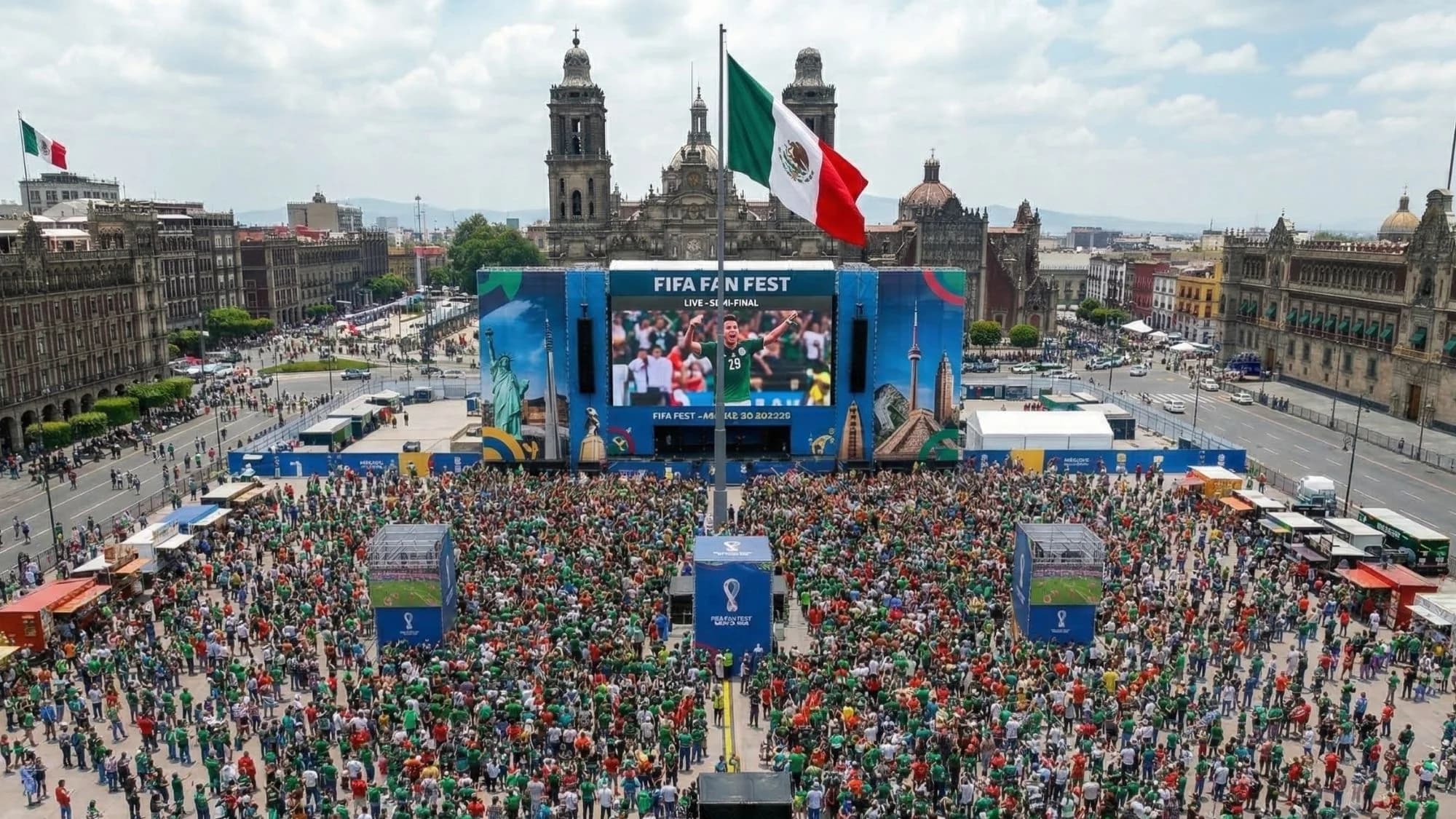
Where to watch: The Zócalo, the main plaza in the historic centre, has hosted enormous public screenings before and is the most likely site for an official fan zone. For bar and restaurant culture, Condesa and Roma are where Mexico City's creative class hangs out. Dozens of terraces, natural wine bars, and restaurants put up screens for the big matches. El Parnita in Roma Norte, Licorería Limantour (a world-class cocktail bar), and the rooftop bars at Condesa DF and the other boutique hotels all fill up fast on match days.
Between matches: Mexico City rewards slow exploration. The Frida Kahlo Museum in Coyoacán (book tickets far in advance), the Diego Rivera murals at the Palacio Nacional, the Museo Tamayo, the market at La Merced. Tacos at El Huequito in the historic centre at midnight after a match is a perfect way to end a day.
Transport tip: The Metro is fast, cheap, and covers the city well. Line 3 runs through the Condesa/Roma corridor. Taxis and Uber/InDriver are very cheap by international standards. For the Azteca, Metro Line 2 goes to CU station, and match-day shuttles typically run from there.
Safety tip: Mexico City is large and complex. Stick to the Roma/Condesa/Polanco/Coyoacán corridor for nightlife, use ride-hailing apps instead of street hails, and pay attention at crowded events. The tourist-oriented neighbourhoods are generally safe and well-policed during major events.
Stay: Roma Norte or La Condesa for the best food, atmosphere, and safety. Polanco for upscale hotels and walking access to Chapultepec Park. Historic Centre if you want to wake up close to the energy of Teotihuacán day-trips (book those at 4am, seriously, go early).
Guadalajara
Stadium: Estadio Akron — hosting 5 matches.
Guadalajara is Mexico's second city in pretty much every sense: second in population, second in football culture (Club Chivas de Guadalajara, one of the country's most-loved clubs, plays here), and second in food reputation (locals will argue strenuously about that last one). It's more manageable than Mexico City, which usually means a more relaxed fan experience.
Where to watch: Avenida Chapultepec is Guadalajara's main nightlife and dining strip. Wide sidewalks, outdoor seating, and dozens of bars putting screens up on match days. For something more local, the area around the Mercado San Juan de Dios (the largest covered market in Latin America) has cantinas that have been showing football matches since long before streaming existed. The Plaza de los Mariachis in the historic centre is a cultural experience even with no match on. With a game playing, it's something else.
Between matches: Tequila is produced about an hour west of the city, and no, this is not a day-trip you can skip. The town of Tequila itself has distillery tours that run from no-frills to seriously sophisticated. Back in the city, the Centro Histórico has some of the finest colonial architecture in Mexico.
Transport tip: Guadalajara has an expanding Metro system with 3 lines covering the main tourist corridors. The Macrobús (BRT) runs along Calzada Independencia. Estadio Akron is in the western suburbs, reachable by a Metro-and-bus combo, or by Uber/Cabify.
Stay: The Chapultepec / Providencia / Americana neighbourhood corridor has the best restaurants and boutique hotels. Historic Centre for a more classic Guadalajara feel.
Monterrey
Stadium: Estadio BBVA — hosting 5 matches.
Monterrey is the business capital of northern Mexico: sleek, modern, and underrated as a travel destination. The city sits in a dramatic mountain landscape (Cerro de la Silla looms over the skyline), and it has a strong football culture anchored by Club Rayados and Club Tigres, two of Liga MX's most competitive clubs.
Where to watch: Barrio Antiguo, the Old Quarter, is the city's cultural heart and bar district — cobbled streets, colonial buildings, cantinas that spill out onto the sidewalk. The Paseo Santa Lucía (an urban canal lined with restaurants) is a good spot to catch a match at a waterfront table. For something more contemporary, the Valle and San Pedro Garza García suburbs have a cluster of modern sports bars popular with the local professional class.
Between matches: Parque Fundidora, a converted industrial complex, is one of the best urban parks in Mexico, with the MARCO contemporary art museum on site. The Grutas de García, dramatic limestone caves about an hour out of the city, are worth a half day if you have a gap between matches.
Transport tip: Monterrey's Metro covers the city's core. Uber is widely used and reliable for the suburbs and the airport.
Safety tip: Monterrey has had real security challenges in peripheral areas. The tourist corridor (Barrio Antiguo, Valle, San Pedro) is well-established and actively managed, and security presence will be significantly elevated during a major FIFA event. Standard urban vigilance applies: don't flash expensive equipment, use ride-hailing apps, and travel with others at night.
Stay: Centro / Barrio Antiguo for atmosphere and easy walking. San Pedro Garza García for upscale options and a quieter residential feel.
Combining Canada and Mexico in one trip
For fans considering both the Canadian and Mexican legs, logistics need some thought. Vancouver and Toronto are 5 hours apart by flight. Mexico City is 5 hours from Toronto and 3.5 from Vancouver by air. There's no practical ground route connecting Canada and Mexico in time with a match schedule.
The sensible approach: build a Canadian segment (Vancouver and/or Toronto) for early group stage matches, fly south for the Mexican cities, then come back into the US for the knockout rounds.
Generate a free itinerary that maps your specific matches, cities, and travel days at savvyjetsetter.ca/plan — it takes under 60 seconds and gives you a day-by-day breakdown you can actually work from.
Common mistakes fans make in Canada and Mexico
Booking accommodation too late for Vancouver or Toronto. Both cities are already expensive. During a major FIFA tournament they get extreme. Six months minimum lead time is not an exaggeration.
Underestimating Mexico City's size. Getting from Condesa to the Azteca and back can eat 3+ hours on a crowded match day. Build buffer time into everything.
Skipping the local football culture in Guadalajara. An evening at a Chivas or Atlas cantina watching a Liga MX match before the World Cup even starts is a richer experience than half the things on the tourist circuit.
Not having a data plan for Mexico. Local SIM cards (Telcel or AT&T Mexico) are cheap at the airport. Don't rely on hotel Wi-Fi for maps and transport apps in unfamiliar cities.
Treating fan zones as a fallback rather than the main plan. FIFA's free fan festivals are genuinely well-produced. They're often more fun than the stadium experience for group stage games, not the consolation prize.
The bigger picture
The 2026 World Cup is the first with 48 teams, which means more matches, more nations involved, and a longer group stage. For fans without tickets, that's actually a good thing: there's almost always a game to watch, and the host cities will be running on tournament energy for over five weeks.
Whether you're building a two-week trip around a single host country or chasing matches across three countries and a dozen cities, the experience is what you make of it. The fan watching experience at a World Cup is one of the best in world sport.
For expert planning help, personalized hotel picks, and VIP access where it matters, reach out at savvyjetsetter.ca/inquiry. Our travel advisory service can build the whole trip around the tournament schedule, with the right hotels, the right neighbourhoods, and no wasted days.
See Part 1 of this series for the complete guide to all 10 American host cities: New York, Los Angeles, Dallas, Atlanta, Seattle, Boston, Kansas City, Philadelphia, Miami, and San Francisco.