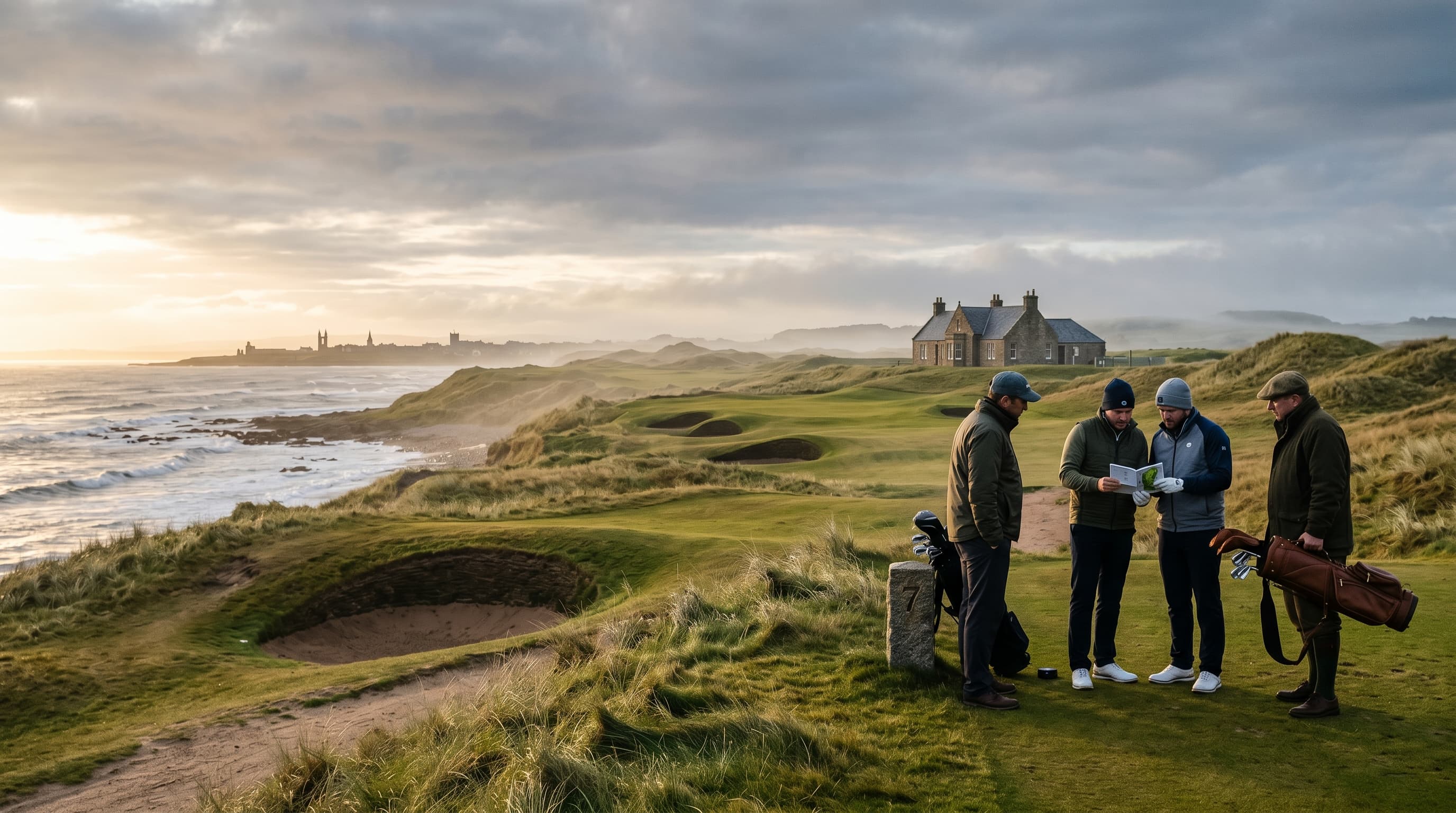
The wind is doing something between a push and a shove. The North Sea sits flat and grey to your left. Ahead of you, the fairway bends through fescue rough you won't find anywhere else, and somewhere behind you, golfers have been making this exact walk for six hundred years. You're on a Scottish links course, and nothing you've played before quite prepared you for it.
That feeling is why serious golfers keep coming back. A golf trip to Scotland isn't a vacation with golf bolted on. It's a different category of experience. It's also logistically trickier than most trips, and there are plenty of ways to get it wrong before you've booked a tee time.
Here's what actually matters.
Why Scotland is different from every other golf destination
Links golf, played on the land between the sea and the arable farmland, is what Scotland invented and what the rest of the world has spent centuries trying to replicate. The courses here don't have manicured rough or predictable bounces. The wind changes the hole you're playing more than any architect could. The ground is firm, the turf is tight, and the ball does things along the ground you have to learn to use rather than fight against.
There are also more historic courses per square mile than anywhere else. The Old Course at St Andrews has been played continuously since the 15th century. Carnoustie has hosted eight Opens. Turnberry sits on the Ayrshire coast with Ailsa Craig looming offshore. These aren't theme parks. They're working clubs, often affordable by global standards, and genuinely open to visiting players most of the time.
The atmosphere matters too. Golf is woven into Scottish culture in a way it isn't anywhere else. Locals play in conditions that would close courses elsewhere. The 19th hole conversation is real, and it isn't rushed.
When to go on a golf trip to Scotland
The season runs roughly April through October. June and July give you the longest days, with tee times as late as 9pm in midsummer, but you'll also get the busiest courses and highest prices. August can be excellent but it's peak tourist month across Scotland generally.
September and October are the sweet spot. Crowds thin out, prices drop (sometimes a lot), the light is golden, and the courses are firm from summer. Weather is no worse than spring, and often more settled. This is when canny golfers travel.
Be honest with yourself about the weather at any time of year: it can and will rain, it will be windy, and temperatures rarely climb past the low 60s°F even in summer. Pack waterproofs that actually work. More on that in the mistakes section.
The must-play courses for visitors
You can't play everything. Trying to will ruin the trip. Here are the courses that deserve a place on your list, and what you need to know about each.
Old Course, St Andrews The home of golf. Everyone wants to play it, which is exactly the problem. Access for visitors goes through the St Andrews ballot system (more on that below). Green fees run around £295 (~$375 USD) per round. Worth every penny if you draw a spot. Worth planning your whole trip around. Not worth stressing over if you don't get a tee time.
Carnoustie Golf Links Tougher than St Andrews, less celebrity-driven, and more affordable at around £220 (~$280 USD). The town of Carnoustie isn't much to look at, but the course itself is relentless, and it's one of the most demanding links tests in the world. Easier to book direct, particularly midweek in shoulder season. Open players have wept here. You should enjoy the chance to test yourself.
Kingsbarns Golf Links About fifteen minutes from St Andrews, Kingsbarns is the most accessible top-tier links in Scotland for visiting golfers. Book direct, no ballot, multiple tee times daily. The course runs along dramatic coastal cliffs with sea views on nearly every hole. Green fees around £250 (~$315 USD). If you can only guarantee one great round, Kingsbarns delivers.
Trump Turnberry (Ailsa Course) The course itself is exceptional. A coastal loop with Ailsa Craig visible from multiple holes and a lighthouse on the 9th. Ignore the ownership politics if you can, because the golf and the setting are as good as anything in Scotland. The hotel is also genuinely spectacular if you want a splurge stay. Green fees start around £350 (~$445 USD) and go up depending on season.
Royal Troon Home to the Postage Stamp. The 8th hole, at 123 yards, is one of the most photographed par threes in golf. Royal Troon alternates between hospitable and punishing with no obvious pattern. Visitors can play Tuesday and Thursday only (no weekends). Book far ahead. Open Championship history runs through the walls here.
One underrated pick: Crail Golfing Society The seventh oldest golf club in the world, sitting on the Fife coast between St Andrews and Edinburgh. The Balcomie Links plays along the sea at every turn and costs roughly £75–£90 (~$95–$115 USD). Nobody is going to pepper you with questions about your handicap. It's a proper links course that most visiting golfers walk straight past on the way to the big names, and that's their loss.
The planning framework that will save your trip
Be realistic about rounds per day. The instinct is to pack in as many rounds as possible. Two rounds in a day sounds appealing until you've walked 10 miles in a North Sea wind. One round per day, occasionally two if your first one starts early, is a smarter target. You'll play better and enjoy it more.
Choose your base wisely. Most golfers base in St Andrews. It makes sense given the concentration of quality courses in Fife. The town is worth spending time in, the restaurant scene has improved a lot, and you're within an hour of Carnoustie, Kingsbarns, and Crail. Edinburgh is a strong alternative: better nightlife, good transport links, and about an hour's drive to most of the courses listed above. Glasgow gives you quick access to Turnberry and Troon. If you're doing a full Scotland circuit, consider moving bases.
You need a car. Scotland's golf geography doesn't work without one. Getting from St Andrews to Turnberry by public transport is an all-day commitment. Rent a car. Driving on the left is disorienting for the first hour and then becomes unremarkable. Scottish roads are well maintained and the distances between courses aren't as large as they look on a map. Just don't try to drive to and from Edinburgh for a dinner reservation after a full round of Carnoustie.
Book tee times early. Very early. For the top courses, six to twelve months in advance isn't excessive. Many clubs now have online booking; others still prefer email or phone for visiting parties. If you're working through a golf tour operator, they can often secure times that aren't visible to individual bookers. For a week-long trip with four or five confirmed courses, the booking alone is worth outsourcing.
The St Andrews ballot system, explained simply. The Links Trust operates a daily ballot for the Old Course. Applications open at 2pm for tee times two days ahead. Submit via the Links Trust website or by calling the caddie master. Applicants in the ballot are entered for available slots, and you won't know until the following morning if you drew a time. You can also line up on the day by arriving at the starter's box early. Single golfers have the best chance of drawing a spot or walking on. Groups of four should enter the ballot religiously and have a backup plan regardless.
Where to stay and eat in St Andrews
The Old Course Hotel is the closest you'll get to staying on the links. Rooms look out over the 17th Road Hole, service is polished, and the spa works well after a long day on foot. Rates start around £450–£600 (~$570–$760 USD) per night in season. A splurge, but a memorable one.
Rufflets Country House Hotel, a mile outside town, is smaller and more personal. It won't be confused with the Old Course Hotel, but it's legitimately good, with a strong kitchen and enough style that it doesn't feel like a consolation prize. Rates start around £180–£250 (~$230–$315 USD) per night.
For food, The Adamson on South Street does serious modern Scottish cooking. The kind of place that's become a local anchor without being precious about it. The Seafood Ristorante on the Scores has harbour views and knows what to do with local fish. Both require reservations, particularly in summer.
Common mistakes golf travelers make in Scotland
Over-scheduling rounds. This is the biggest one. Walking 36 holes in a day on a proper links is hard. Doing it two days running is punishing. You came to enjoy this, not survive it. Build in rest days. They're not wasted, they're essential.
Not checking the St Andrews ballot before booking flights. If your entire trip hinges on playing the Old Course, verify what the ballot actually requires and understand the realistic odds before you commit to non-refundable flights. The ballot is not a guaranteed booking. Have a Plan B.
Skipping the smaller courses. The instinct is to fill the itinerary with the famous names. But Crail, Leven Links, Lundin Links, Brora: these courses are cheap, walkable, and genuinely excellent. They're also where you'll have the most natural interaction with local golfers, which is part of what makes Scotland different.
Packing wrong. Waterproof trousers and a proper gore-tex jacket are not optional. An umbrella is mostly useless on a links in any real wind. Layers under your waterproofs, good waterproof shoes (or arrange caddie shoes on arrival), and a rain cover for your bag are table stakes. Scotland will test whatever gear you bring.
No rest days. Covered above, but worth saying twice. Build one full off-day into every five days of golf travel. Walk the town, drive somewhere coastal, eat a long lunch. You'll hit the ball better on the subsequent days and enjoy the whole trip more.
Build your Scotland golf itinerary
A week in Scotland typically accommodates four to five rounds comfortably, with one rest day and realistic travel time between courses. The standard circuit runs St Andrews → Carnoustie → Kingsbarns → Crail, with optional day trips to Troon or Turnberry if you've based yourself centrally enough.
Sequencing matters: don't schedule your most anticipated round (probably the Old Course, if you draw the ballot) on day one when you're still adjusting to links conditions. Give yourself a round or two to acclimate before tackling the courses that will test you hardest.
Planning your Scotland itinerary? Build a custom day-by-day plan in 60 seconds at savvyjetsetter.ca/plan. Put in your dates, group size, and travel style and get a structured starting framework immediately. Free to try, with a full premium itinerary available for $15 CAD with a Trip Pass (or $29 CAD for three trips, if Scotland is just the beginning).
For a trip this logistically specific, with ballot applications, tee time sequences, and accommodation near multiple courses, there's real value in having an expert handle the coordination. Our travel advisor is TICO-registered, works with the Fora Travel network, and can access VIP hotel perks at properties like Turnberry and the Old Course Hotel. Submit an inquiry at savvyjetsetter.ca/inquiry and explain what you're trying to accomplish. The more specific you are, the better.
Scotland is one of those trips that rewards preparation without demanding perfection. Get the key tee times locked, give yourself room to breathe, and the rest tends to take care of itself. The wind will do what it does. The courses will test you honestly. That's the point.