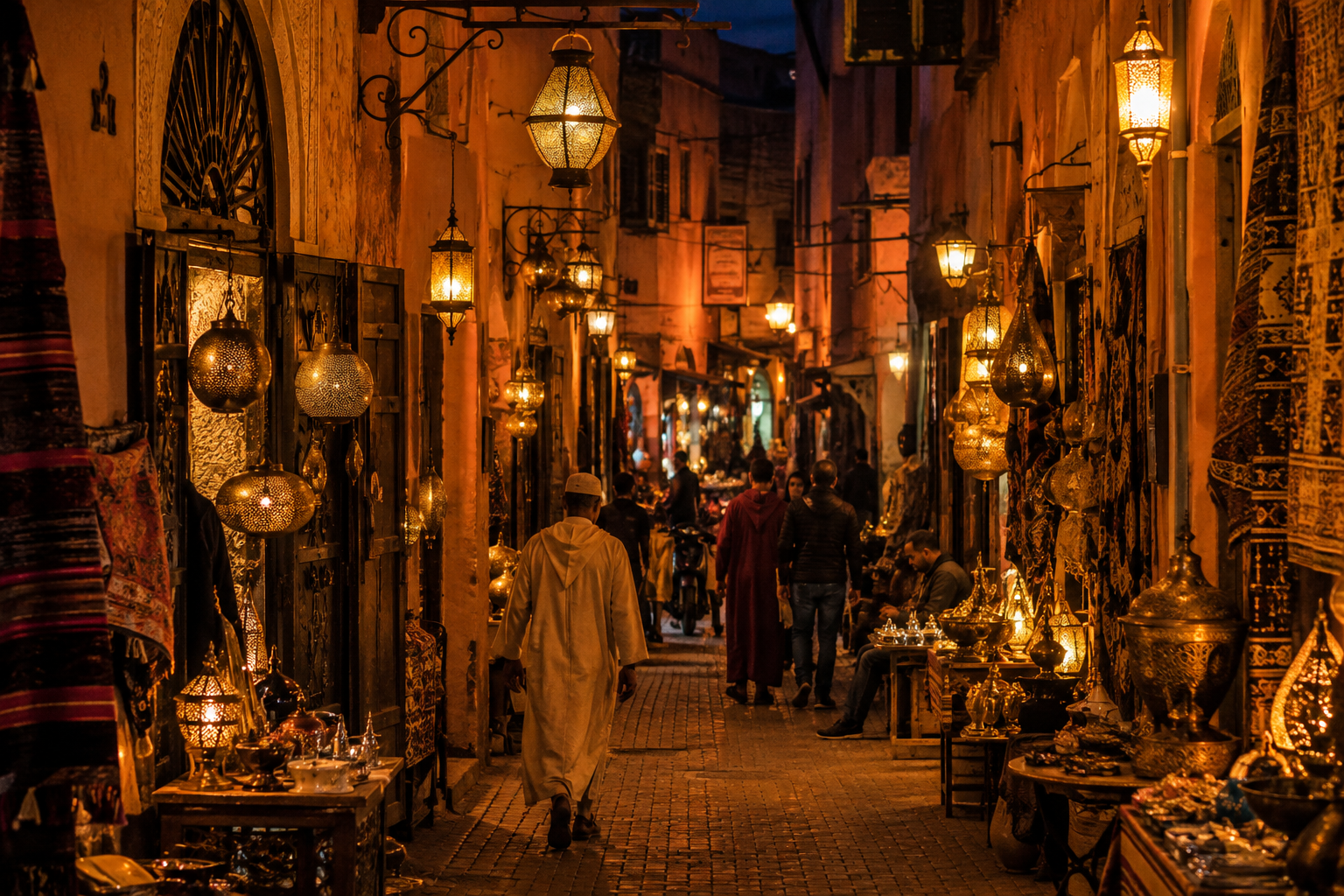
The first 20 minutes in Marrakech's medina feel like a system error. The alley you need doesn't appear on the map. A moped materializes out of a wall. Someone is offering a free tour that is very much not free. The call to prayer starts mid-chaos and somehow makes it all feel deliberate.
A Morocco itinerary 10 days long unfolds like this: by the end of day two, you have the layout in your head. By day three, you're navigating the souks without stopping to check your phone. That's the Morocco effect: genuinely disorienting on arrival, and then, faster than makes sense, completely coherent. It's the trip that looks complicated from the outside and turns out to be one of the most manageable countries you've visited.
A Morocco itinerary 10 days long, structured around Marrakech, Fes, and the Sahara, gives you enough time to actually be in each place rather than pass through it. Under 10 days and you're cutting the desert or abbreviating Fes. More time is welcome, not required.
The 10-Day Route: How the Cities Connect
The classic Morocco 10 day trip runs Marrakech to Fes to Merzouga, then back to Marrakech to fly out:
- Days 1-3: Marrakech (fly in here from most international hubs)
- Days 4-5: Fes
- Days 6-7: Merzouga, Sahara region
- Days 8-9: Return to Marrakech
- Day 10: Fly home from Marrakech (or end in Fes if the routing works better for you)
Getting between cities:
Marrakech to Fes: CTM bus costs around $25 and takes 9 hours. A 1-hour flight runs $60-90. If the price difference is small, take the flight.
Fes to Merzouga (Sahara): 6-7 hours by bus or private driver. A private driver shared between 2-4 people runs $120-150 and is worth the spend — drivers on this route typically have working relationships with the desert camps. Book through your riad in Fes rather than cold off a booking site; they know which camps have functioning facilities, which matters more than the photos suggest.
Merzouga back to Marrakech: Same logic in reverse. Many travelers fly home from Marrakech, so the same driver who took you south can often arrange the return leg.
Don't add Chefchaouen and the Atlantic coast to this itinerary. That's a 14-day trip, and spreading these stops across 10 days means you're in transit constantly and present nowhere.
For a personalized day-by-day plan built around your specific dates, group size, and budget, the itinerary planner at savvyjetsetter.ca/plan generates a sequenced Morocco itinerary 10 days long that you can use as a working document and adjust from there.
Marrakech: How to Use Three Nights Well
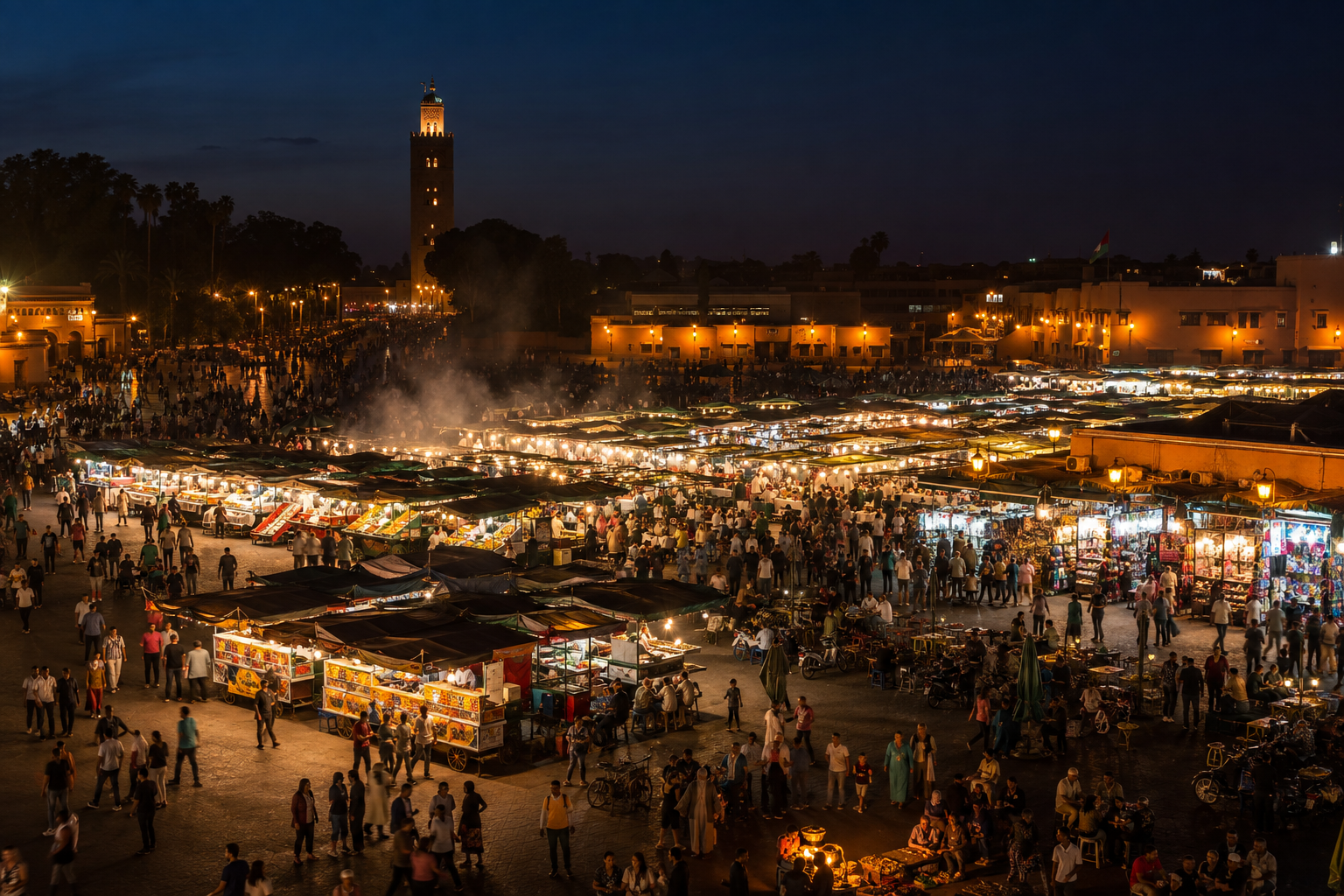
Three nights is the right amount of time. The medina is compact on a map and labyrinthine in person. You'll get your bearings faster than you expect, and after that it's worth wandering without an agenda.
Go to Djemaa el-Fna twice. The square at sunset and after dark are two different places. Afternoon: juice vendors, snake charmers, smoke. After dark: the food stalls take over, musicians set up, the whole square shifts register. Both are worth experiencing separately.
Le Jardin Secret earns the entry fee. People treat it as a photo stop. Slow down. The Islamic garden is a restored sixteenth-century palace, and the geometric tilework is extraordinary up close. An hour here is not the same as a ten-minute walk-through.
Bahia Palace before 9:30am. Group tours arrive by mid-morning. Get there early and it's peaceful. Get there at 11am and it's dense.
The Saadian Tombs: If you're there on a quiet weekday morning, fine. On a busy day, the queue and the limited space don't add up to a great experience. The time is better elsewhere.
Where to stay: Riad Yasmine or Riad BE for mid-range ($100-150/night, rooftop pool, both inside the medina walls). La Mamounia is the legendary splurge at $400+/night. If you're not staying, book a drink at the bar. The courtyard is worth seeing.
Where to eat: Café Clock for lunch. It's a social enterprise café inside the medina, reliable tagine, and they give you free harira soup with the meal. Nomad for dinner: rooftop, solid Moroccan and North African dishes, book ahead. For everything else, eat a few streets back from the main restaurant rows bordering Djemaa el-Fna. The same food costs a third of the price two minutes in, and there are no commission-based touts involved.
A strong Marrakech itinerary first time accounts for the learning curve — the first morning is orientation, and that's fine. Don't stack it too full.
Fes: The Medina Is the Experience
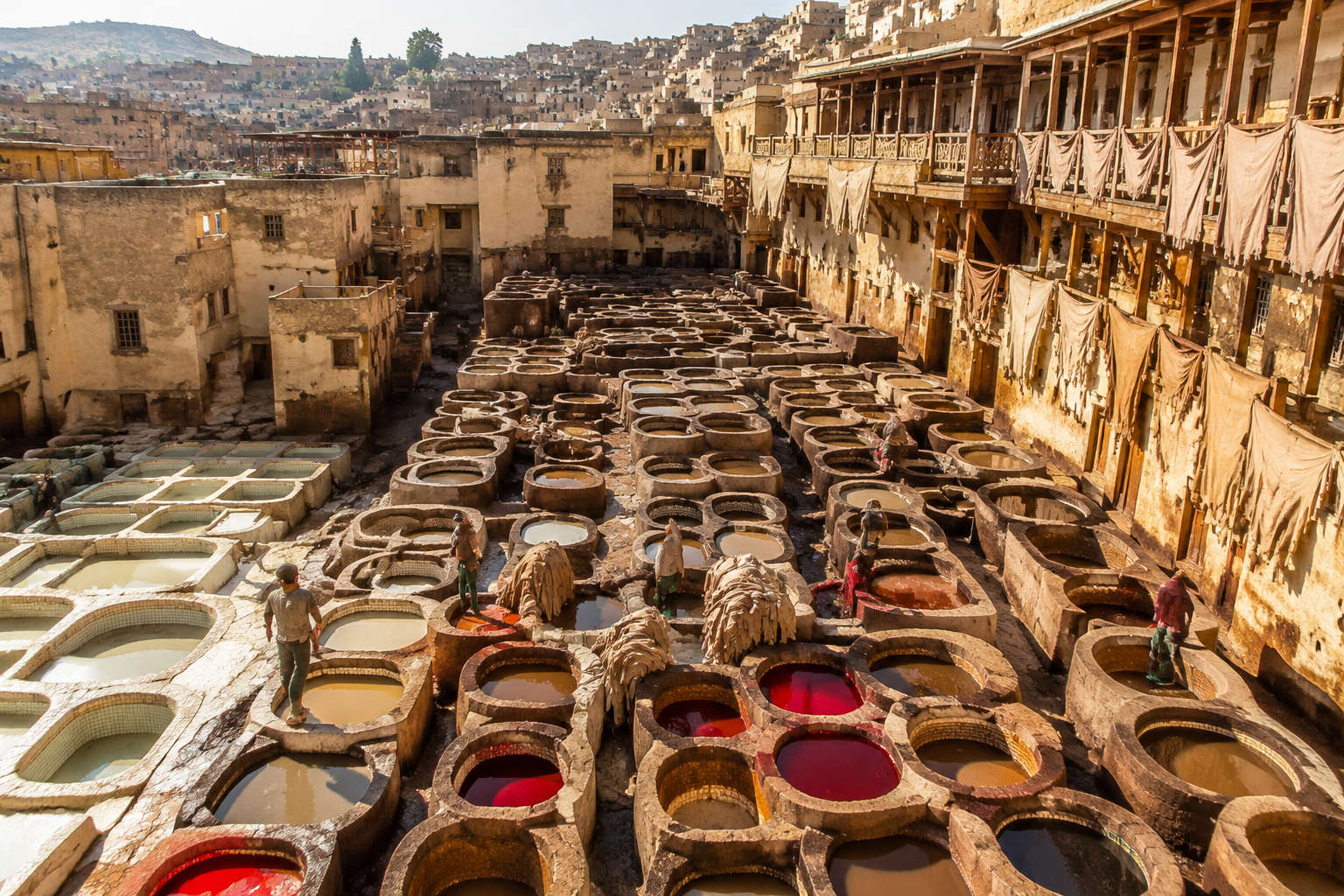
Fes is where some travelers fall completely in love with Morocco and others spend the afternoon in a café wondering why they came. The difference is usually whether they spent three hours with a licensed guide on their first day.
Book a guide through your riad. Official guides in Fes run $40-60 for three hours. One structured walk gives you a spatial understanding of the medina that two days of independent wandering won't produce. After that first session, you can navigate solo with confidence. Without it, the city stays harder to read than it needs to be.
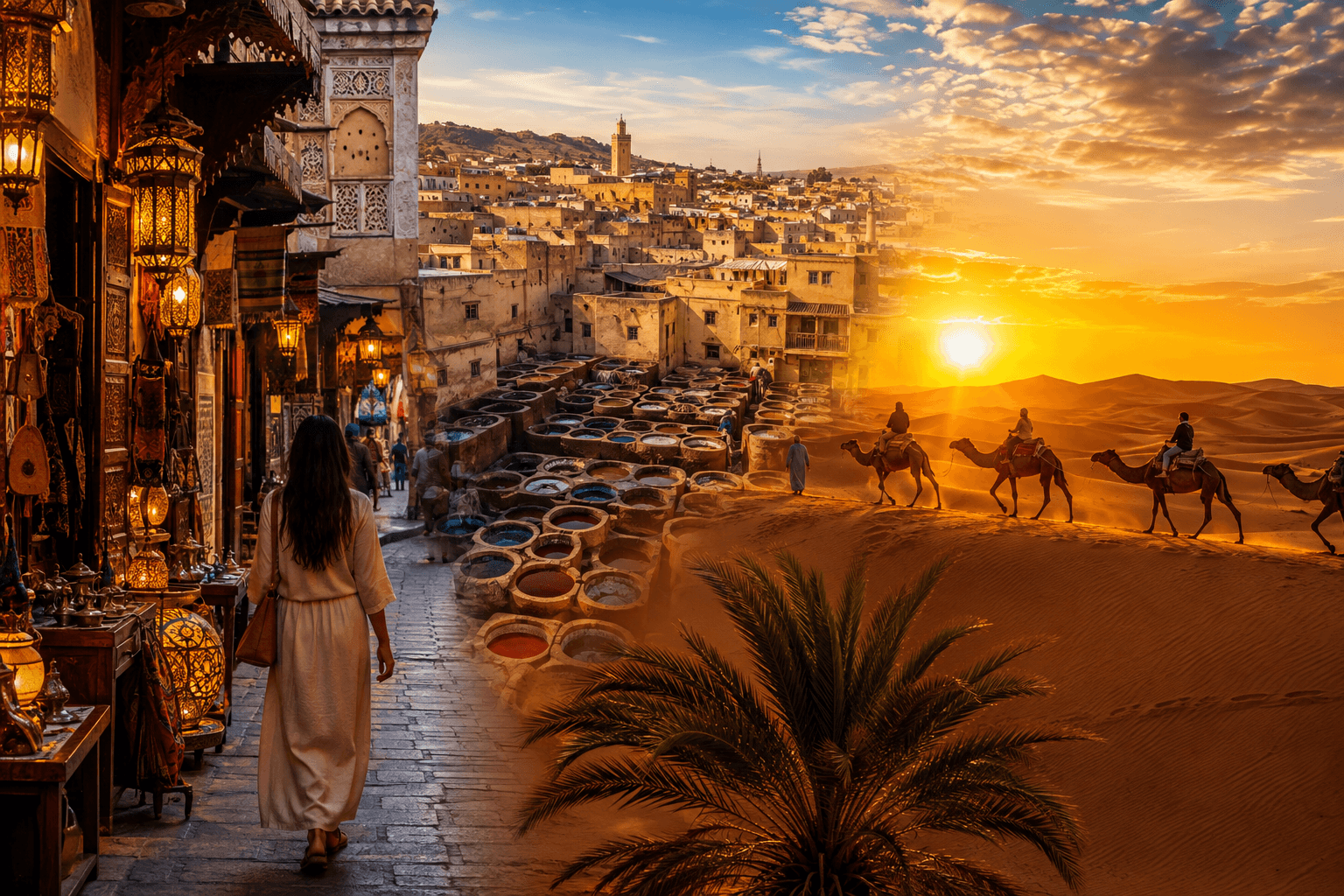
The Chouara Tanneries. You've seen the image: stone vats of dye in ochre, burgundy, and white, workers moving between them. You view it from the leather shops above. Shopkeepers invite you up in exchange for a browse. You're not obligated to buy anything. Look, thank them, leave. Morning light is better than afternoon.
Fes is a more authentic medina experience than Marrakech, which skews more tourist-forward. Marrakech is more legible on arrival. Fes takes a day to calibrate. That calibration is the point — this is what a living medieval city actually looks like from the inside.
Where to stay: Riad Laaroussa or similar medina riads in the $90-140/night range. The riads inside Fes el-Bali offer dramatically better value than chain hotel options nearby.
Where to eat: Ruined Garden for dinner (rooftop, restored riad setting, Moroccan mezze, reliably good). Clock Café Fes for lunch, same mini-chain as Marrakech, consistent quality. Book both ahead.
If the Morocco first time travel tips you've read have underwritten Fes in favor of more time in Marrakech, push back on that. Fes is the better medina experience. The Fes medina travel guide rule is simple: hire the guide first, then explore the city on your own terms.
The Sahara: One Night Minimum, Two Is Better
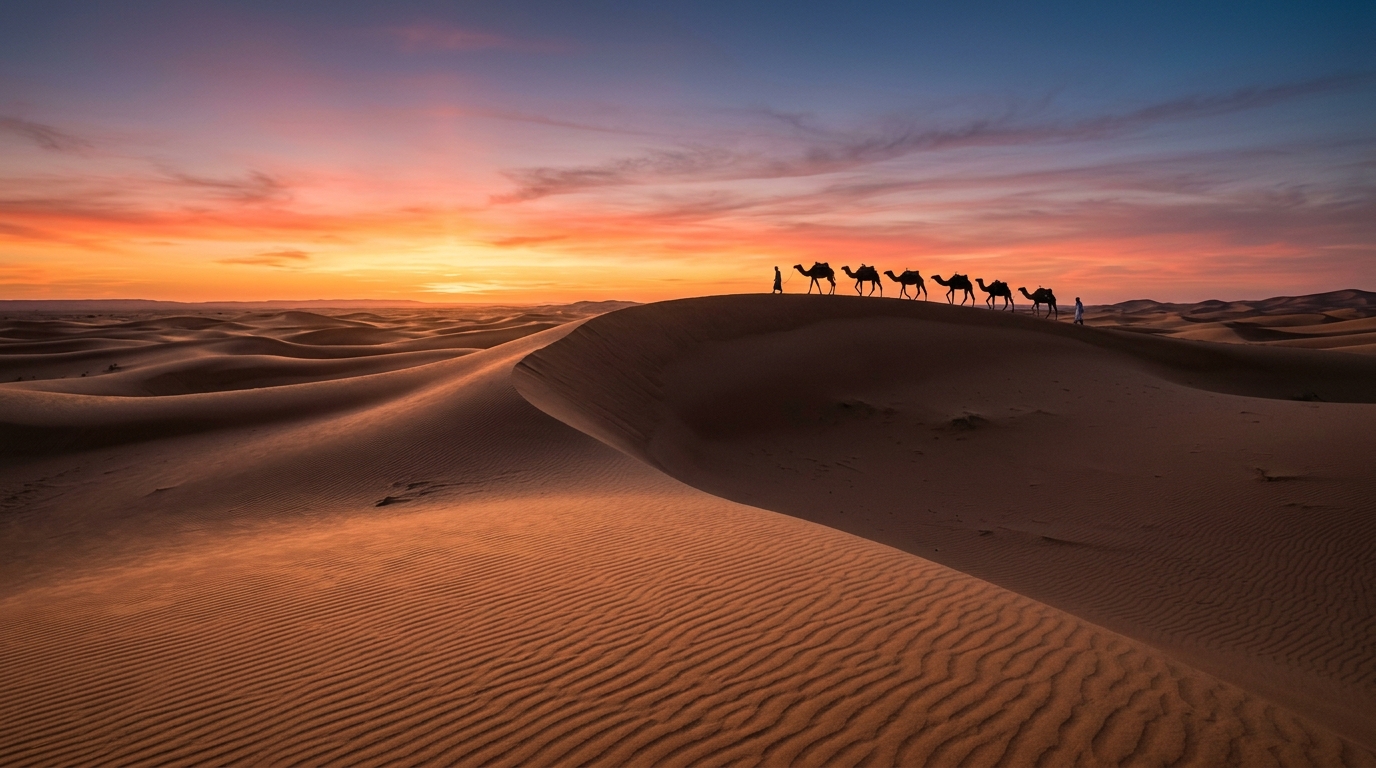
The Merzouga Sahara delivers what it promises. Camel ride to camp at sunset, dinner outside under a sky with near-zero light pollution, sunrise before the heat builds. There's nothing cynical to say about it.
One night is the minimum. Two nights means you can skip the rush-back at dawn and wander the dunes alone before the camps start moving. Almost every first-timer says they wish they'd booked two nights. The extra day costs another $80-120/person in camp fees.
The camel-to-camp handoff is straightforward: you ride in around sunset (45-60 minutes), the camp crew takes the camels, and the guide walks you the last stretch on foot. Most Sahara desert Morocco guide posts skip the practical detail that matters most: pack a proper insulating layer you wouldn't normally associate with a desert trip. Temperatures drop fast after sunset, and by midnight it can be cold enough that a light jacket won't cut it. In winter months (November through February), overnight temperatures near Merzouga can fall below freezing.
Mid-range camps ($80-120/person all-inclusive: camel, tent, dinner, breakfast) give you the same sky as the $300 glamping setups. The night sky doesn't change based on your tent price. The variable that actually matters is whether the facilities work, which is why booking through your riad beats booking cold online.
If you're flying home from Marrakech, build a buffer day into the return leg. The drive from Merzouga is 8-9 hours, and arriving in Marrakech the night before an early departure with no margin is a bad plan.
For custom routing, riad introductions, and desert camp recommendations from a human advisor, see savvyjetsetter.ca/inquiry.
What Morocco Gets Wrong in the Guidebooks
A few things first-timers consistently didn't expect:
The food is not spicy. Morocco is heavily spiced (cumin, saffron, preserved lemon, ras el hanout) but not chili-hot. If you've been avoiding Morocco because of heat concerns, recalibrate. The food is complex, fragrant, and generally excellent, especially at mid-range riad restaurants.
Bargaining in the souks is theater, not confrontation. Starting at 40% of the opening price is standard practice. Walking away is a legitimate negotiating move and nobody takes it personally. It's a ritual on both sides. Treat it that way and it becomes genuinely enjoyable.
Women traveling solo are fine. The concern is common and largely overstated. The practical adjustment is dressing modestly in the medinas: shoulders and knees covered. This applies regardless of gender.
Buy a SIM card at the airport. Maroc Telecom and Orange both sell SIMs at arrivals for around $5, including 10GB of data. Set it up in the taxi queue. You don't need an international plan from home.
Common Mistakes on a Morocco 10-Day Trip
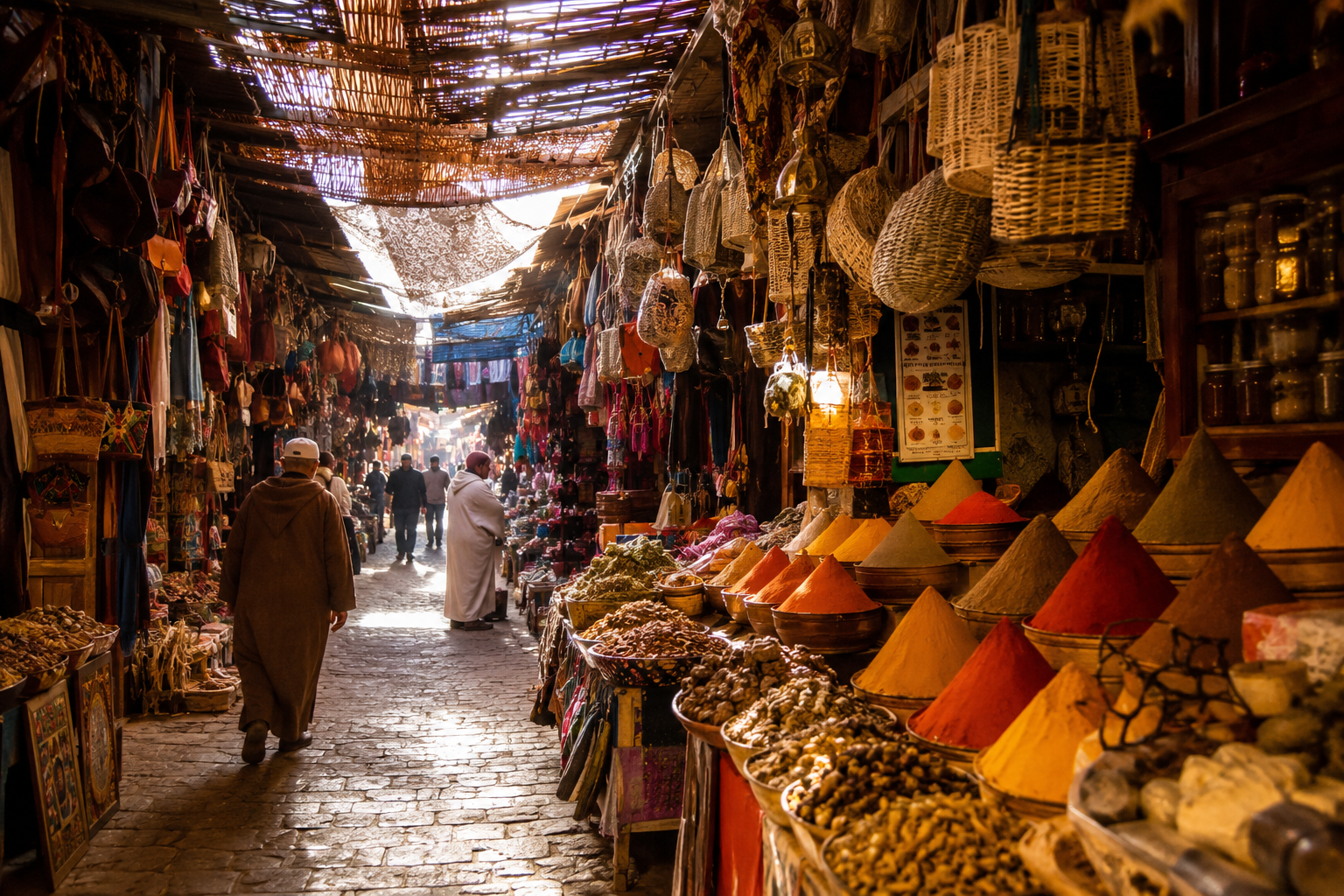
Booking too many cities. Chefchaouen and the Atlantic coast are worth doing. On a different trip. Fitting them into 10 days means you're in transit constantly and present nowhere. Three stops, done properly, is the trip.
Taking an unofficial guide near the medina gates. These guides lead you to a carpet or leather shop and expect payment at the end. Licensed guides are arranged through your riad. That distinction matters and costs you almost nothing extra to get right.
Skipping Fes for more time in Marrakech. Marrakech is easier to navigate. Fes is a more substantial experience. People who do more Marrakech and less Fes almost always wish they'd inverted that. Do both.
Underestimating the Sahara transit time. Merzouga is a full day of travel each way from Fes. If your total Morocco time is under 8 days, the Draa Valley is a striking desert landscape that doesn't require the same travel commitment. Still worth doing, much easier logistics.
Paying tourist prices at the restaurant rows in Djemaa el-Fna. Two streets into the medina, the same tagine costs a fraction of the price and there's no one outside with a laminated menu trying to pull you in.
Packing the wrong shoes. Medina alleys are uneven stone, often narrow, sometimes damp. Comfortable walking shoes you're fine getting dirty are essential. Keep the nice ones for dinner at a riad.
Plan Your Morocco Itinerary Before You Land
Morocco rewards people who sort the routing before they arrive: city order, transport between legs, and which night you need to be in Merzouga. Getting that sequence wrong adds unnecessary transit days. The classic example: arriving in Merzouga on day 7 of a 10-day trip when your Marrakech flight leaves on day 10. That's one buffer day for a full-day drive back, with no slack if the transport slips.
Build a personalized Morocco itinerary 10 days long at savvyjetsetter.ca/plan, tailored to your travel dates, group, and pace.
Ten days. Three cities. One desert. The logistics are more manageable than the mystique suggests. Get the sequence right before you board.