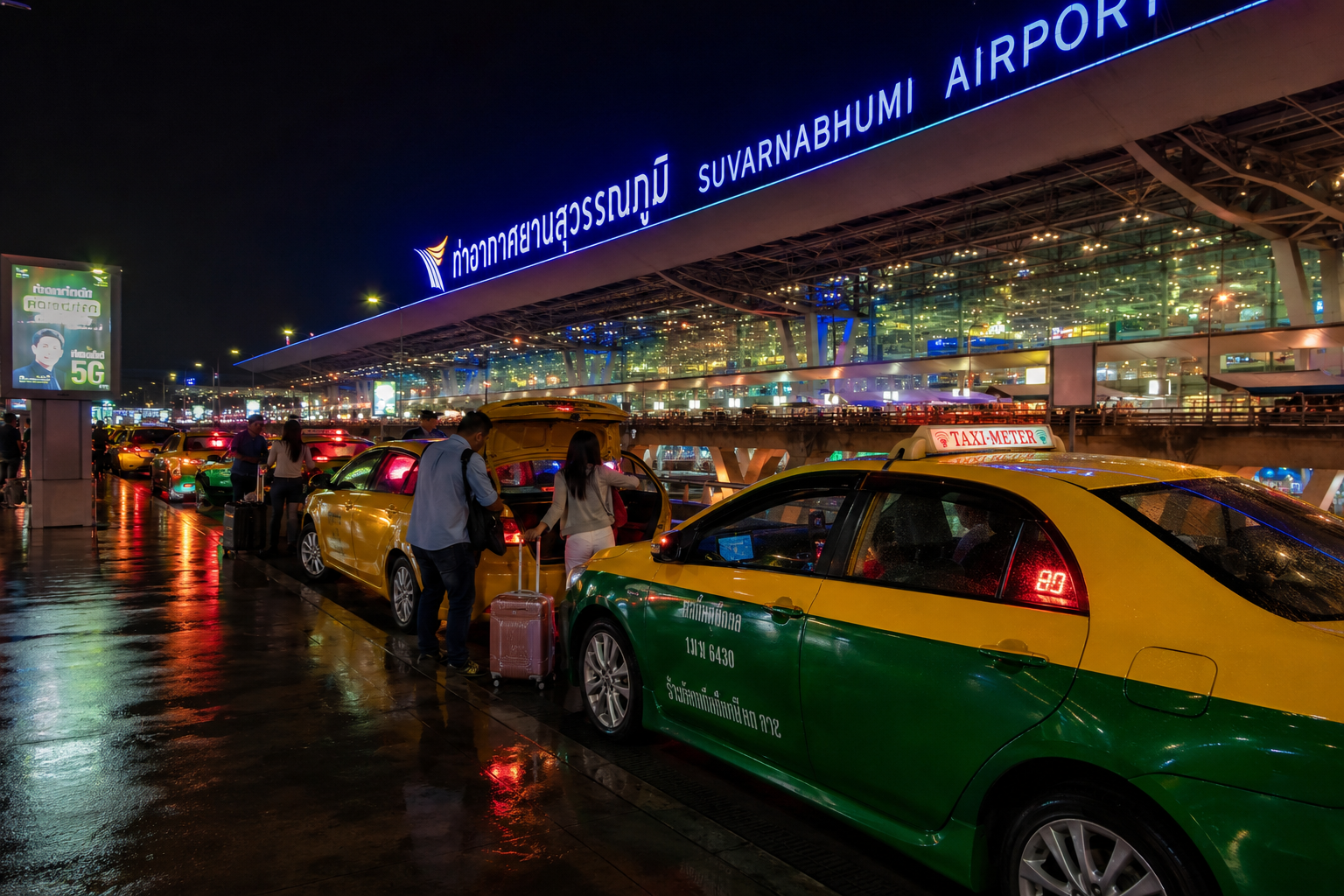
No Thailand first timer guide fully prepares you for the first 90 seconds outside Suvarnabhumi's arrivals doors at midnight: 34 degrees, the air heavy with humidity and the faint sweetness of jasmine garlands from the flower vendor by the exit, taxi queue stretching 40 meters into the dark, neon signs in Thai script, someone honking somewhere in the distance. You flew halfway around the world and your brain is running at about 30%.
Thailand rewards people who arrive flexible and penalizes people who've over-planned for a version of the country that doesn't quite exist. The first-timers who come away disappointed are almost always the ones who had a tight 10-day itinerary covering three regions and spent a third of their trip on planes and overnight buses.
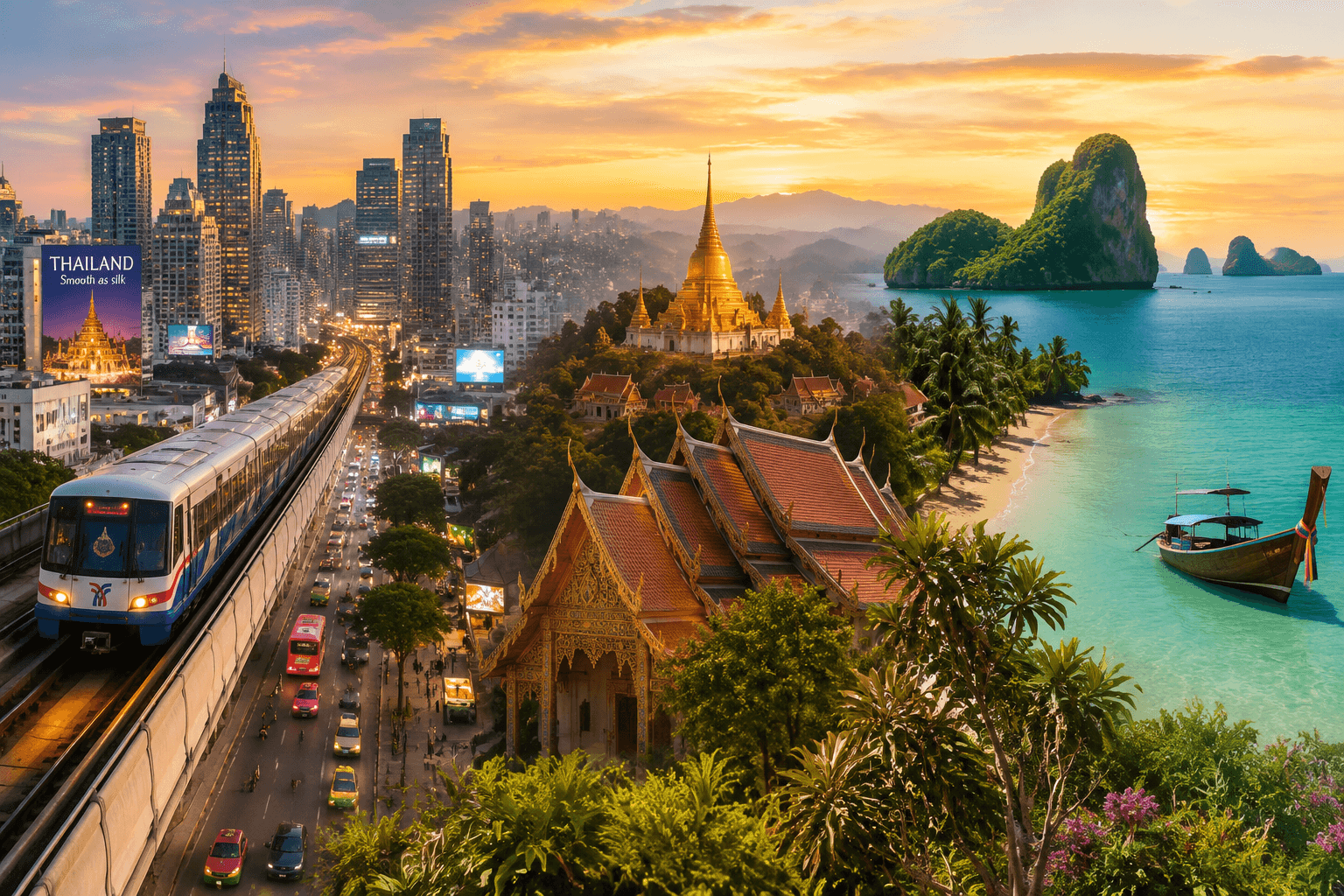
This Thailand first timer guide exists to answer one question before anything else: which Thailand are you actually going to? Bangkok, Chiang Mai, and the southern islands are not the same place connected by geography. They're three different trips that happen to share a border. Getting that decision right matters more than any restaurant recommendation in any Thailand travel guide 2026.
Which Part of Thailand Is Right for First-Timers?
The first decision is the region sequence. Be honest about what kind of trip you actually want.
Bangkok only (3-4 days): If you came for the city (the food, the temples, the controlled chaos), this is a complete trip. Bangkok is not a gateway to somewhere else. If you're not a beach person, don't manufacture a beach leg because it seems expected. Three focused days here beats three days split across Bangkok, a flight connection, and a rushed island stay where you spend one night recovering from the journey.
Bangkok + islands (8-10 days): The standard first-timer structure. Three nights Bangkok, fly south to Koh Samui or Koh Tao, five nights on the island. AirAsia and Bangkok Airways both fly this route for $50-90. It works and the pacing is right.
Bangkok + Chiang Mai (7-8 days): For people who want cultural depth rather than beaches. Northern Thailand is a separate experience: cooler temperatures, temple circuits, mountain landscape, and a food culture that shares almost nothing with what you'll eat in Bangkok. Right for travelers who want markets, cooking classes, and a day trek rather than sand.
Full country sweep (14 days): Bangkok, Chiang Mai, and the islands. The problem with a Thailand itinerary 2 weeks covering all three is that you're on a plane or overnight bus every two or three days. You end up remembering airports more than destinations. Better suited for a second trip. First-timers consistently get more out of going deeper in two regions than rushing three.
Bangkok: What Actually Deserves Your Time
The most important Bangkok first time travel tips in any Thailand first timer guide: give the city four hours before you decide what you think of it. It disorients you and then makes complete sense. First-timers who dismiss it too quickly are usually the ones who stayed near Khao San Road.
What's worth it:
Wat Pho earns its reputation. The reclining Buddha is 46 meters long and the scale is something photos can't communicate; you have to stand next to it to understand what you're looking at. Go first thing in the morning before tour groups arrive. The Grand Palace is genuinely impressive but requires modest dress (long pants, covered shoulders) in 35-38 degree heat, and midday crowds are brutal. Go at 8am when it opens or drop it from a tight schedule without guilt -- it's not the only temple worth seeing in Bangkok.
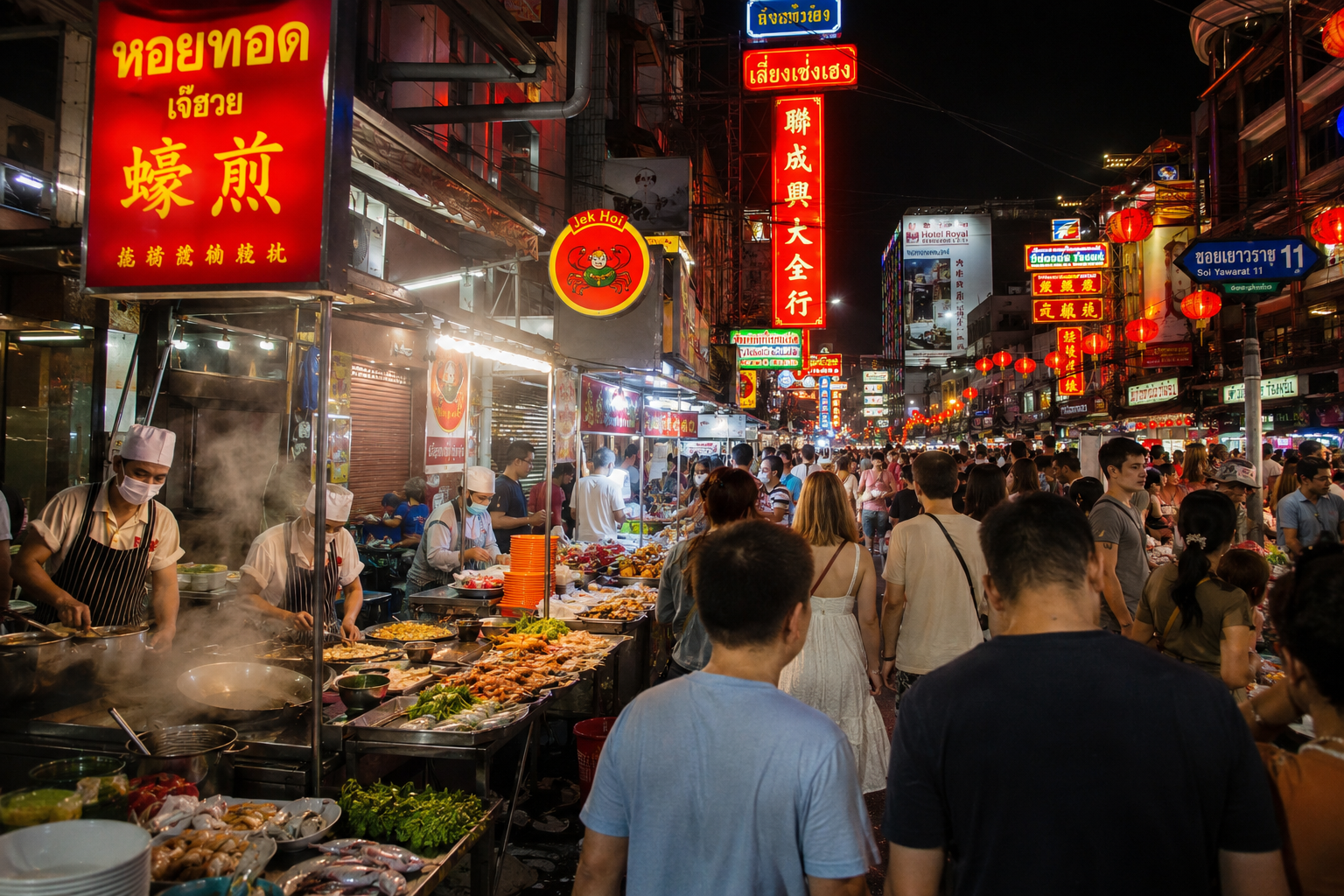
Yaowarat Road, Bangkok's Chinatown, operates differently after 7pm when the street food vendors set up: roast duck stalls, dim sum carts, fresh seafood displayed on ice, the street shifting from daytime shop district to something louder and worth walking slowly through. If you pick one evening to wander somewhere rather than sit in a restaurant, this is it.
Chatuchak Weekend Market runs Saturdays and Sundays only. The food stalls in section 26 are worth the trip on their own; the vintage section is legitimately good. The trinket sections can be moved through quickly.
Where to eat:
Thip Samai on Mahachai Road is the reference point for pad thai in Bangkok. Look for the queue forming around 6pm. The location with the line outside is the right one: open until midnight, $5-7 per dish.
Jay Fai, old city, Michelin-starred, has been running the same wok for decades. The drunken noodles with crabmeat are what the recognition is about. Budget $30-50 per person. Book months ahead through their reservation system or queue at 3pm for the evening service. The wait is part of the experience.
For everyday eating: any BTS Skytrain station food court. $3-5 per dish, air-conditioned, consistently good.
Where to stay:
Silom or Sathorn for BTS access and walkable neighborhoods. Sukhumvit Soi 11-15 for slightly more nightlife-adjacent options. Avoid Khao San Road unless backpacker hostels are the specific goal. That neighborhood doesn't represent Bangkok, and staying there means everything else requires a longer ride than it should.
Before you land, you can have a day-by-day Bangkok plan ready in under a minute at Savvy Jetsetter's free itinerary planner -- enter your dates and travel interests and the AI planner builds the full itinerary.
Chiang Mai: What to See and When to Stop
Two hours north by plane ($35-60 on AirAsia), Chiang Mai is the anti-Bangkok. Walkable, surrounded by forested mountains, a moated old city, and more than 300 temples in the metro area. Most Chiang Mai travel guides try to cover all of them. You need to see three.
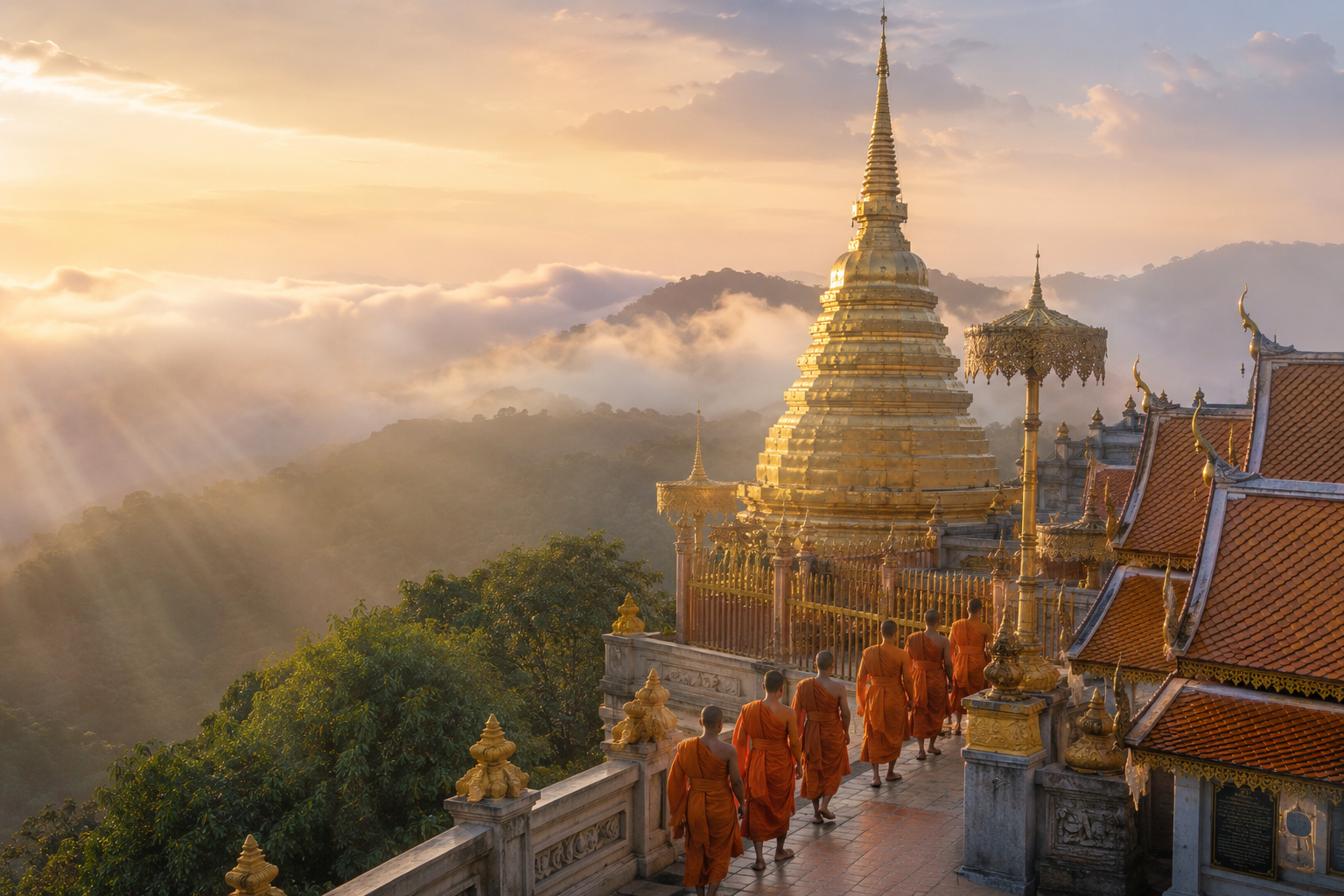
Wat Phra Singh sits in the center of the old city and is still an active monastery; it feels like a working religious site rather than a heritage attraction. Wat Chedi Luang is partially ruined, and the scale of what it once was is the reason to visit. Doi Suthep sits on a mountain above the city and requires a songthaew (red truck taxi, $2-3 each way) or rented scooter to reach. Go at 7am before the tour buses; the views across the valley are the point.
After three temples, stop. Chiang Mai's temple density becomes a blur past that point and there's more interesting ground to cover.
What else earns your time:
The Sunday Walking Street on Wualai Road (4pm to midnight) has better quality control than most markets in Southeast Asia: local handicrafts, textile work, hand-painted goods. Vendors speak English. Nothing staged about it.
Doi Inthanon National Park is two hours from the city and worth a full day: Thailand's highest peak, two royal chedis, hill tribe villages, and waterfalls that require a 20-minute walk from the car park. Rent a songthaew for the day ($40-50 split four ways) or join a day tour through operators on Nimman Road.
The Elephant Nature Park north of the city is the standard recommendation because it's earned. This is a rescue sanctuary (not a riding camp), and the half-day program ($85-100) involves feeding and bathing rescued elephants while a guide explains each animal's history. Book directly on their website at least two to three weeks ahead.
Where to eat:
Khao soi is the signature of Northern Thai cooking, a coconut curry noodle soup that tastes nothing like what you've been eating in Bangkok. Cherng Doi Restaurant is the local reference, less than a kilometer from Nimman Road. For a meal that isn't Thai when you've been eating it for four days straight: Ginger & Kafe. For late-night eating when everything else is closed: the Night Bazaar food section on Chang Khlan Road.
Choosing the Right Island for a Thailand First Visit
Picking the right island for your Thailand islands first visit matters as much as the Bangkok-vs-Chiang-Mai decision. Stop treating them as a single category. Koh Samui and Koh Tao are as different from each other as Bangkok is from Chiang Mai.
Koh Samui has an international airport, luxury resort infrastructure, and the most developed amenities of any Thai island. Chaweng Beach is crowded and overpriced; Bophut (the Fisherman's Village side) is quieter, better restaurants, less constructed feel. Best for couples, families, and anyone who wants proper hotel-level comfort without compromise.
Koh Phangan is known for the Full Moon Party at Haad Rin beach (monthly, chaotic), but that's not the only reason to go. Outside party weekends, it's cheaper than Samui, less built-up, and quiet in the parts that aren't Haad Rin. Best for flexible travelers in their 20s-30s who want a mix of beach and social without paying Samui prices.
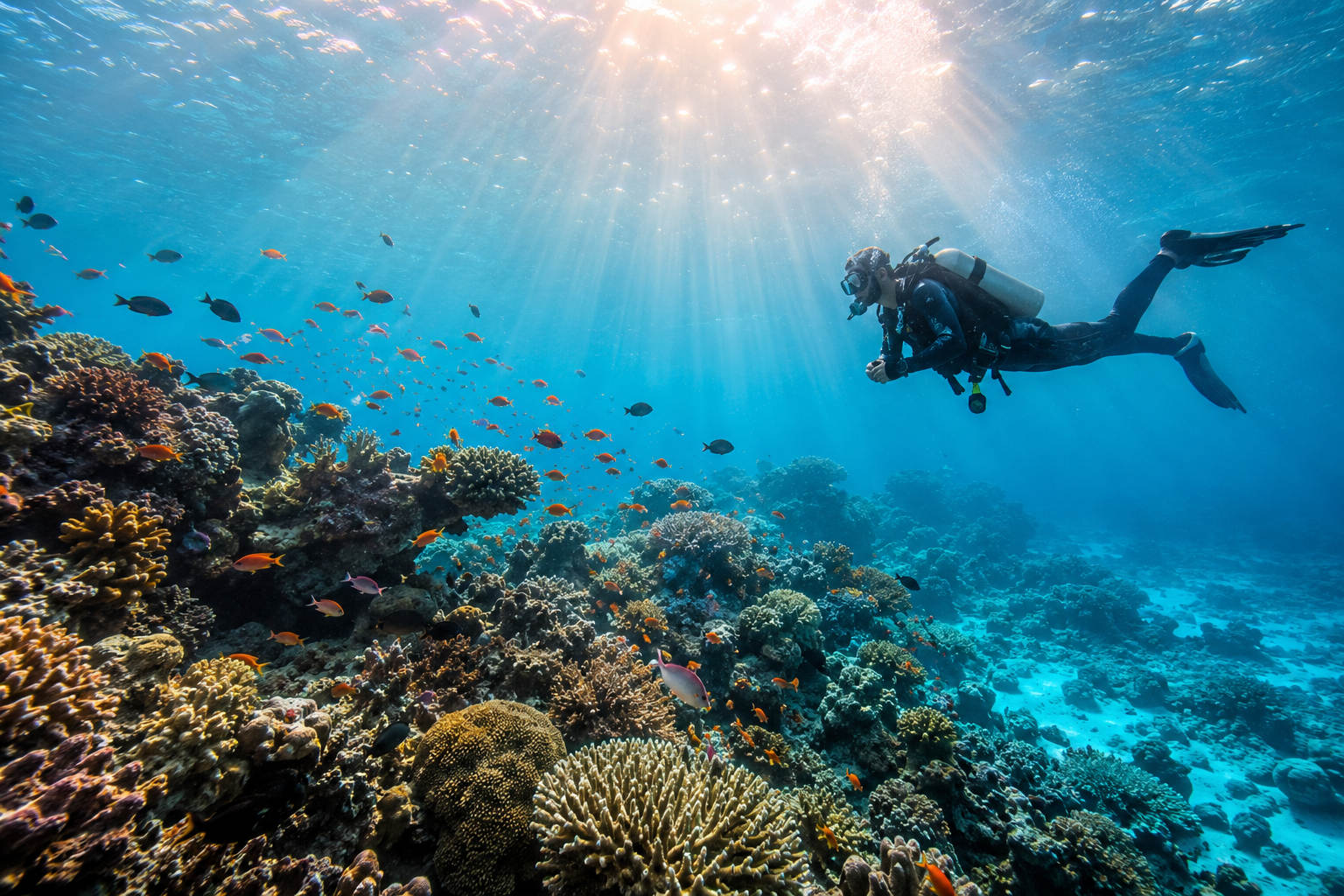
Koh Tao is the place to get a PADI Open Water certification. Prices are the lowest in Asia ($300-350 for three days, gear included), visibility is good, and the coral is healthy. The island itself is small; the beaches are fine without being exceptional. Best suited for divers, snorkelers, and anyone who wants an activity anchoring the stay.
Koh Lanta / Krabi (Andaman side): The limestone karst landscape that appears in most Thai travel photography. Worth it for a return trip or a standalone Andaman itinerary. The journey from Bangkok (flight to Krabi, then a ferry) adds enough transit to make it the wrong call when you're already combining Bangkok with a northern leg. Save it for when Thailand is the whole trip.
For a first visit, Bangkok-to-Samui or Bangkok-to-Koh-Tao is the most practical routing. This Thailand first timer guide recommends five nights minimum on the island; anything shorter and two nights get absorbed by transit recovery.
What Things Actually Cost
Thailand is affordable. First-timers consistently over-spend because they eat in tourist-area restaurants and take tuk-tuks when the BTS Skytrain goes to the same place faster and for a fraction of the price.
Real daily budgets:
- Budget: $35-50/day per person (hostel, street food, local transport)
- Mid-range: $80-120/day for two people (solid guesthouse, eating well, one day trip)
- Comfortable: $200-350/day for two (boutique hotel, a couple of nicer dinners, private transport for day trips)
Inter-city flights are cheap and fast: Bangkok to Chiang Mai is $35-60 on AirAsia or Nok Air, one hour. Don't take the overnight train when you're short on time. Bangkok to Koh Samui is $50-90; budget $20 extra for ferry connections to smaller islands.
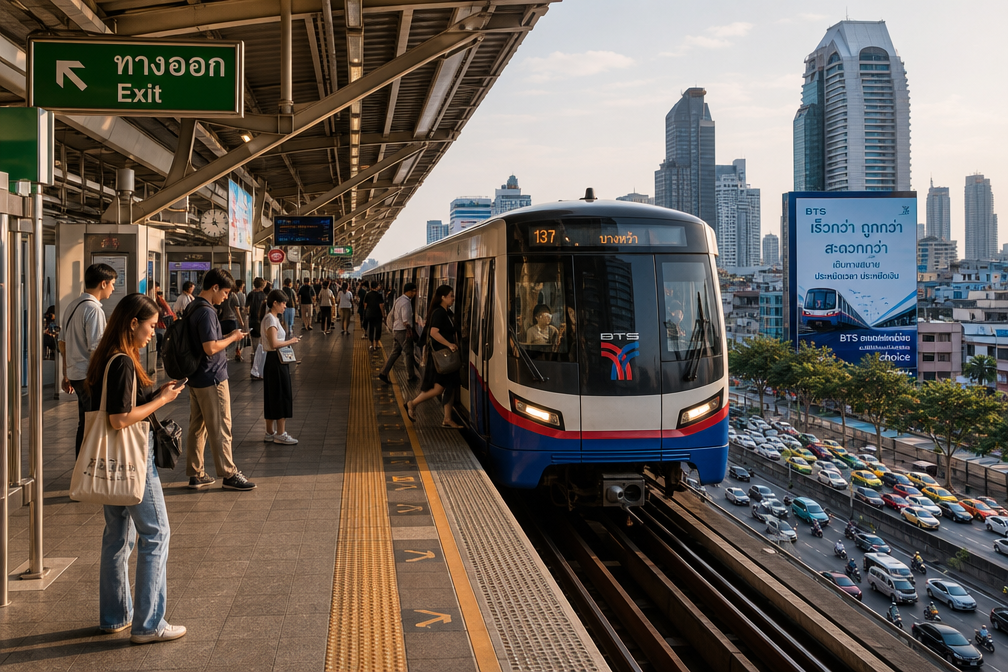
Tuk-tuks: negotiate a fare before you get in, and know that the BTS Skytrain covers central Bangkok at $0.50-1.50 per trip. The tuk-tuk costs more and takes longer. Worth doing once for the experience; use the BTS for actually getting places.
For destination-level budget detail -- accommodation tiers by neighborhood, day trip costs, island pricing breakdown -- the Thailand destination guides at Savvy Jetsetter cover it by region.
Common Mistakes on a First Trip to Thailand
Trying to cover three regions in 10 days. Bangkok, Chiang Mai, and the islands in 10 nights means transport every two to three days. A Thailand first timer who does Bangkok and one island thoroughly comes home with a better trip than someone who rushed all three. Pick two regions.
Booking tours through your hotel. Hotels take 30-40% commission on activities. Book the Elephant Nature Park, diving schools, and day trip operators directly. Klook and Viator both offer verified pricing and cancellation policies that hotel concierge desks can't match.
Visiting during Songkran without knowing what it is. Thai New Year runs April 13-15. The country celebrates with a three-day city-wide water fight: streets close, businesses shut, nothing operates normally. Either embrace it completely (it's genuinely memorable) or shift your dates. The worst outcome is arriving with a packed itinerary and no idea it's happening.
Underestimating heat in April-May. Peak temperatures hit 36-40 degrees with high humidity. November through February is peak season for a reason: ideal temperatures and dry air. March is good and less crowded than peak. April and May require planning outdoor activities for early morning and accepting air-conditioned afternoons.
Renting a scooter in Chiang Mai without riding experience. Cheap, common, and the leading cause of tourist hospital visits in Northern Thailand. Grab (the rideshare app that works like Uber throughout Thailand) costs roughly the same and gets you there without the risk. Download it before you land.
Plan Before You Land
This Thailand first timer guide has covered the sequencing that matters most: which city order makes sense, where flying beats the train, which island experiences need advance booking versus which you can walk into. Get that sequence wrong and you spend your trip on the wrong kind of transport at the wrong time.
For a personalized day-by-day Thailand itinerary built around your actual travel dates and interests, build your free itinerary at Savvy Jetsetter. For island routing, accommodation recommendations, and timing advice from an adviser with recent on-the-ground knowledge, submit a Thailand trip inquiry.
Match the right version of Thailand to how you actually travel. Everything after that is logistics.