Dublin in 5 Days: The Ultimate First-Timer's Itinerary

Savvy JetsetterFebruary 20, 2026Updated May 5, 20268 min read
Dublin in 5 Days: The Ultimate First-Timer's Itinerary

Planning a first Dublin trip is mostly an exercise in absorbing contradictory advice. Skip Temple Bar. No, definitely go to Temple Bar. Book the Guinness Storehouse months ahead. It's overrated. You need three days. You need eight. Before your first pint is even poured, you've second-guessed the whole trip.

Here's the truth, as someone who's done it both badly and well: Dublin is small, walkable, and has a clear centre. The transit out to the coast is reliable. Each neighbourhood has its own thing going on, and a week still wouldn't be enough. Five days, planned with any care at all, gives you a properly good first visit and a list of reasons to come back.

What follows is a day-by-day plan for five days in Dublin: the pubs worth the walk, the day trips to Howth and Glendalough, a few honest takes on the famous stops, and the mistakes first-timers make on repeat. No filler.

Before you go: practical notes for first-timers

Dublin weather follows its own rules. Pack a light waterproof jacket no matter what the forecast says. It's not the cold you're dressing for; it's the way the sky goes from sun to sideways rain in 20 minutes and back again.

The city is walkable. Most of what's in this 5-day plan is on foot or a short bus and DART (Dublin Area Rapid Transit) ride away. The DART connects the city centre to the coast, including Howth, in under 30 minutes. You don't need a car for any of it.

Two things I'd pre-book before you arrive: the Guinness Storehouse and the Book of Kells at Trinity College. Both sell out days ahead in peak season (May through September). Everything else can stay loose.

If you want a fully personalised plan built around your travel dates, budget, and interests, you can generate a free Dublin itinerary at savvyjetsetter.ca/plan. The AI planner takes about 60 seconds and spits out a full day-by-day breakdown based on your group size and travel style.

Day 1: South Dublin and your first proper pint

Land, drop your bags, and resist the urge to start ticking off tourist boxes. Day 1 is for getting the feel of the place: the side streets, the pace, the way the city actually moves when nobody's performing for you.

Start in Portobello if you can swing it. Walk north along the Grand Canal toward the centre. This is the Dublin people live in, not the version dressed up for visitors. Independent cafés, local bakeries, canal-side benches. It's a 25-minute walk if you don't stop, and you'll stop a lot.

Work your way toward Grafton Street (the main pedestrian shopping strip) and into St. Stephen's Green for a wander. From there, give the National Gallery of Ireland an hour. Admission is free, the permanent collection is excellent, and the Caravaggio alone is worth the detour.

For your first Dublin pub, go to The Long Hall on South Great George's Street. It's a Victorian pub with dark mahogany woodwork and a back bar that hasn't really changed since the 1880s. Get there around 5pm if you want a seat, order a Guinness, and let the evening do its thing. If you want an unhurried start to a trip, this is it.

For dinner, Fade Street Social nearby is reliably good. Small plates, a solid cocktail list, a buzzy room that doesn't tip into too much.

Day 2: Kilmainham, the Storehouse, and North Dublin

This is the day most first-timers spend badly. Guinness Storehouse first thing, then three hours wondering where the afternoon went. Time it right and you'll fit in a lot more.

Start early at Kilmainham Gaol, about 30 minutes by bus from the centre. This is where the leaders of the 1916 Easter Rising were executed. The guided tour (book ahead, around €9) is one of the most affecting things you can do in Ireland, and 90 minutes is the minimum. It reframes everything you see in Dublin afterwards.

From Kilmainham, the Guinness Storehouse is a short walk or taxi. Book your timed entry online (around €26, less with a student discount). Work your way through seven floors of brewing history and head up to the Gravity Bar for the 360-degree view over the city with your complimentary pint. The view alone justifies the ticket.

After the Storehouse, cross the Liffey and spend the afternoon in Smithfield Square and Stoneybatter. This part of Dublin has a quieter, more residential feel than the Southside tourist trail. Independent coffee shops, record stores, a street-level energy that actually feels lived in. Dinner at Oxmantown on Manor Street is worth the trip north. The food is excellent and the room doesn't try too hard.

For evening pints: Mulligan's on Poolbeg Street, established 1782. The Guinness is among the best poured in the city. Order nothing else.

Day 3: Day trip to Howth

Take the city off your plate for a day. Howth is a small fishing village on a peninsula 15 kilometres northeast of Dublin's centre, and it's one of the most rewarding additions you can make to a 2026 Dublin trip. The DART from Connolly or Pearse Station gets you there in under 30 minutes. No car, no logistics, no booking.

The Howth Cliff Walk is the main reason to come. The full loop is about 6km along coastal cliffs above the Irish Sea, with views back toward Dublin on a clear day. Some sections get narrow and muddy after rain, so wear shoes you don't mind ruining. Allow 2-3 hours at a comfortable pace.

Back in the village, lunch on the West Pier is non-negotiable. Wrights of Howth and The Brass Monkey both do excellent fresh seafood at fair prices: crab claws, fish chowder, fish and chips eaten 20 metres from the water. Sit outside if the weather lets you.

Wander the harbour after lunch, hit the Sunday market if you're there on a weekend, and DART back to the city for a relaxed evening. Howth belongs on every well-made first-timer's Dublin itinerary. Don't trade it for another afternoon in the centre.

Day 4: Trinity College, the Georgian Quarter, and Ha'penny Bridge

Day 4 is for architecture, history, and the parts of the city that look best on foot. Start at Trinity College Dublin for the Book of Kells. The illuminated 9th-century manuscript is worth seeing, and the Long Room library attached to it is one of the most photographed interiors in Ireland. Pre-book online (around €16) and arrive first thing, before the tour groups land.

Quick aside before you go further. Our free Dublin guide at savvyjetsetter.ca/guides goes deeper on the city: neighbourhood by neighbourhood, where to eat at every budget, and the spots that don't make most itineraries. It's free to download after a quick sign-up. No credit card.

From Trinity, walk east into the Georgian Quarter around Merrion Square. The colourful terraced townhouses here once housed Oscar Wilde, Daniel O'Connell, and W.B. Yeats. The square has a small park with an irreverent Wilde statue, posed reclining against a boulder with an expression of magnificent detachment. Five minutes well spent.

Lunch at The Winding Stair on Ormond Quay: modern Irish food in a bookshop above the Liffey. Slightly more expensive than a casual lunch stop, but the cooking is honest and the room is worth it.

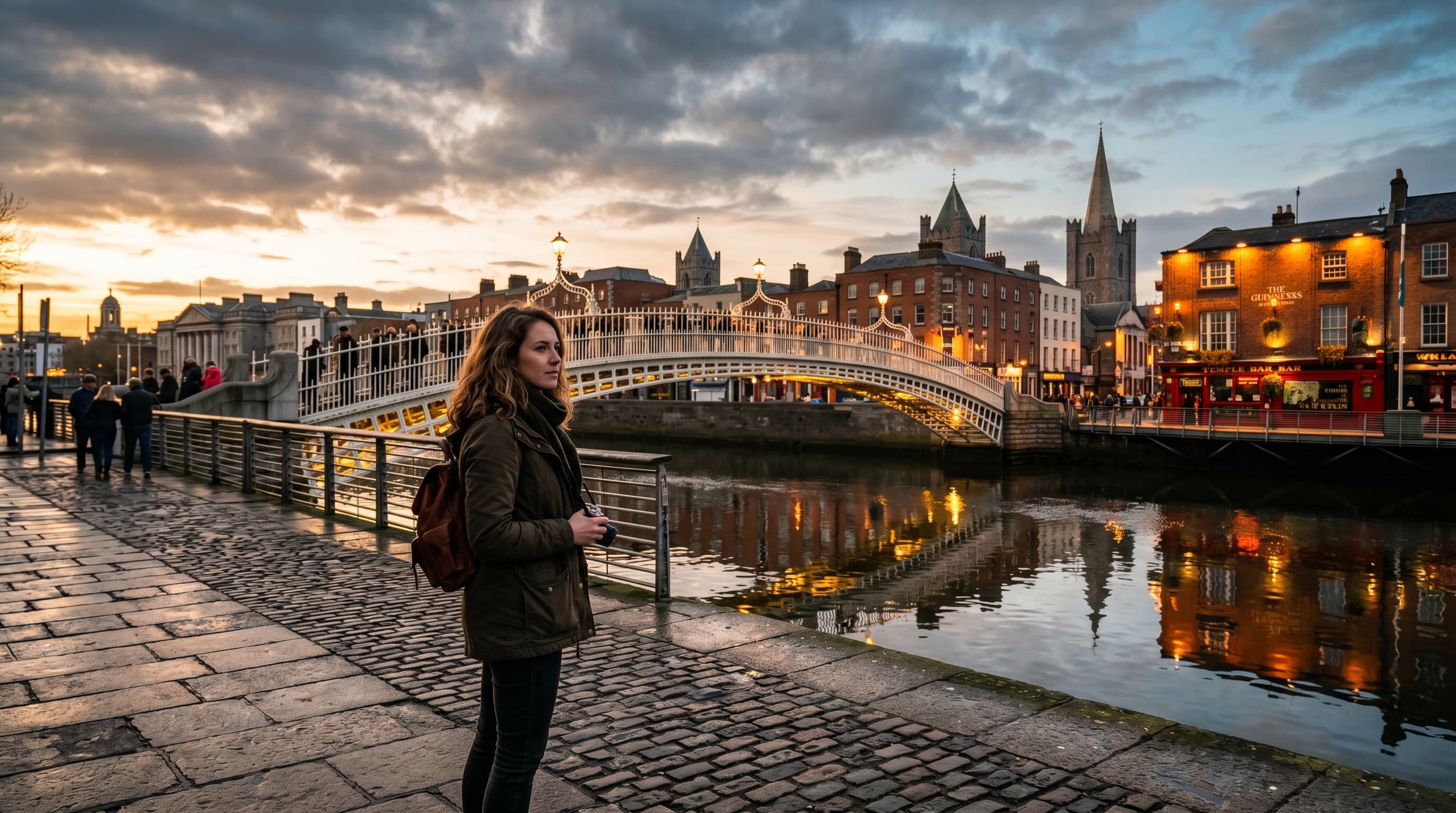
In the afternoon, walk the riverside past Ha'penny Bridge and into Temple Bar for a look around. Once. Take your photos, note the cobblestones, move on. The pubs here charge a premium and the bartenders are slammed. Better options are scattered across the rest of the city.

Evening drinks: Kehoe's Pub on South Anne Street. Victorian woodwork, proper ales, and a steady mix of people who clearly know where to drink.

Day 5: Glendalough and a last night out

Glendalough ("valley of two lakes") is about 45 kilometres south of Dublin in the Wicklow Mountains, and it earns its spot on this 5-day plan even though it's technically outside the city. A 6th-century Christian monastery sits between two glacial lakes, surrounded by mountain terrain that doesn't look entirely real from certain angles.

Get there by organised day trip from Dublin (several operators run direct services from the centre, roughly €25-35 per person including transport) or by car if you have access to one. Allow 4-5 hours total including travel, and wear actual walking shoes.

Walk through the monastery ruins, spend time at the Round Tower, and take the Upper Lake Trail if you have the legs for it. It's a 4km walk with good elevation gain and sweeping views across the Wicklow Mountains. A fitting close to a trip that started in the city and ends in a valley that's barely changed in a thousand years.

Back in Dublin for your last evening: pick one more pub you haven't been to. Toner's on Baggot Street, Grogan's on William Street South, or The Stag's Head off Dame Street are all excellent final chapters. Order a last Guinness. Take your time with it. Dublin deserves a slow goodbye.

Where to stay in Dublin

The Merrion (Merrion Street Upper) is the city's benchmark luxury property. Georgian townhouses converted into a proper five-star hotel, with service and a spa that justify the rate. From around $400 USD per night.

The Shelbourne on St. Stephen's Green is a Dublin institution: a historic bar, a central location, and pricing that's easier to swallow than the Merrion. Comfortable and well-positioned for everything in this guide.

For budget and midrange, Generator Dublin in Smithfield has private rooms in a well-designed setting with a social vibe. Good location, reasonable pricing, and a real step above standard hostel territory. Expect roughly $60-120 USD per night depending on room type and season.

Common mistakes first-timers make in Dublin

These are the Dublin tips that usually turn up after the trip, not before.

Spending all your time in Temple Bar. The area is worth a walk-through for the atmosphere and the photos, but the pubs charge a premium and the food is average. Dublin's actually great pub experiences (The Long Hall, Mulligan's, Kehoe's, Toner's) are scattered across both sides of the river, and not one of them is in Temple Bar.

Skipping the day trips. If you only see the centre, you're seeing half the picture. Howth and Glendalough are each under an hour from Dublin and look nothing like each other: coastal cliffs versus mountain monastery. Both belong on a proper first-timer's plan.

Not pre-booking the Guinness Storehouse. Walk-up tickets exist but go fast in summer. Five minutes on the website before you leave saves a painful queue on arrival.

Underestimating Irish weather. The forecast says "partly cloudy." Pack a jacket anyway. The weather changes fast and the rain doesn't usually warn you.

Staying on one side of the Liffey. The Northside (Smithfield, Stoneybatter, Phibsborough) feels nothing like the Georgian Southside, and neither looks anything like Temple Bar. Cross the river at least once. You'll find a different city on the other bank.

Plan your Dublin itinerary

Five days is enough for a real first Dublin trip. You see the city properly, get out to the coast, head into the mountains, and still have room for things that don't appear on any list. The places in this guide are real recommendations based on what consistently holds up.

For a personalised plan built around your travel dates, group size, and budget, generate a free itinerary at savvyjetsetter.ca/plan. It takes about 60 seconds and gives you a full day-by-day breakdown to work from.

For deeper coverage (every neighbourhood, the best spots at every price point, and a guide you can actually use offline), the free Dublin guide at savvyjetsetter.ca/guides is the most thorough resource we have. Sign up and it's yours instantly.

Dublin rewards the people who take it seriously. Plan well, and it'll be worth every grey sky.

Browse Travel Guides

In-depth city guides with hotel picks, food recommendations, and insider tips.