The FIFA World Cup final is scheduled for July 19, 2026 at MetLife Stadium in New Jersey. If you didn't grab tickets before they went four-figures, you're in good company. For most fans, the World Cup happens away from the stadium anyway: in packed bars, on outdoor screens in city parks, at FIFA-sanctioned fan festivals, and in the way an entire host city rearranges itself on match day.
This guide covers all 10 US host cities. What to do, where to watch, how to get around, and how to build a trip around the tournament even if you never set foot inside a stadium.
How the US World Cup cities work
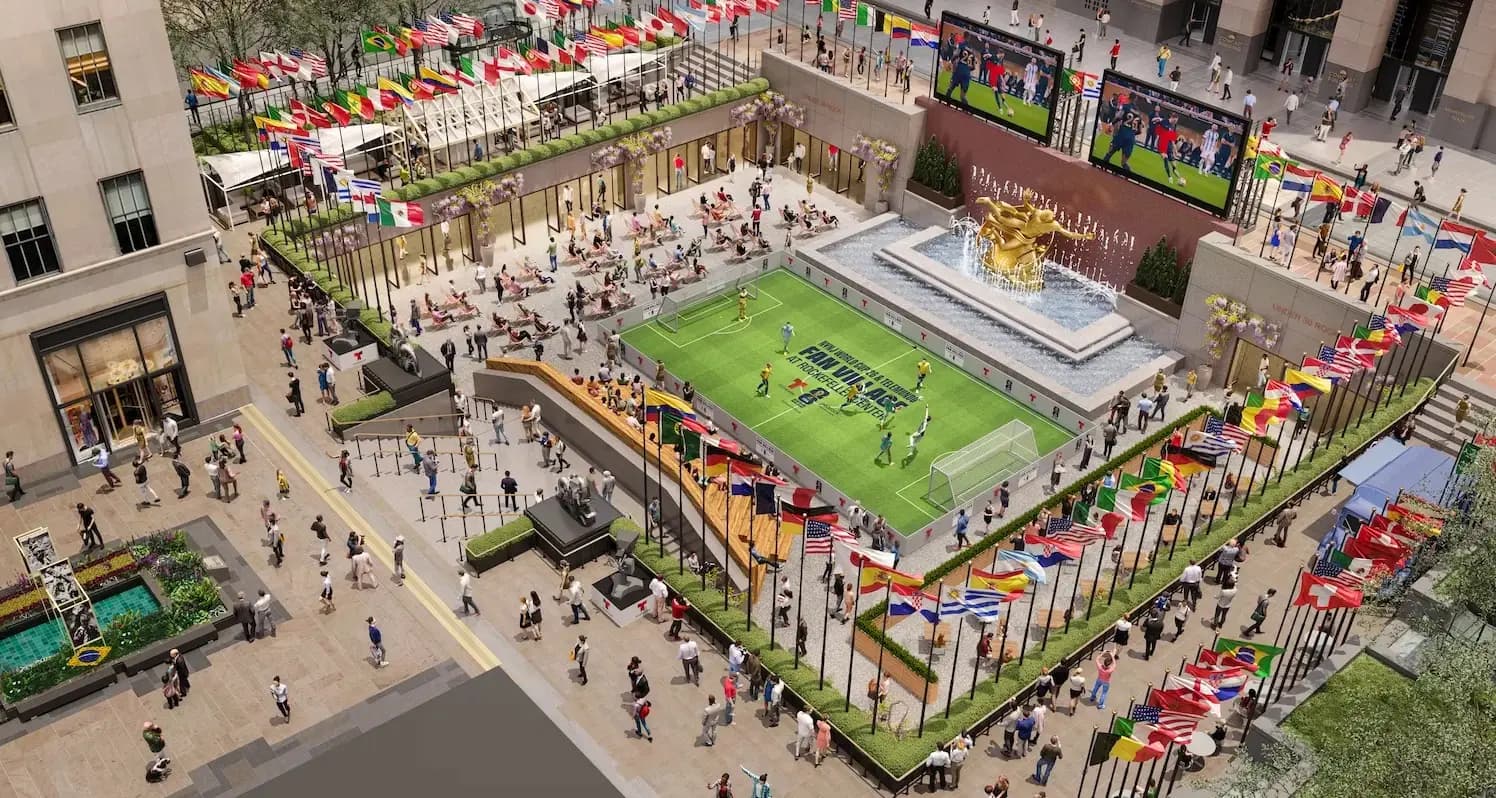
The 2026 tournament runs June 11 – July 19, 2026 across 16 cities in the US, Canada, and Mexico. The US alone hosts 10 of them, more than any other country. FIFA is expected to set up official Fan Festivals in or near each host city: free, open-air venues with giant screens, food vendors, merchandise, and live entertainment. They've been a fixture at every tournament since 2006, and they typically pull in tens of thousands of people per match day.
Beyond the official festivals, every host city has a deep sports bar culture and a soccer community that will make sure nowhere feels like an afterthought. My honest advice: pick one or two cities and go deep, instead of trying to cover them all.
New York / New Jersey
Stadium: MetLife Stadium, East Rutherford, NJ. Hosting 11 matches including both semifinals and the Final.
New York is the centrepiece of the 2026 tournament. Even if you never cross the Hudson, Manhattan will be consumed by football from opening day through the final.
Where to watch: Times Square has hosted outdoor screenings before and is a near-certainty for a major fan zone. For a more authentic pub atmosphere, head to Nevada Smith's in the East Village, arguably the most soccer-dedicated bar in the US, or Smithfield Hall in Midtown, which fits hundreds of fans per match. In Brooklyn, Pacific Standard and the Greenpoint area have a younger crowd and multiple screens.
Transport tip: MetLife Stadium is accessible via NJ Transit from Penn Station (Meadowlands Sports Complex station during events). For watch parties in the city, the subway is your friend. Don't bother with a car.
Stay: Midtown and the East Village put you close to nightlife and multiple subway lines. For the Final, rates will be extreme. Book 6+ months out, or consider Jersey City across the river.
Los Angeles
Stadium: SoFi Stadium, Inglewood. Hosting 9 matches including a semifinal.
LA's football scene has exploded since LAFC and the Galaxy both built genuine fan cultures. The city sprawls, but watch party culture concentrates in a few neighborhoods.
Where to watch: LA Live (the entertainment complex near Crypto.com Arena downtown) is prime territory for official fan zones. In the neighborhoods, The Galley in Santa Monica draws a crowd for any major match, while Three Clubs in Hollywood and bars in the Koreatown corridor (one of the most passionate football communities in the city) fill fast. For Latin American matches, the scene in East LA and around Olvera Street is one of the best in the country, full stop.
Transport tip: LA's transit has improved but a car still helps in the sprawl. For the stadium, the K Line (SoFi Stadium Station) connects to downtown and most key neighborhoods.
Stay: Downtown, Silver Lake, or Culver City offer the best balance of access and atmosphere. Avoid Inglewood proper for lodging unless prices everywhere else have gone nuclear.
Dallas / Fort Worth
Stadium: AT&T Stadium, Arlington. Hosting 9 matches.
Dallas has one of the most underrated soccer cultures in the US, partly because of the large Mexican and Central American population who treat every CONCACAF match like a national event.
Where to watch: The Common Table in Uptown is the city's soccer headquarters. Multiple screens, craft beer, and a crowd that shows up for 7am kickoffs without complaint. Truck Yard in Deep Ellum has outdoor space and big screens. For Latin American fixtures specifically, the dive bars along Jefferson Boulevard in Oak Cliff are an experience of their own.
Transport tip: Dallas is a car city. That said, the Trinity Railway Express connects downtown Dallas to Arlington on event days, and Uber/Lyft between neighborhoods is reliable and cheap.
Stay: Uptown, the Bishop Arts District, or Lower Greenville give you the most walkable nightlife access.
Atlanta
Stadium: Mercedes-Benz Stadium. Hosting 8 matches.
Atlanta's FIFA connection goes back to 1996, when the city hosted Olympic football. The stadium is world-class, and the area around it is built for pre- and post-match crowds.
Where to watch: Centennial Olympic Park downtown has hosted large-screen events before and is a natural FIFA fan zone location. For a bar experience, Park Bar and Stats Brewpub near the stadium are solid. In the neighborhoods, Little Five Points has a character all its own, and the spots around Ponce City Market attract a mixed, sports-friendly crowd.
Transport tip: MARTA's Red and Gold lines connect to the stadium (Vine City or State Farm Arena stations). For match days, public transit is the only sane choice.
Stay: Midtown or Old Fourth Ward keep you close to the action and Atlanta's best restaurants.
Seattle
Stadium: Lumen Field. Hosting 8 matches.
Seattle is an undersung football city. The Sounders have one of the best-supported clubs in MLS, and the fanbase knows how to organize match day.
Where to watch: The area around Occidental Square and Pioneer Square fills with fans on match days. For a dedicated soccer experience, Fado Irish Pub in Pioneer Square and the bars along Capitol Hill (including The Stumbling Monk and Unicorn) draw committed supporters. For the biggest games, Lumen Field's surrounding plazas often host unofficial watch parties even when the match is elsewhere.
Transport tip: Lumen Field is walkable from downtown and served by Link Light Rail. The city core is very walkable. You won't need a car during your stay.
Stay: Capitol Hill or South Lake Union for the food and nightlife. Pioneer Square if you want to be closest to the stadium action.
Boston / New England
Stadium: Gillette Stadium, Foxborough. Hosting 8 matches.
Boston has a deep soccer soul that often goes unacknowledged nationally. The local community spans Irish, Portuguese, Brazilian, Cape Verdean, and Haitian populations, which means matches between those national teams will feel like home games for thousands of fans in the city.
Where to watch: The Banshee in Dorchester is the most-mentioned soccer bar in the city, and it draws a serious crowd. In the Back Bay and Fenway area, Cask 'n Flagon and several Irish pubs along Boylston Street set up for major matches. For Portuguese football in particular, the Ironbound-adjacent communities and East Boston spots are worth seeking out.
Transport tip: Gillette Stadium is served by MBTA commuter rail (Franklin/Providence Line, Foxboro stop on event days). Downtown matches are best navigated on foot and by T.
Stay: Back Bay or South End for walkability and restaurant quality. Fenway puts you close to a lively sports bar strip.
Kansas City
Stadium: Arrowhead Stadium. Hosting 7 matches.
Kansas City is the smallest US host city by population, which means the energy concentrates in a way that's impossible to replicate in megacities. When a match is on, the entire city knows it.
Where to watch: The Power & Light District downtown is an outdoor entertainment complex with multiple bars and big screens. It becomes a de facto fan zone during major tournaments. Boulevard Brewing Taproom and Chicken N Pickle (North Kansas City) are both large enough to host hundreds of fans with outdoor seating.
Transport tip: Kansas City has limited public transit. Most fans drive or rideshare to the stadium. Downtown bars are walkable from most hotels.
Stay: Downtown near the Power & Light District is the obvious choice. The Crossroads Arts District has boutique hotel options and great food.
Philadelphia
Stadium: Lincoln Financial Field. Hosting 8 matches.
Philadelphia's soccer culture is sometimes overlooked next to its football and baseball legacy, but the Union have built a serious fanbase, and the city's bar scene doesn't need much excuse to get loud.
Where to watch: Misconduct Tavern near Rittenhouse Square is a dedicated soccer pub with multiple screens, a knowledgeable crowd, and long opening hours. Chickie's & Pete's has multiple locations and is big enough to handle large groups. For South Philly atmosphere (especially close to the stadium), East Passyunk Avenue has a cluster of good bars.
Transport tip: The Broad Street Line subway goes close to the stadium (Pattison station). For bar-hopping, Center City is compact and walkable.
Stay: Center City or Rittenhouse Square for the most options. Logan Square puts you near the Museum of Art and its steps, which, yes, you'll want to see.
Miami
Stadium: Hard Rock Stadium, Miami Gardens. Hosting 8 matches including a semifinal.
Miami might be the most natural World Cup host city in the US. The city has enormous Latin American and Caribbean communities, meaning matches involving Brazil, Argentina, Colombia, Mexico, Jamaica, or any Caribbean nation will feel like home games for a huge portion of the crowd, whether they're in the stadium or not.
Where to watch: Ball & Chain in Little Havana is an institution: live music, strong drinks, and a crowd that knows how to celebrate regardless of the scoreline. In Wynwood, Wynwood Social and Coyo Taco (yes, the taco bar with great beer selections) fill up fast for big fixtures. For the beach side, Abbey Brewery in South Beach is reliable. Expect fan zones along the waterfront. Bayfront Park has hosted large-scale events before.
Transport tip: Hard Rock Stadium is accessible via Miami-Dade transit (Metrorail to Dolphin Station, then a shuttle). For in-city bar-hopping, ride-sharing is the most practical option. Don't count on walkability between Miami's neighborhoods.
Stay: Brickell for access and nightlife. Wynwood if you want art, food, and atmosphere. South Beach if budget is no object.
San Francisco Bay Area
Stadium: Levi's Stadium, Santa Clara. Hosting 8 matches.
The Bay Area is home to enormous soccer communities. Mexican, Central American, and European expat populations all with strong national team loyalties. The stadium is in the suburbs, but the watch party culture is firmly in San Francisco proper and in Oakland across the bay.
Where to watch: Greens Sports Bar in Polk Gulch is the city's most dedicated soccer pub. Open at 4am for European kickoffs and a fixture for major tournaments. The Edinburgh Castle on Bush Street is a solid backup. In the Mission District, several bars along 24th Street draw a heavily Mexican-American crowd that makes CONCACAF and Copa América matches genuinely thrilling. Oakland's Fruitvale neighborhood is another exceptional option for those matches.
Transport tip: BART connects San Francisco and Oakland to Santa Clara (Great Mall/Main station, then a shuttle to the stadium). Getting to the stadium from the city takes 60–90 minutes. Plan accordingly, or watch from the city and skip the commute.
Stay: Mission District for food and atmosphere. Hayes Valley for walkability and cocktail culture. Downtown/Union Square if you need convenience.
Cross-city strategy: picking your base
If you're planning a trip around multiple matches in different cities, the logistics matter. Here's a rough pairing guide:
- New York + Philadelphia + Boston are all within 4–5 hours by train (Amtrak Acela). An East Coast trip covering three host cities is very doable.
- LA + San Francisco is 90 minutes by flight, or 6 hours by car/train. A California circuit works well.
- Dallas + Kansas City are midcontinent cities, 3.5 hours by flight. Different vibes, both worth visiting.
- Miami is best treated as a standalone, or paired with Atlanta (2-hour flight).
- Seattle naturally pairs with Vancouver in Part 2 of this guide.
If you want a personalised itinerary that maps your matches, city stops, and travel days into a clear plan, generate your free World Cup 2026 travel itinerary at savvyjetsetter.ca/plan. It takes about 60 seconds.
Common mistakes World Cup fans make
Underestimating accommodation costs. Host cities will see hotel prices 3–5x higher than normal on match days. Book now. Book everything.
Assuming you need stadium access to have a good time. The bar and fan zone experience for a big knockout match is often more memorable than watching from a distant upper-deck seat. Embrace it.
Showing up too early (or too late) to a bar. For major matches, popular sports bars fill 2+ hours before kickoff. Show up late and you're watching from the pavement.
Not planning the stadium commute. Even if you get last-minute tickets, most stadiums are not downtown. The commute on match day is long. Build 2 hours each way into your plans.
Trying to cover too many cities. Six cities in 10 days sounds like a World Cup adventure. In practice it's an exhausting logistics puzzle. Pick two or three and go deep.
Forgetting the time zones. Group stage matches may kick off at 9am, 12pm, and 3pm local, depending on where you are. Some early kickoffs are worth the alarm. Others, you might prefer to catch on highlights.
Plan your World Cup 2026 trip
The US leg of the 2026 World Cup gives you something genuinely rare: a full tournament spread across a country with great cities, real sports culture, and a fan base that shows up. You don't need a ticket to feel it.
For city-specific deep dives, hotel picks, and day-by-day itineraries for any of these destinations, browse our guides at savvyjetsetter.ca/guides. If you want VIP hotel access and a fully mapped trip with zero research on your part, reach out through savvyjetsetter.ca/inquiry.
Part 2 of this series covers the Canadian and Mexican host cities: Vancouver, Toronto, Guadalajara, Mexico City, and Monterrey, where the tournament takes on a different energy entirely.